


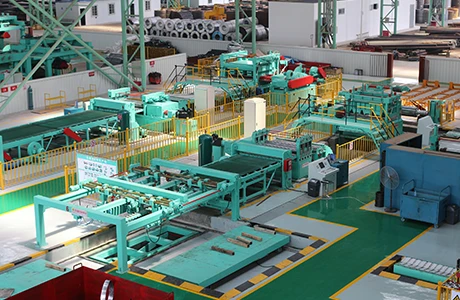
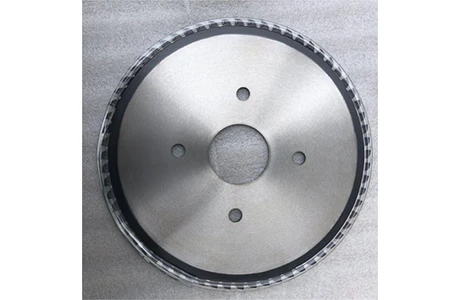

The production of industrial steel piping requires a sophisticated synergy of mechanical engineering and metallurgical precision. For businesses looking to establish or upgrade their production lines, selecting a steel pipe making machine manufacturer involves understanding the critical balance between roll forming accuracy, welding stability, and overall system throughput. This guide examines the technical prerequisites and procurement standards necessary for high-performance tube mill operations.
In the B2B manufacturing landscape, the transition from raw steel coils to finished API or structural pipes involves complex stages—from decoiling and forming to high-frequency welding and sizing. The challenge for modern operators lies in reducing material waste while increasing the production speed of specialized products like solar piles or oil pipeline components, where dimensional consistency is non-negotiable.
Readers will gain a technical understanding of ERW (Electric Resistance Welding) technology, the parameters that define machine efficiency, and the criteria for evaluating equipment suppliers. By analyzing the technical flow—from the double-head uncoiler to the final recoiler—this article provides a professional framework for making informed investment decisions in steel processing machinery.
Industrial Engineering of Steel Pipe Production
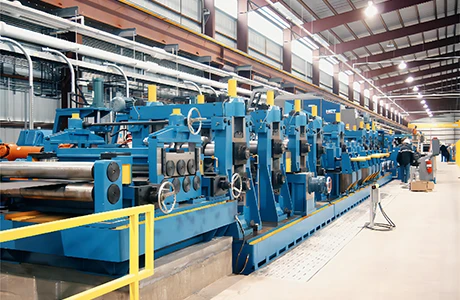
The fundamental process of steel pipe manufacturing relies on the cold roll forming method, where a flat steel strip is progressively bent into a cylindrical shape. The core engineering challenge is the management of internal stresses during the forming stage. If the rollers are not precisely aligned or the pressure is inconsistent, the strip may experience uneven deformation, leading to weld defects or structural instability in the final pipe. High-quality ERW Tube Mills utilize a sequence of flattening units, main driving units, and guide units to ensure the strip enters the welding zone with perfect concentricity. Beyond the forming section, the integration of cooling units and sizing straighteners is essential to lock in the dimensions and ensure the pipe remains straight over long lengths, which is critical for applications in oil and gas transmission where precision fits are required.
Technical Evaluation and Procurement Framework
When evaluating tube mill technology, procurement officers and engineers must look beyond the basic production capacity. The real value of a production line is found in its ability to maintain stability under varying material grades and its ease of reconfiguration for different pipe diameters.
Roll Forming Precision and Control
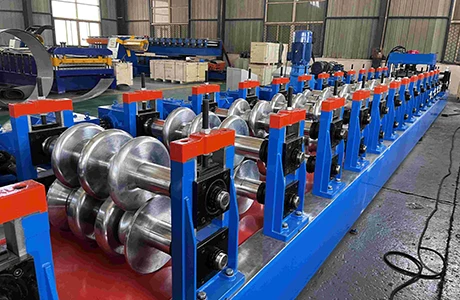
Precision in roll forming is dictated by the quality of the rollers and the rigidity of the machine frame. A professional system must ensure that the transition from the flat strip to the circular tube occurs without creating micro-cracks in the steel. The use of PLC-based control systems allows for real-time monitoring of the forming speed and pressure, ensuring that the "U" shape is achieved consistently before the sealing process.
| Technical Factor | Operational Requirement | Risk of Failure | Evaluation Criteria |
|---|---|---|---|
| Roller Alignment | Micron-level precision | Uneven wall thickness | Laser measurement data |
| Frame Rigidity | High-tensile reinforced steel | Vibration at high speeds | Material grade of chassis |
| Forming Sequence | Gradual reduction ratios | Strip buckling | Number of forming passes |
| Sizing Unit | Controlled compression | Ovality/Out-of-roundness | Final OD tolerance |
| Guide Systems | Low-friction contact | Surface scratching | Bearing quality/Lubrication |
| Control Logic | Real-time PLC feedback | Production inconsistency | Response time of sensors |
Welding Technology Integration
High-frequency longitudinal welding is the heart of the ERW process. The efficiency of the weld depends on the frequency stability and the precision of the squeeze rollers. For specialized applications like API pipes, the weld must be seamless and structurally identical to the base metal. Advanced systems integrate induction welding and automated bead scarfing to remove the internal and external weld seams, ensuring a smooth finish that prevents turbulence in fluid transport pipes.
Material Compatibility and Feed Systems
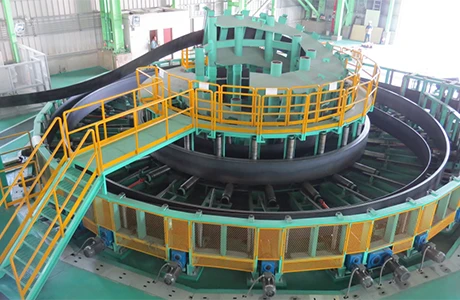
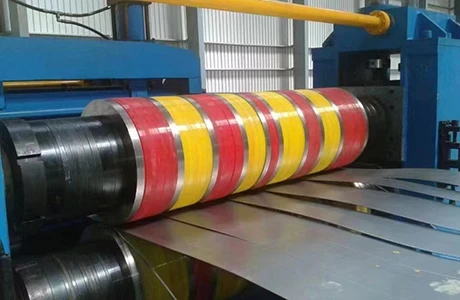
The feed system, including double-head uncoilers and spiral accumulators, determines the continuity of production. A spiral accumulator is vital for "non-stop" operation, allowing the strip-head cutter and welder to work without halting the entire line. Buyers should verify if the machine can handle various steel grades, from low-carbon strips for furniture to high-strength alloys for automotive and marine steel, without requiring extensive tooling changes.
Dimensional Tolerance Management
In B2B procurement, tolerances are the primary metric of quality. Whether producing Φ9mm cored wire tubes or 16-inch diameter structural pipes, the length tolerance (often targeted at ±1%) and wall thickness consistency are critical. The inclusion of automated laser measurement modules allows for in-line quality checks, reducing the reliance on post-production sampling and minimizing waste.
Production Speed vs. Stability
While high production speeds (up to 100 m/min) are attractive, they must not come at the cost of stability. Excessive speed can lead to weld splatter or dimensional drift. The ideal system balances output with the capacity of the cooling unit to stabilize the metal temperature before it reaches the sizing section, ensuring that the final product does not warp during the cooling phase.
Turnkey Implementation Requirements
Implementing a full production line requires more than just machinery; it requires a complete solution. This includes the installation of auxiliary equipment such as threading machines, end facers, and hydro testers for leak detection. Turnkey projects should involve professional engineering design and quality inspections (ISO, CE, SGS standards) to ensure that the factory layout optimizes the flow from raw material entry to final packaging.
Lifecycle Maintenance Strategy
The longevity of a tube mill depends on the maintenance of wear parts, particularly the forming rollers and welding electrodes. A strategic maintenance plan includes regular calibration of the PLC system and the replacement of rollers based on tonnage processed. Selecting a supplier with a robust network of spare parts and technical support is essential to avoid prolonged downtime in a high-volume manufacturing environment.
FAQ
What is the primary difference between ERW and other pipe making methods?
ERW (Electric Resistance Welding) uses high-frequency current to heat the edges of a steel strip, which are then forged together under pressure. Unlike seamless pipes, ERW pipes are formed from coils, offering better wall thickness control and higher production speeds for a wide range of diameters from 1/2" to 16".
How do I determine the required production speed for my plant?
Production speed should be based on your target annual tonnage and the specific product grade. While machines can reach 80-100 m/min, high-precision pipes or those with thicker walls may require slower speeds to ensure weld quality and dimensional stability. Always calculate your required daily output and add a 15% buffer for maintenance downtime.
What are the most critical components to check when buying a used tube mill?
Focus on the wear level of the forming rollers, the condition of the high-frequency welding transformer, and the accuracy of the sizing unit. Check the PLC version for compatibility with modern software and inspect the frame for any structural cracks or misalignment caused by previous over-capacity operation.
Can one production line handle both square and round pipes?
Yes, multi-functional tube mills can produce both, but they require different sets of forming rollers. The core drive and welding systems remain the same, but the rollers must be swapped to change the profile from round to square or rectangular. Some advanced mills offer quick-change roller systems to reduce downtime.
What certifications should I look for in a machinery supplier?
Look for ISO certification for quality management, CE marking for safety compliance (especially for European markets), and SGS certifications for product verification. These ensure the manufacturer follows international engineering standards and provides equipment that meets global safety and performance benchmarks.
How is "cored wire" tube production different from standard tube milling?
Cored wire production involves a precision dosing system that fills metallic powders (like Al, Ti, or Si) into the U-shaped strip before it is fully closed and sealed. This requires much stricter control over the filling ratio (typically 10%–35%) and a more precise sealing process to prevent leakage of the core material.
References and further reading
- ASTM E45 Standard Test Method for Determining the Size, Shape, and Distribution of Inclusions in Steel
- DIN 50602: Steel - Determination of Inclusion Content
- GB/T 10561: National Standard for Steel Inclusion Analysis
- API Specification 5L: Specification for Line Pipe
 English
 Albanian
 Arabic
 French
 German
 Indonesian
 Italian
 Japanese
 Kazakh
 Korean
 Latin
 Macedonian
 Portuguese
 Russian
 Spanish
 Thai
 Turkish
 Ukrainian
 Uzbek