



Cold roll forming is a continuous bending operation that shapes metal strips into specific profiles without applying heat, ensuring the material retains its structural integrity and mechanical properties. For industrial buyers, selecting the right equipment involves understanding the delicate balance between forming speed, material thickness, and the geometric complexity of the final profile. This article examines the technical requirements and procurement standards necessary for establishing a high-efficiency production line.
In the context of modern B2B manufacturing, the demand for precision components like U-channels and solar piles has shifted the focus toward intelligent automation and servo-driven systems. Integrating cold roll forming machine manufacturers into a supply chain requires a deep dive into their engineering capabilities, specifically their ability to handle various steel grades and thicknesses while maintaining strict length accuracy.
Readers will gain a comprehensive understanding of the technical flow from uncoiling to final cutting, the criteria for evaluating equipment stability, and the specific application fields where roll-formed profiles provide the highest value. By analyzing the relationship between machine specifications and output quality, procurement managers can avoid common implementation errors and optimize their total cost of ownership.
The Engineering Logic of Cold Roll Forming
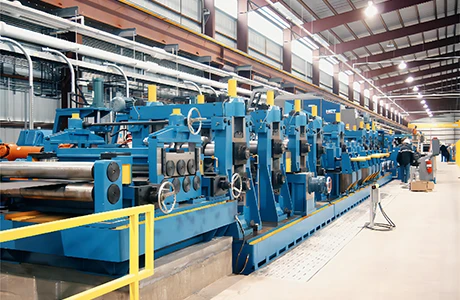
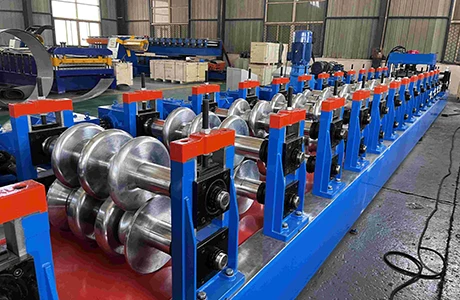
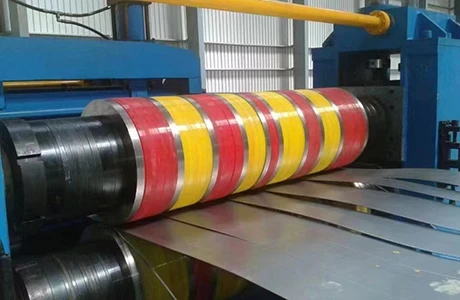
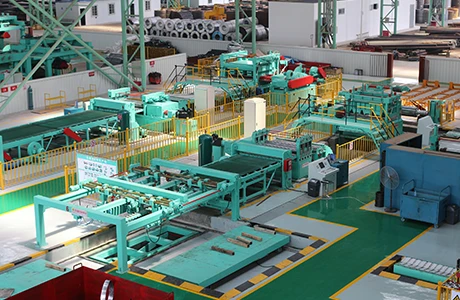
The fundamental principle of cold roll forming relies on a series of sequential rollers that gradually deform a metal strip into the desired shape. Unlike press braking, which forms the metal in a single hit, roll forming distributes the strain across multiple stations. This prevents material fracture and reduces internal stress, which is critical when working with high-strength carbon steel or galvanized strips. The process begins with the uncoiler, where the raw material is fed into the system, followed by a strip-head cutter and welder to ensure continuous production without stopping for every coil change.
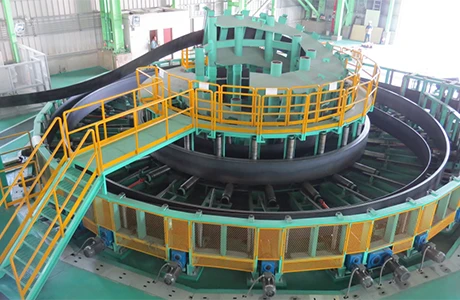
Technical efficiency is determined by the "forming angle" and the number of stations. If the transition between stations is too abrupt, the material may suffer from "spring-back," leading to dimensional inaccuracies. Advanced engineering ensures that the rollers are designed with a precise geometry to counteract this effect. In high-capacity lines, such as those used for structural supports, the integration of a spiral accumulator allows the cutting system to operate independently of the forming speed, maximizing the overall throughput of the facility.
Strategic Procurement and Technical Evaluation
Evaluating a production line requires more than a review of the brochure; it requires a mapping of technical specifications to actual production goals. The following analysis breaks down the critical components of a high-performance roll forming system, focusing on the U-channel production logic as a primary example.
Material Compatibility and Strip Selection
The choice of raw material dictates the wear rate of the rollers and the overall speed of the line. Whether using hot-rolled carbon steel for structural beams or galvanized steel for electrical racks, the material thickness (ranging from 1.5mm to 6.0mm) must align with the drive system's torque capacity. Using low-quality strips with inconsistent edges can lead to tracking errors and surface scratches.
| Material Type | Recommended Thickness | Primary Application | Critical Evaluation Factor |
|---|---|---|---|
| Carbon Steel (HR) | 2.0mm - 6.0mm | Construction Beams | Yield Strength Consistency |
| Galvanized Steel | 1.5mm - 3.0mm | Cable Tray Brackets | Coating Adhesion/Scratch Resistance |
| High-Strength Alloy | 1.5mm - 4.0mm | Automotive Subframes | Spring-back Control |
| Cold Rolled Steel | 1.5mm - 2.5mm | Furniture Framing | Surface Finish Precision |
| Stainless Steel | 1.5mm - 3.0mm | Medical/Food Grade | Roller Material Hardness |
| Alloyed Steel | 2.0mm - 5.0mm | Mining Supports | Forming Station Count |
Precision Forming and Station Optimization
The number of forming stations—typically between 10 and 20—is determined by the profile's complexity. For a U-channel, the height (40mm to 150mm) and flange width (20mm to 80mm) must be achieved through a gradual progression to ensure the edges remain clean and the shape consistent. High-precision rollers reduce the need for secondary straightening, which is a significant time-saver in mass production.
Automation and Control Systems
Modern lines rely on Siemens PLC and touchscreen HMI systems to synchronize the uncoiler, forming section, and cutoff unit. The transition to servo motor direct drives has allowed for higher precision in forming speed (8 to 20 meters per minute) and more reliable synchronization. Intelligent control systems allow operators to monitor sensor feedback in real-time, reducing unplanned downtime caused by mechanical misalignment.
Post-Forming Processing Capabilities
A complete production line must address finishing. This includes optional servo or hydraulic punching for creating mounting holes and the choice between a flying saw or hydraulic shear for cutting. A flying saw is essential for high-speed lines as it cuts the profile while it is still moving, eliminating the need to stop the forming process and thus doubling the output efficiency.
Application Scenarios for U-Channel Profiles
U-channels produced via cold roll forming are ubiquitous in industrial infrastructure. They are primarily used in formwork support and scaffolding systems due to their high strength-to-weight ratio. In electrical engineering, they serve as critical cable tray brackets, while in the automotive sector, they are adapted for trailer components and subframes, where dimensional consistency is non-negotiable.
Quality Assurance and Tolerance Control
The industry standard for length accuracy is often ±1.0 mm, depending on the cut-off method. Quality control focuses on the "edge fold" and "angle accuracy." To maintain these tolerances, the machinery must be constructed with rigid frames to prevent deflection under the high pressure of the forming rollers, especially when processing thicker materials up to 6.0mm.
Operational Maintenance for Longevity
To prevent corrosion and preserve shape precision, rollers must be cleaned and oiled regularly. Hydraulic systems require routine checks of oil quality and sensor feedback to avoid catastrophic failures. For facilities handling multiple specifications, investing in servo width adjustment systems can significantly reduce the time required for profile changeovers.
FAQ
What is the main advantage of cold roll forming over hot rolling?
Cold roll forming occurs at room temperature, which preserves the material's original mechanical properties and provides a much smoother surface finish. It allows for the production of complex, consistent profiles with higher dimensional accuracy and less material waste compared to hot rolling, making it ideal for precision structural components.
How do I choose the number of forming stations for a specific profile?
The number of stations depends on the total bend angle and the thickness of the material. More complex profiles or thicker materials require more stations to distribute the deformation gradually. This prevents the steel from cracking or warping and ensures that the final product meets strict tolerance specifications.
Can one machine produce multiple different U-channel sizes?
Standard machines are designed for a specific profile. However, lines equipped with adjustable rollers or quick-change tool systems can handle multiple specifications. For high-flexibility production, servo-driven width adjustments are recommended to reduce the manual labor and time associated with profile changeovers.
What is the role of a spiral accumulator in a roll forming line?
A spiral accumulator acts as a buffer between the continuous forming section and the intermittent cutting section. It allows the forming rollers to keep running at a constant speed while the cutting unit performs its operation, effectively eliminating the "stop-and-go" cycle and increasing total production output.
What should I look for when evaluating a machinery supplier?
Buyers should evaluate the supplier's certification (such as ISO, CE, or SGS), their experience with turnkey projects, and their ability to provide customized engineering designs. It is critical to verify their capability to handle the specific material thickness and profile complexity required for your application.
How does material thickness affect the forming speed?
Thicker materials increase the resistance during the bending process, requiring more torque from the drive system and often resulting in a slower optimal forming speed. To maintain high speeds with thicker materials, the machinery must have a robust gearbox drive or high-torque servo motors and a higher number of forming stations.
References and further reading
- International Standards for Cold Formed Steel Structural Members.
- Guidelines for Industrial Roller Design and Material Deformation.
- Handbook of Metal Forming and Automated Production Systems.
 English
 Albanian
 Arabic
 French
 German
 Indonesian
 Italian
 Japanese
 Kazakh
 Korean
 Latin
 Macedonian
 Portuguese
 Russian
 Spanish
 Thai
 Turkish
 Ukrainian
 Uzbek