


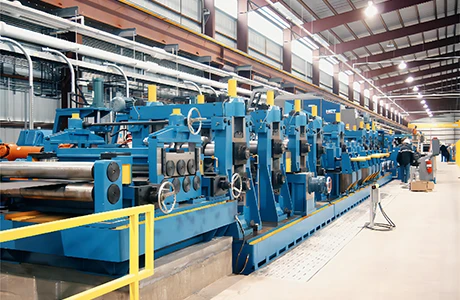
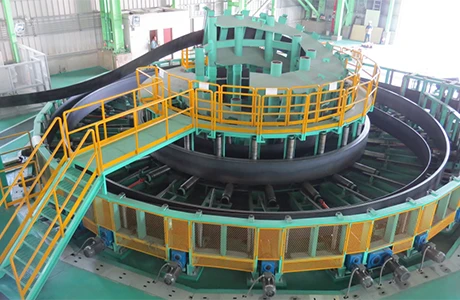
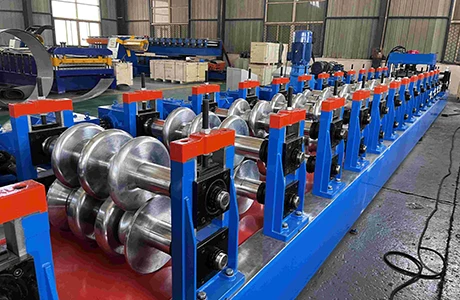
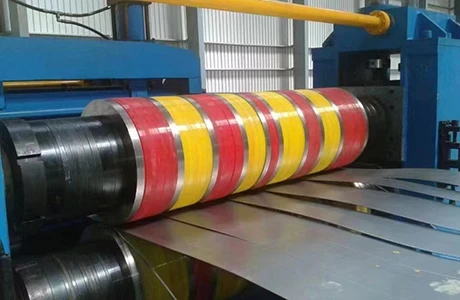
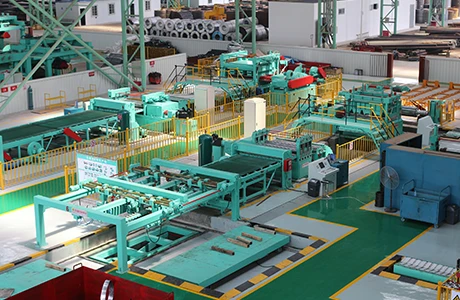

Cold roll forming is a continuous bending operation that shapes flat metal strips into specific profiles without the need for heating. This process is critical for producing high-strength tubes and structural components used in the automotive, construction, and energy sectors. Understanding the technical nuances of this machinery allows procurement managers to optimize production throughput and ensure dimensional accuracy across large batches of steel products.
For enterprises looking to establish a pipe production line, the selection of a cold roll forming machine manufacturer depends on the required diameter, wall thickness, and the specific standards—such as API or structural grades—that the final product must meet. The integration of uncoiling, forming, welding, and finishing creates a cohesive ecosystem that defines the overall efficiency of the factory floor.
This guide analyzes the core engineering components of tube mill lines, evaluates the impact of tooling materials on longevity, and provides a framework for selecting equipment based on application scenarios. Readers will gain insights into how customized roll designs and advanced welding technologies contribute to the creation of high-quality welded pipes and solar support piles.
Industrial Cold Roll Forming Fundamentals
The essence of cold roll forming lies in the gradual deformation of metal through a series of rollers. Unlike press braking, which bends metal in a single strike, roll forming distributes the strain over multiple stations, reducing the risk of material failure and ensuring a more consistent profile. This method is particularly advantageous for producing long sections of piping, where longitudinal consistency is paramount. The process begins with a steel coil being fed through an uncoiler and flattened, then passed through a sequence of forming rolls that incrementally shape the strip into a circular or square cross-section. For welded pipes, this is followed by high-frequency induction welding, which fuses the seam without adding filler material. The technical challenge for any manufacturer is managing the "spring-back" effect—the tendency of the metal to return to its original shape—which requires precise calculation of the roll geometry and pressure. By utilizing CNC-milled rollers and carburized gear systems, the machinery can maintain tight tolerances even during high-speed continuous operation.
Technical Evaluation for Tube Mill Equipment
Designing a high-performance tube mill requires a synergistic approach to mechanical engineering and metallurgy. The focus must shift from simple throughput to a balance of precision, energy efficiency, and tool life. The following analysis details the critical dimensions of a professional production line, from the initial forming stages to the final cutting and packaging.
Precision Roll Design and Material Selection
The rollers are the heart of the forming process. Depending on the material being processed—be it mild steel, carbon steel, or stainless steel—the choice of tool steel is critical. High-chromium alloys like Cr12 and Cr12MoV are frequently used to prevent premature wear. Proper heat treatment, including quenching and tempering, ensures that the rolls maintain their hardness under extreme pressure. A well-designed roll sequence minimizes internal stress in the pipe, preventing warping during the welding phase.
| Roll Material | Hardness Property | Typical Application | Wear Resistance |
|---|---|---|---|
| Cr12 | High Hardness | Standard Mild Steel | Moderate |
| Cr12MoV | High Toughness | Harder Carbon Steels | High |
| D2 Steel | Superior Wear Resistance | Stainless Steel Pipes | Very High |
| D3 Steel | High Compression Strength | Heavy Wall Tubes | High |
| Carburized Steel | Surface Hardness | High-Volume Production | Optimal |
| Tungsten Carbide | Extreme Hardness | Specialized Alloys | Maximum |
High-Frequency Welding Integration
Modern tube mills rely on High-Frequency (HF) induction welding to create a seamless-looking bond. This process uses an induction coil to heat the edges of the formed strip to a plastic state, allowing them to be squeezed together by pressure rolls. The efficiency of this process depends on the quality of the ferrite and impeder used in the HF welder. Precise control over the power output ensures a consistent weld bead, which is essential for pipes used in high-pressure fluid transport or structural solar piles.
Finishing Section Requirements
A raw welded pipe requires several finishing steps to meet commercial standards. This includes seam annealing to relieve internal stresses and straightening machines to ensure linearity. For high-spec projects, eddy current testing systems are integrated to detect internal flaws in the weld. Final steps such as chamfering, end facing, and hydro-testing are mandatory for API-grade pipes to ensure they can withstand operational pressures without leaking.
Customization for API and Structural Pipes
Not all pipes are created equal. API (American Petroleum Institute) pipes require stricter tolerances and specific chemical compositions. To achieve this, the mill must be capable of handling varying wall thicknesses and diameters, typically ranging from 1/2" to 16". Customization involves adjusting the roll gap and welding parameters to accommodate different steel grades, ensuring that the final product meets the necessary structural integrity for oil pipelines or construction frameworks.
Cutting Efficiency with HSS Tooling
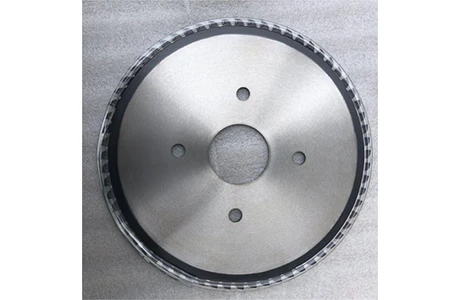
The cutting process must be synchronized with the mill speed to prevent production bottlenecks. High-Speed Steel (HSS) circular saw blades, specifically those made from M2 or M35 steel, are engineered for this task. Cobalt-blue M35 blades are preferred for harder materials due to their superior heat resistance. When used in a flying saw system, these blades allow for non-stop cutting, which significantly reduces waste and eliminates the need for secondary deburring.
Turnkey Implementation Strategy
For many B2B buyers, procuring a "complete solution" is more valuable than buying individual machines. A turnkey project includes the layout design, installation of the uncoiler, the main mill, the finishing line, and the automatic packaging system. This approach ensures compatibility between different components and reduces the commissioning time. Professional implementation also includes staff training to ensure the equipment is operated within its design limits to maximize lifespan.
Operational Stability and Maintenance
Long-term productivity depends on the stability of the drive system. Using spiral bevel gears and drum gear couplings reduces noise and vibration, which in turn protects the precision of the rollers. Regular maintenance, such as checking the lubrication of the gear teeth and the alignment of the CNC-milled key grooves, prevents unexpected downtime. Replacing wear parts like induction coils and HSS blades proactively is essential for maintaining output quality.
FAQ
What is the primary difference between cold roll forming and hot rolling?
Cold roll forming shapes the metal at room temperature, which results in a better surface finish and higher dimensional accuracy compared to hot rolling. Hot rolling involves heating the metal above its recrystallization temperature, making it easier to form larger shapes but resulting in a rougher scale on the surface and less precise tolerances.
How do I choose the right HSS saw blade for my tube mill?
Selection depends on the material and machine type. Steam-treated blades are suitable for mild steel on manual machines. TiN-coated blades are ideal for stainless steel and semi-automatic setups. For fully automatic production cutting of very hard materials, M35 Cobalt blue blades are recommended due to their exceptional heat and wear resistance.
What are the essential components of a tube mill finishing section?
A complete finishing section typically includes an eddy current machine for flaw detection, a seam annealing machine for stress relief, a straightener, a chamfer and end facer for edge preparation, a hydro-tester for leak detection, and an automatic bundle and packaging machine for shipment preparation.
Can one machine produce both square and round pipes?
Yes, multi-functional tube mills are designed for this. By replacing the forming roller sets (moulds) and adjusting the alignment, a single machine can switch between producing round pipes, square pipes, or rectangular profiles, provided the material thickness and overall diameter remain within the machine's capacity.
What factors affect the lifespan of the forming rollers?
The lifespan is primarily affected by the choice of tool steel (e.g., Cr12MoV vs. D2), the quality of the heat treatment process, and the type of material being formed. Proper lubrication and ensuring the strip is correctly aligned to avoid uneven wear on the roller surfaces also significantly extend the tooling life.
Why is the uncoiling and flattening stage important?
Steel coils naturally possess "coil set" or curvature. If the material is not properly flattened before entering the forming rolls, it will introduce lateral instability, leading to uneven wall thickness, skewed pipe ends, and increased stress on the rollers, which compromises the dimensional quality of the final pipe.
References and further reading
- International Standards for Welded Steel Pipes (API 5L / ASTM A500).
- Industrial Guide to High-Frequency Induction Welding and Heat Treatment.
- Metallurgical Analysis of HSS and TCT Tooling in Continuous Metal Cutting.
 English
 Albanian
 Arabic
 French
 German
 Indonesian
 Italian
 Japanese
 Kazakh
 Korean
 Latin
 Macedonian
 Portuguese
 Russian
 Spanish
 Thai
 Turkish
 Ukrainian
 Uzbek