


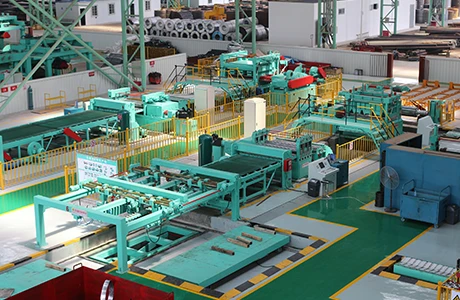

Steel coil slitting is a critical primary processing step in the metal fabrication supply chain, converting wide master coils into narrower strips for downstream applications. The precision of this process determines the quality of final products in sectors ranging from automotive parts to solar support structures. This guide examines the technical requirements and procurement criteria essential for selecting the right machinery to ensure dimensional accuracy and edge quality.
For industrial operators, the challenge lies in balancing production speed with strict tolerance levels. Inconsistent slitting can lead to material waste, camber issues, and assembly failures in high-precision environments. Understanding the intersection of mechanical rigidity, servo-driven precision, and material science is vital for maintaining a competitive edge in the metal processing industry.
Readers will explore the engineering benchmarks used to evaluate steel slitter manufacturers, the impact of automation on yield, and practical guidelines for specifying equipment. By focusing on technical evidence and operational efficiency, this analysis provides a framework for making informed investment decisions in slitting line technology.
Industrial Logic of Coil Slitting
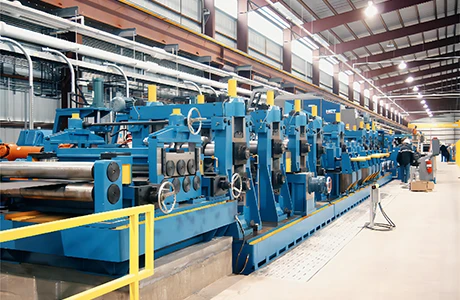
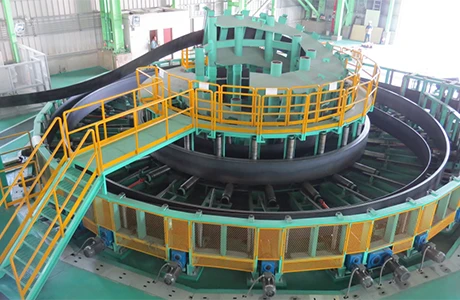
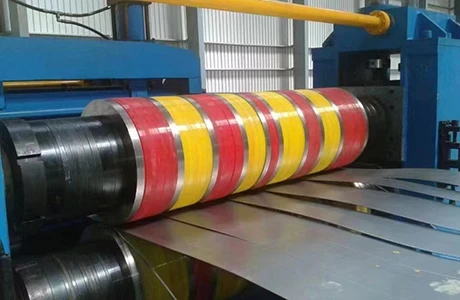
The core objective of a slitting line is to achieve a clean shear cut across the thickness of a steel coil without inducing excessive deformation or burrs. This process begins with an uncoiler that provides a steady feed of material, followed by a leveling stage to remove internal stresses from the master coil. The actual slitting is performed by rotating circular knives that apply high pressure to shear the metal. The mechanical stability of the machine frame is paramount; any vibration or misalignment at high speeds directly translates into width deviations. In modern B2B manufacturing, the transition from mechanical synchronization to independent servo control has revolutionized accuracy, allowing for real-time adjustments to knife positioning and tensioning. This technical evolution ensures that the resulting strips maintain the structural integrity required for subsequent cold roll forming or tube milling processes.
Strategic Procurement and Technical Evaluation
Selecting a slitting solution requires a deep analysis of the relationship between the material properties of the steel and the mechanical capabilities of the equipment. The following seven dimensions define the performance and value of a professional slitting line.
Precision Tooling and Roll Quality
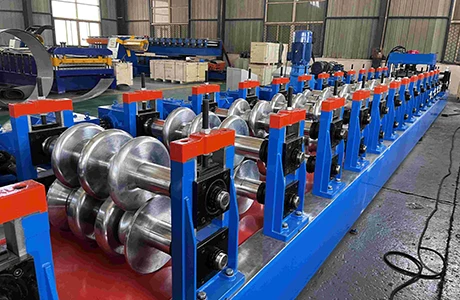
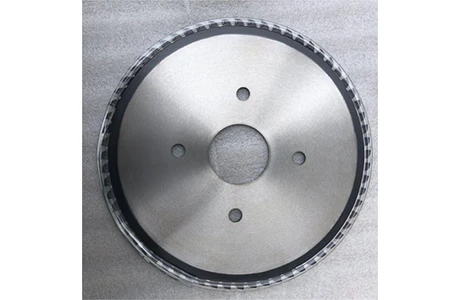
The quality of the slitter knives and spacers determines the edge quality of the strip. High-grade tool steel with specific hardness ratings is necessary to prevent premature wear, especially when processing high-strength carbon steel. The precision of the spacers ensures that the gap between knives remains constant across the entire width, preventing "slivers" or uneven edges.
| Tooling Component | Critical Requirement | Impact on Quality | Evaluation Metric |
|---|---|---|---|
| Slitter Knives | High Hardness/Wear Resistance | Edge Burr Reduction | Rockwell Hardness (HRC) |
| Precision Spacers | Micron-level Tolerance | Width Consistency | Dimensional Deviation (mm) |
| Arbor Shafts | High Rigidity/Anti-deflection | Flatness of Cut | Deflection Rate |
| Bearing Units | High Load Capacity | Rotation Stability | Vibration Frequency |
| Guide Rollers | Surface Smoothness | Prevention of Scratches | Surface Roughness (Ra) |
| Leveling Rolls | Parallelism | Material Flatness | Flatness Tolerance |
Material Compatibility and Yield Strength
Different steel grades respond differently to shearing. High-yield strength steels require significantly more force and more rigid machine structures to avoid shaft bending. A buyer must specify the maximum tensile strength of the material to ensure the motor torque and frame rigidity are sufficient to handle the load without compromising accuracy.
Production Continuity and Automation
To maximize ROI, automation in coil handling is essential. The use of double-head uncoilers allows for the preparation of the next coil while the current one is being processed. Integrating automatic shearing and butt welding systems further reduces downtime, ensuring a continuous flow of material into the slitting head and subsequent recoiler.
Customization of Slitting Widths
Versatility in width adjustment allows a facility to serve multiple market segments. Servo-driven positioning systems enable rapid changeovers between different product specifications. For enterprises like AIS Machinery, the ability to customize the roll sets based on specific customer drawings is a key differentiator in supporting diverse industrial applications.
Tension Control and Coil Winding
Proper tension during the recoiling process prevents the finished narrow coils from telescoping or becoming loose. Advanced tension control systems monitor the winding diameter and adjust the torque accordingly, ensuring that the stripped coils are tight and ready for immediate transport or further processing.
Quality Inspection Standards
Industrial quality control involves monitoring the strip width and edge burr height in real-time. Implementing automated measurement systems reduces the reliance on manual sampling and ensures that every meter of the produced strip adheres to the technical specifications provided by the end customer.
Equipment Lifecycle and Maintenance
The longevity of a slitting line depends on the maintenance of the cutting tools and the lubrication of moving parts. Regular calibration of the knife gaps and the use of high-quality bearings reduce the total cost of ownership. Evaluating the availability of spare parts and technical support from the supplier is critical for minimizing unplanned outages.
FAQ
What is the primary difference between a manual and a servo-driven slitting line?
Manual lines require physical adjustment of spacers and knives, which is time-consuming and prone to human error. Servo-driven lines use motorized precision actuators to position the tooling, significantly reducing changeover time and increasing width accuracy to micron levels, which is essential for high-precision industrial strips.
How does material thickness affect the choice of slitting equipment?
Material thickness directly impacts the required shearing force. Thicker materials necessitate larger motor power, more robust arbor shafts to prevent deflection, and specialized knife geometries to manage the heat and pressure generated during the cut. Failure to match equipment capacity to thickness results in poor edge quality and accelerated tool wear.
What causes "burrs" on the edge of the slit steel, and how can they be minimized?
Burrs are typically caused by excessive knife gaps, dull tooling, or improper alignment of the knives. To minimize them, operators should ensure knives are sharpened regularly, use precision spacers to maintain a tight and consistent gap, and verify that the machine frame is not vibrating during high-speed operation.
Can one slitting machine handle different grades of steel?
Yes, provided the machine is engineered for the highest yield strength among the grades being processed. While carbon steel and stainless steel can be processed on the same line, different knife materials (such as tungsten carbide for harder steels) may be required to maintain edge quality and tool life.
What information should I provide to a supplier for an accurate quotation?
Buyers should provide the maximum and minimum coil width, the range of material thicknesses, the steel grade and its yield strength, the maximum coil weight, the required finished strip widths, and the target production speed. This ensures the supplier can design a frame and drive system that meets actual operational loads.
Why is tension control important during the recoiling phase?
Without precise tension control, the narrow strips can wrap unevenly, leading to "telescoping" where the layers slide sideways. This makes the coils difficult to unwind in the next production stage and can cause damage to the edges of the material, reducing the overall usable yield of the coil.
References and further reading
- ASTM International Standards for Cold-Rolled Steel Sheet and Strip.
- Industrial Guidelines for Precision Metal Shearing and Slitting Tolerances.
- Technical Manual on Servo-Driven Automation in Metal Processing Lines.
 English
 Albanian
 Arabic
 French
 German
 Indonesian
 Italian
 Japanese
 Kazakh
 Korean
 Latin
 Macedonian
 Portuguese
 Russian
 Spanish
 Thai
 Turkish
 Ukrainian
 Uzbek