-
 Tel:86-15176910262
-

Search
 Tel:86-15176910262
Search
The precision processing of steel coils represents a critical juncture in the metal fabrication supply chain, where the transition from bulk raw material to specific industrial dimensions occurs. For procurement managers and plant engineers, identifying reliable cut to length machine manufacturers is no longer just about purchasing hardware, but about integrating a system that ensures dimensional accuracy and minimizes material waste.
The complexity of this process lies in the synergy between uncoiling, leveling, and shearing. Inconsistencies in any of these stages lead to camber, bowing, or uneven edges, which can compromise the integrity of downstream components, especially in high-precision ERW tube mills and structural steel production. As industries push for tighter tolerances and higher throughput, the engineering requirements for these lines have shifted toward greater automation and synchronization.
This technical analysis explores the critical engineering considerations for selecting cut-to-length systems, the impact of auxiliary equipment like loading trolleys on operational efficiency, and the evaluation frameworks used to distinguish high-performance machinery from baseline industrial offerings.


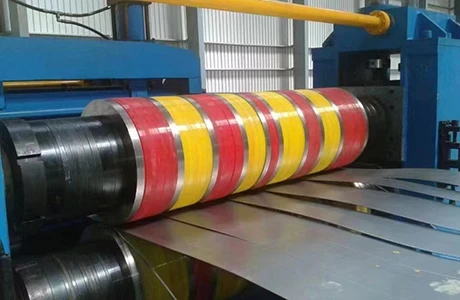
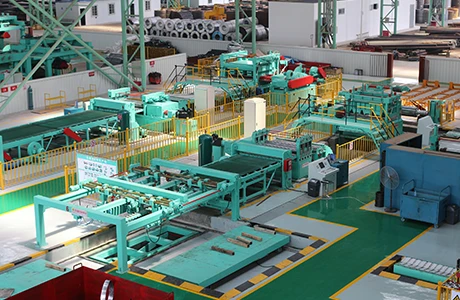
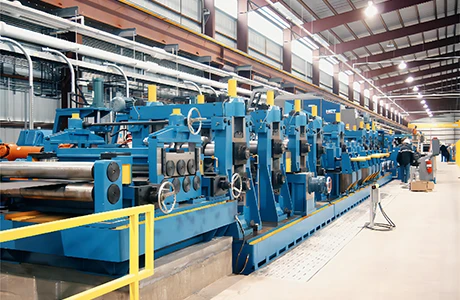
A professional cut-to-length line is a sequence of highly synchronized modules. It begins with the uncoiler, which manages the tension and release of the steel coil, followed by a flattening machine or leveler that removes the internal stresses and curvature inherent in coiled steel. The process concludes with a shearing mechanism that cuts the strip to precise lengths.
The structural integrity of the main frame is paramount; welded steel structures with high rigidity are required to prevent deflection under the weight of coils that can reach 20 tons. This rigidity ensures that the centerline remains constant, which is the foundation for dimensional accuracy across the entire length of the cut sheet.
The primary metric for evaluating machinery from cut to length machine manufacturers is the tolerance of the cut length and the flatness of the resulting sheet. Length accuracy is typically governed by the precision of the feed rollers and the synchronization between the feeding motor and the shear trigger. Any slippage in the rollers directly translates to length variance.
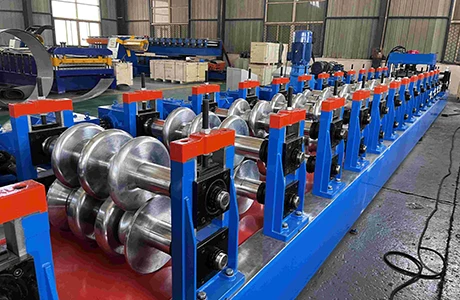
Coil width and outer diameter are the defining constraints for machine capacity. For instance, systems designed for a coil width range of 300–1600 mm must maintain consistent pressure across the entire width to avoid "edge wave" or center buckling. This requires optimized roller diameters and precisely calculated gap settings in the flattening section.
Furthermore, the drive system—whether electric with gearboxes or hydraulic—must offer stable torque delivery. High-precision wear-resisting tooling and CNC-milled key grooves are essential for ensuring that the mechanical transmission does not introduce backlash, which would otherwise degrade the cutting precision over time.
Feeding efficiency is often the hidden bottleneck in coil processing. The transition from the storage area to the uncoiler spindle is a high-risk operation involving heavy loads. Manual intervention in this stage not only slows down the cycle time but increases the risk of workplace accidents and coil damage.
When the loading trolley is electrically interlocked with the uncoiler, the system achieves a semi-automatic state that eliminates guesswork in coil positioning. This alignment is crucial because any eccentricity during the initial loading phase can lead to uneven tension during uncoiling, subsequently affecting the quality of the leveling process.
The overall effectiveness of a cut-to-length line is measured by its ability to maintain speed without sacrificing precision. The relationship between travel speed and cutting accuracy is a key trade-off; higher speeds can introduce vibration, which may lead to "burrs" or uneven edges on the cut steel.
Engineers evaluate system performance based on several normalized factors, including the stability of the drive system, the precision of the leveling rollers, and the efficiency of the coil loading cycle. These metrics provide a comparative baseline for assessing different machine configurations.
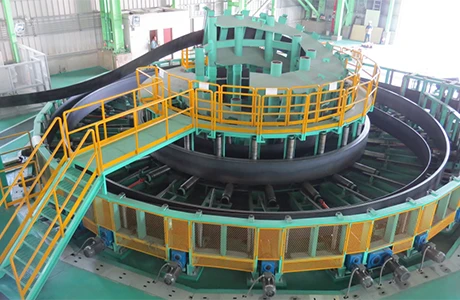
In a representative engineering scenario, a cut-to-length line is often integrated into a larger ERW (Electric Resistance Welding) tube mill facility. Here, the line is used to prepare raw material blanks for specialized components or to produce flat strips for secondary forming processes. The integration requires a seamless workflow from the coil car to the uncoiler, and eventually to the forming and sizing sections.
The operating environment in these plants is typically demanding, characterized by heavy dust and vibration. Consequently, the equipment must be built with high-strength welded steel frames and protected drive systems. The use of CNC-milled components and heat-treated gears ensures that the machinery remains wearable and efficient, reducing the noise and downtime associated with mechanical failure.
The industry is moving toward "intelligent" cut-to-length lines that utilize sensor-based feedback loops to adjust leveling pressure in real-time. By detecting material thickness variations or coil camber automatically, the system can adjust the roll gaps to maintain a consistent flatness profile without manual recalibration.
Another significant shift is the adoption of high-frequency induction welding and advanced shearing controls to further minimize material scrap. Integration with centralized ERP systems allows for dynamic length adjustments based on real-time order requirements, reducing the need for manual setup changes between different product batches.
Ultimately, the goal is a fully autonomous raw material input system where the coil car, uncoiler, and shearer communicate via a unified control panel, minimizing human error and maximizing the output of the entire tube mill line.
When evaluating offerings from various cut to length machine manufacturers, buyers should look beyond the headline specifications and analyze the configuration profile. The choice between a basic setup and a high-duty automated line depends entirely on the expected coil weight, the required precision of the final cut, and the volume of production.
A precision configuration, for example, will prioritize the quality of the flattening machine and the accuracy of the feed rollers, whereas a high-duty configuration will focus on the load-bearing capacity of the coil car and the durability of the main frame. Understanding these trade-offs is essential for calculating the long-term ROI of the investment.
The following matrix provides a framework for comparing different technical profiles based on typical industrial requirements.
| Configuration Profile | Max Coil Weight | Control Mode | Recommended Use Case |
|---|---|---|---|
| Basic Configuration | 3-5 Tons | Manual | Low-volume specialty shops |
| Standard Configuration | 5-10 Tons | Semi-Automatic | General structural steel prep |
| High-Duty Configuration | 10-20 Tons | Linked Control | Heavy industrial tube mills |
| Precision Configuration | 3-10 Tons | Automatic | High-tolerance automotive parts |
| Automated Configuration | 5-20 Tons | Fully Integrated | High-throughput factory lines |
| Industry Baseline | 5-15 Tons | Semi-Automatic | Standard API pipe production |
The loading trolley significantly impacts the downtime between coil changes. By automating the transport and alignment of steel coils from the ground to the uncoiler spindle, it eliminates the slow and imprecise process of manual crane positioning. A motorized trolley with precise lifting and centering capabilities ensures that the raw material is ready for processing immediately, thereby increasing the overall equipment effectiveness (OEE) of the tube mill line.
Length inaccuracy is primarily caused by slippage in the feed rollers and lack of synchronization between the feeding motor and the shearing mechanism. Additionally, if the material is not properly leveled, internal stresses can cause the strip to "spring back" or stretch, leading to dimensional variance. High-quality machinery utilizes CNC-positioned rollers and synchronized electronic controls to mitigate these issues.
Yes, but the capacity and precision depend on the material's yield strength and thickness. Harder grades of carbon steel require more robust leveling rollers and high-strength shearing blades. Most professional systems are designed for a range of carbon steel specifications, but buyers should verify the specific tonnage and hardness limits against the manufacturer's technical documentation to ensure the tooling can withstand the operational stress.
The flattening machine removes the "coil set" or curvature that occurs when steel is wound into a coil. Without proper leveling, the resulting cut sheets will have residual stresses, causing them to bow or warp after being cut. This is especially critical for downstream processes like ERW tube welding, where flat raw material is required for a consistent seam and accurate diameter.
Hydraulic systems are generally preferred for heavy-duty lifting and high-force shearing due to their immense power density and shock absorption. Electric drive systems, particularly those with servo motors, offer superior precision and easier integration with automated control systems. The choice depends on whether your priority is raw power (hydraulic) or high-precision, high-speed synchronization (electric).
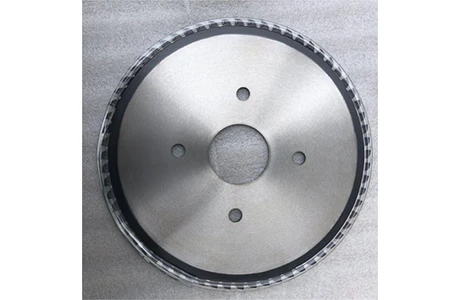
Regular maintenance focuses on three areas: the shearing blades, the feed rollers, and the drive alignments. Blades must be sharpened or replaced to prevent burrs; rollers must be checked for wear to avoid slippage; and all mechanical couplings and key grooves should be inspected for backlash. Using CNC-milled, heat-treated components reduces the frequency of these interventions by increasing the overall wear resistance of the system.
The selection of a coil processing system is an exercise in balancing throughput, precision, and structural durability. We have seen that the efficiency of a line is not solely dependent on the shearer, but is heavily influenced by the front-end feeding logic and the rigidity of the system architecture. The integration of components like the loading trolley transforms a fragmented process into a streamlined industrial workflow.
For enterprises seeking to optimize their production, the focus should remain on the synergy between uncoiling and leveling. By partnering with experienced cut to length machine manufacturers who prioritize CNC precision and structural rigidity, plants can ensure a stable raw material input that minimizes waste and maximizes the quality of the final welded pipe or structural product.

Send a Message
Dear customer, thank you for your attention! We provide high-quality machinery and equipment and look forward to your orders. Please inform us of your needs and we will respond quickly!