


Industrial Round to Square Cold Roll Forming Machine Price Guide
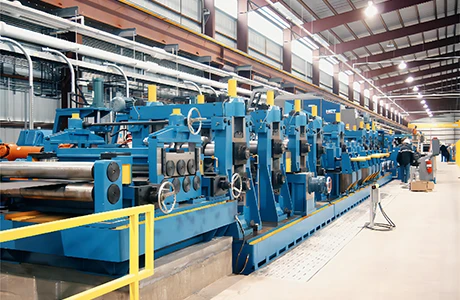
Transitioning from a standard round tube to a high-precision square or rectangular profile requires more than just pressure; it demands a controlled sequence of plastic deformation. For manufacturers in the structural steel and automotive sectors, the round-to-square cold forming process is the industry standard for achieving superior weld seam alignment and structural integrity. By utilizing a series of precision sizing and forming rolls, raw welded tubes are progressively reshaped, ensuring that the final product maintains strict dimensional tolerances and clean, sharp corners.
Whether you are producing solar support piles, mechanical frames, or furniture tubing, the efficiency of your production line depends on the synergy between the HF welding unit and the subsequent sizing section. Understanding the technical nuances of this transformation—from pre-forming to final shaping—allows operators to reduce material waste and minimize tooling wear, ultimately optimizing the total cost of ownership for the equipment.

The Technical Mechanics of Round-to-Square Cold Deformation
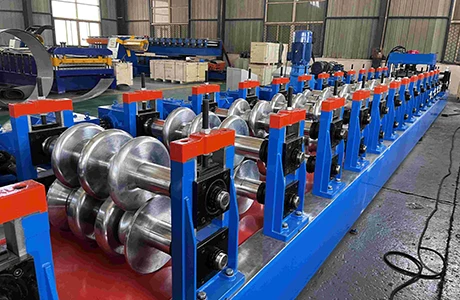
The transformation of a fully welded round tube into a square or rectangular section is achieved through stepwise deformation. Unlike direct square forming, this process involves three distinct stages: pre-forming, transitional forming, and final shaping. This gradual approach prevents the material from cracking and ensures that the stress is distributed evenly across the tube wall.
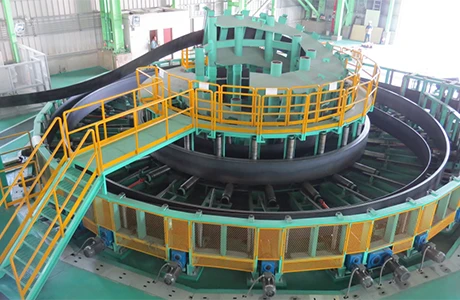
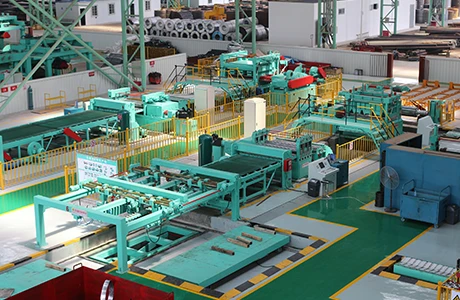
The process flow begins with the raw material being fed through the forming section and HF welding. After the burr removal and cooling phases, the tube enters the round-to-square unit. Here, the cold bending principle is applied, utilizing plastic deformation across multiple roll passes. This method is particularly advantageous for mid-to-thick wall tubes and high-strength materials, as it keeps the weld seam centralized, which significantly enhances the overall structural performance of the finished pipe.
- Pre-forming: Initial break of the round profile to establish the primary axes.
- Transitional Forming: Gradual shaping of the corners and flattening of the sides.
- Final Sizing: High-precision rolls ensure the final dimensions and edge straightness.

Engineering Specifications and Material Compatibility
To maintain high processing accuracy, the mechanical components of the forming line are constructed from high-grade alloys. The shafts are manufactured from 40Cr and undergo HF tempering quenching to resist wear and deformation under high loads. Bevel gears are crafted from 20CrMnTi, ensuring smooth power transmission across the driven stands.
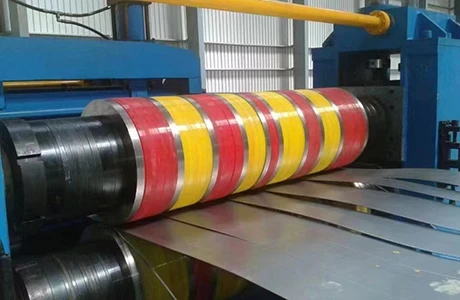
The system is designed to handle a wide range of raw materials, including Cold Rolled (CR) bright tubes (oiled), Galvanized steel, and Hot Rolled (HR) coils. With a maximum tensile strength capacity of 517MPa and yield strength of 460MPa, the machinery can process strip thicknesses from 2.0mm up to 6.35mm. This versatility allows manufacturers to switch between producing standard structural pipes and specialized solar piles without requiring a complete overhaul of the primary driving units.
One of the key engineering advantages is the flexible tooling design. When changing product specifications, only the final forming and sizing rolls need to be replaced. This significantly reduces downtime and minimizes the need for extensive tooling inventories, making the line highly adaptable to fluctuating market demands.
Optimizing Production for Industrial Applications
The application of round-to-square forming extends across multiple heavy industries. In the construction of mechanical frames and automotive profiles, dimensional accuracy is non-negotiable. The use of CNC adjustments and inline measuring systems ensures that every piece of tubing meets the exact edge and angle precision required for assembly.
For the solar energy sector, where piles must withstand environmental stress, the centralized weld seam provided by this process is a critical safety feature. By reducing the likelihood of weld failure during the shaping process, the resulting pipes offer higher reliability for large-scale installations. Additionally, the reduced energy consumption compared to direct forming methods helps plants lower their operational overhead.
Common challenges such as "bamboo-like" defects or edge waviness are addressed through the optimization of the deformation rate per pass. By balancing the pressure in the sizing unit and ensuring symmetrical roll forces, manufacturers can eliminate these surface imperfections, ensuring a high-quality finish that requires minimal post-processing.
Technical Design Data for Cold Forming Lines
| Parameter Category | Minimum Specification | Maximum Specification | Material/Component |
|---|---|---|---|
| Raw Material Strip | 2.0mm Thickness / 240mm Width | 6.35mm Thickness / 520mm Width | CR, HR, Galvanized |
| Round Tube OD | 76mm | 165mm | Steel Coil |
| Square Hollow Section | 60x60mm | 130x130mm | Structural Steel |
| Rectangular Section | 80x40mm | 100x160mm | Structural Steel |
| Shaft Metallurgy | 40Cr HF Quenched | 40Cr HF Quenched | High-Wear Alloy |
Evaluating Quality Control and Tooling Longevity
Achieving consistent corner quality is the primary metric for evaluating a cold forming line. In high-end production, corners are formed through gradual pressing across multiple rolls to prevent stress fractures. Misalignment or over-rounded corners typically stem from improper roll design or unbalanced pressure settings, both of which can be corrected through precision CNC calibration.
Tooling longevity is directly tied to the material selection of the rolls and the efficiency of the lubrication system. By using 40Cr shafts and optimizing the deformation rate, the wear and tear on the sizing section are minimized. This is particularly important when working with high-strength steels, where the friction between the roll and the tube is significantly increased.
Furthermore, the integration of a de-burring frame and a cooling unit before the sizing stage ensures that the material is at the optimal temperature and surface smoothness. This prevents the transfer of weld burrs into the sizing rolls, which would otherwise cause scoring on the finished pipe surface and accelerate roll degradation.
Strategic Procurement Considerations for Pipe Mills
When analyzing the cold roll forming machine price, buyers must look beyond the initial capital expenditure and evaluate the "cost per ton" of production. A line that offers faster changeovers and lower tooling wear will provide a much higher return on investment (ROI) over a five-year period than a cheaper, less precise alternative.
Customization is another critical factor. A turnkey solution that includes everything from the uncoiler to the flying saw ensures that there are no bottlenecks in the production flow. Buyers should prioritize suppliers who can provide integrated solutions, including hydro testers and automatic packaging machines, to create a fully autonomous production environment.
Finally, the ability to scale production is essential. Choosing a machine that can handle a variety of profiles—from round to square and rectangular—allows a manufacturer to pivot their product offering based on market demand without investing in entirely new production lines. This flexibility is the key to remaining competitive in the global metal products market.
Technical Frequently Asked Questions
Why choose the round-to-square process instead of direct square forming?
The round-to-square method ensures better weld seam alignment, stronger structural integrity, and greater tooling flexibility, especially for mid-to-thick wall and high-strength materials.
How is the corner quality controlled? What are the common issues?
Corners are formed through gradual pressing in multiple roll passes. Issues like cracking, over-rounded corners, or misalignment can be resolved by optimizing roll design and adjusting pressure settings.
How can weld seam misalignment be prevented during forming?
Keep the weld seam centered after welding and ensure symmetrical roll forces during forming. Optional weld seam tracking systems can further stabilize seam position.
Is it necessary to replace the entire roll set when changing tube specifications?
No. Only the round-to-square and sizing sections need to be changed, significantly reducing downtime and tooling costs.
What causes edge waviness or "bamboo-like" defects in the finished pipe?
These are typically due to excessive deformation per pass or improper roll design. Adjusting the deformation rate and optimizing pressure balance in the sizing unit can solve this.
Is the round-to-square process suitable for small-size thin-wall tubes?
Generally not. Thin-wall small tubes are prone to instability or cracking during transformation. Direct square forming is more appropriate for such sizes.
Technical Industry References
- ISO Standards for Steel Tube Dimensions
- ASTM International Material Specifications
- American Petroleum Institute (API) Pipe Standards
- World Steel Association Technical Guidelines
Selecting the right forming equipment is a balance between technical precision and operational efficiency. By focusing on the quality of the sizing section and the durability of the roll metallurgy, manufacturers can ensure a stable production output that meets the highest international standards.
Related Equipment Solutions



 English
 Albanian
 Arabic
 French
 German
 Indonesian
 Italian
 Japanese
 Kazakh
 Korean
 Latin
 Macedonian
 Portuguese
 Russian
 Spanish
 Thai
 Turkish
 Ukrainian
 Uzbek