


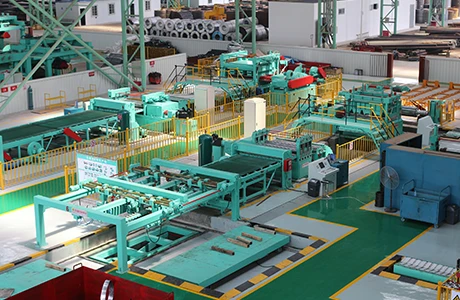
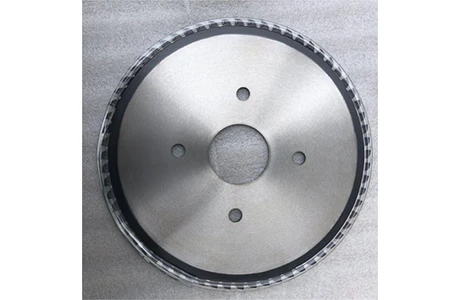
Top Coil Slitting Line Manufacturers and Round to Square Forming
Achieving precise geometric transitions in steel tube production requires a sophisticated balance of mechanical force and material science. The round-to-square forming process is a critical engineering solution for manufacturers producing square and rectangular hollow sections, moving beyond simple bending to a controlled plastic deformation of fully welded round tubes. This method is particularly essential for high-strength materials where structural integrity and weld seam centering are non-negotiable requirements for construction and automotive frames.
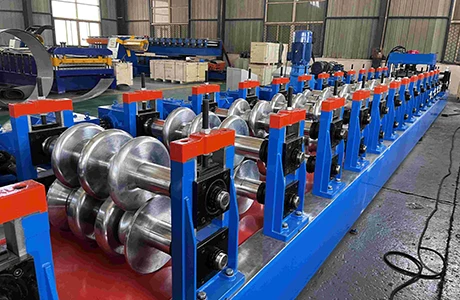
By utilizing a series of precision sizing and forming rolls under cold forming conditions, this technology allows for a seamless transformation of the tube profile. For operations integrating these systems, the ability to rapidly switch specifications through flexible tooling—replacing only final sizing rolls—offers a significant competitive advantage in production agility. Whether for solar support piles or mechanical frames, the precision of the cold bending principle ensures that the finished pipe meets rigorous dimensional tolerances.

Engineering the Round-to-Square Transformation Process
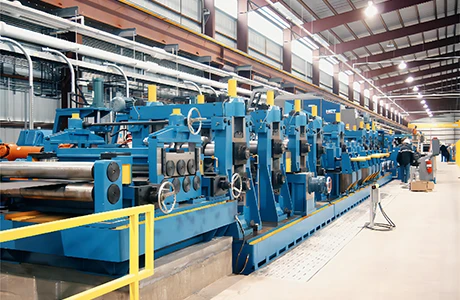
The technical core of round-to-square forming lies in stepwise deformation. Unlike direct forming, this process begins with a high-frequency (HF) welded round tube which is then subjected to three distinct stages: pre-forming, transitional forming, and final shaping. This progressive modification of the profile prevents material stress concentration and reduces the risk of cracking, especially when working with HR coils or galvanized steel with tensile strengths up to 517MPa.
The operational flow is meticulously sequenced to maintain quality: Raw material feeding leads to forming and HF welding, followed by burr removal and cooling. The transition to a square profile occurs in the dedicated round-to-square section, ending with final sizing and a flying saw for precise cutting. This sequence ensures that the weld seam remains centralized, which is a primary technical advantage for increasing the structural performance of the finished hollow section.
- Cold Bending Principle: Utilizes plastic deformation across multiple roll passes to modify the profile without heat.
- CNC Precision: Integrated inline measuring systems ensure edge and angle precision.
- Material Versatility: Capable of processing CR bright tubes, galvanized steel, and HR coils.

Technical Specifications and Machine Performance
The performance of a forming line is defined by its ability to handle various material grades and thicknesses while maintaining stability. The proposed line is engineered to manage coil weights up to 7000 kg, with strip thicknesses ranging from 2.0mm to 6.35mm. The use of 40Cr shaft materials, treated with HF tempering and quenching, ensures that the forming and sizing sections can withstand the immense pressures required for deformation without premature wear.
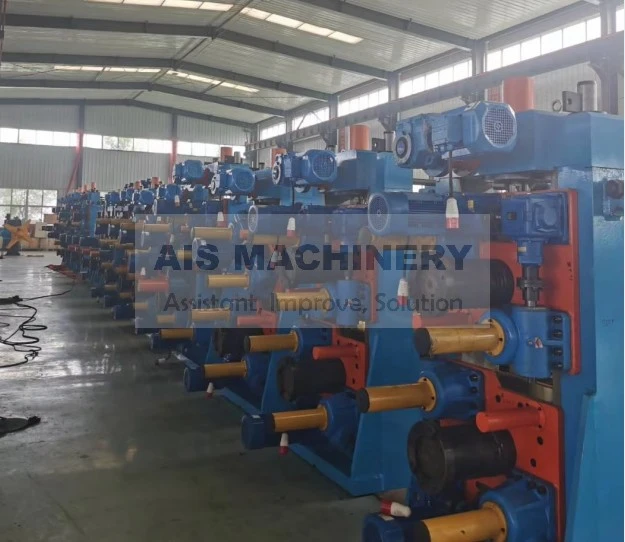
The mechanical configuration consists of 7 driven stands and 8 idle stands in the forming section, complemented by a robust sizing section with 5 driven and 5 idle stands. This redundancy in support ensures that the tube remains perfectly straight as it transforms from a round diameter (up to 165mm) into square sections up to 130x130mm. The use of 20CrMnTi for bevel gears further enhances the transmission efficiency and longevity of the gearboxes.
Industrial Applications and Strategic Value
Precision square and rectangular tubing are indispensable in modern infrastructure. In the solar energy sector, these profiles are used for high-stability support piles that must withstand environmental loads. In the automotive and furniture industries, the clean corners and straight edges provided by the round-to-square process allow for easier assembly and superior aesthetic finishing.
From a commercial perspective, the primary value of this technology is the reduction in tooling costs. Since only the final forming and sizing rolls need to be replaced for different specifications, manufacturers can reduce downtime significantly. This flexibility is crucial for workshops that handle a diverse portfolio of products, from low-pressure fluid conduits to complex mechanical frames, allowing them to respond to market demands with minimal re-tooling overhead.
Technical Design Data and Production Range
| Parameter Category | Minimum Specification | Maximum Specification | Material/Component |
|---|---|---|---|
| Raw Material Thickness | 2.0 mm | 6.35 mm | HR Coil / Galvanized |
| Round Tube OD | 76 mm | 165 mm | 40Cr Shaft Material |
| Square Section Size | 60 x 60 mm | 130 x 130 mm | 20CrMnTi Bevel Gear |
| Material Tensile Strength | - | 517 MPa | Cold Roll Forming |
| Coil Weight Capacity | - | 7000 kg | ISO/CE Certified |
Optimizing Corner Quality and Weld Alignment
One of the most common challenges in tube forming is the appearance of "bamboo-like" defects or edge waviness. These issues typically stem from excessive deformation per pass or an imbalance in pressure within the sizing unit. By optimizing the deformation rate and utilizing symmetrical roll forces, these defects can be eliminated, resulting in a smooth, industrial-grade finish.
Weld seam misalignment is another critical concern. To prevent the seam from shifting during the transformation to a square profile, the seam must be kept strictly centered after the HF welding process. Advanced configurations may include weld seam tracking systems to further stabilize the position, ensuring that the structural integrity of the tube is not compromised at the corners where stress is highest.
Evaluating Supplier Capabilities for Forming Lines
When selecting among various coil slitting line manufacturers and pipe mill suppliers, buyers must evaluate the depth of engineering design and the quality of the components used. A reliable supplier should offer a complete turnkey solution, including not only the main forming line but also finishing equipment such as threading machines, end facers, and hydro testers to ensure a fully integrated production flow.
Quality certifications like ISO, CE, and SGS serve as a baseline, but the true measure of a manufacturer is their ability to provide customized solutions. The capacity to tailor the line to specific material yield strengths (up to 460MPa) and precise dimensional requirements ensures that the equipment will perform reliably in a high-capacity industrial environment. Buyers should prioritize suppliers who can demonstrate a track record of serving diverse global markets, from Southeast Asia to the USA.
Frequently Asked Questions
Why choose the round-to-square process instead of direct square forming?
The round-to-square method ensures better weld seam alignment, stronger structural integrity, and greater tooling flexibility, especially for mid-to-thick wall and high-strength materials.
How is the corner quality controlled? What are the common issues?
Corners are formed through gradual pressing in multiple roll passes. Issues like cracking, over-rounded corners, or misalignment can be resolved by optimizing roll design and adjusting pressure settings.
How to prevent weld seam misalignment during forming?
Keep the weld seam centered after welding and ensure symmetrical roll forces during forming. Optional weld seam tracking systems can further stabilize seam position.
Do we need to replace the entire roll set when changing specifications?
No. Only the round-to-square and sizing sections need to be changed, significantly reducing downtime and tooling costs.
What causes edge waviness or "bamboo-like" defects?
These are typically due to excessive deformation per pass or improper roll design. Adjusting the deformation rate and optimizing pressure balance in the sizing unit can solve this.
Is round-to-square suitable for small-size thin-wall tubes?
Generally not. Thin-wall small tubes are prone to instability or cracking during transformation. Direct square forming is more appropriate for such sizes.
Technical References
- ISO Standards for Steel Pipe Manufacturing
- ASTM International Material Specifications
- CE Machinery Safety Directives
- SGS Quality Inspection Protocols
For enterprises seeking to optimize their hollow section production, selecting a system based on the round-to-square principle provides the best balance of structural strength and operational flexibility. We recommend consulting with engineering specialists to align the roll design with your specific material yield strengths and target tolerances.
Related Industry Insights


 English
 Albanian
 Arabic
 French
 German
 Indonesian
 Italian
 Japanese
 Kazakh
 Korean
 Latin
 Macedonian
 Portuguese
 Russian
 Spanish
 Thai
 Turkish
 Ukrainian
 Uzbek