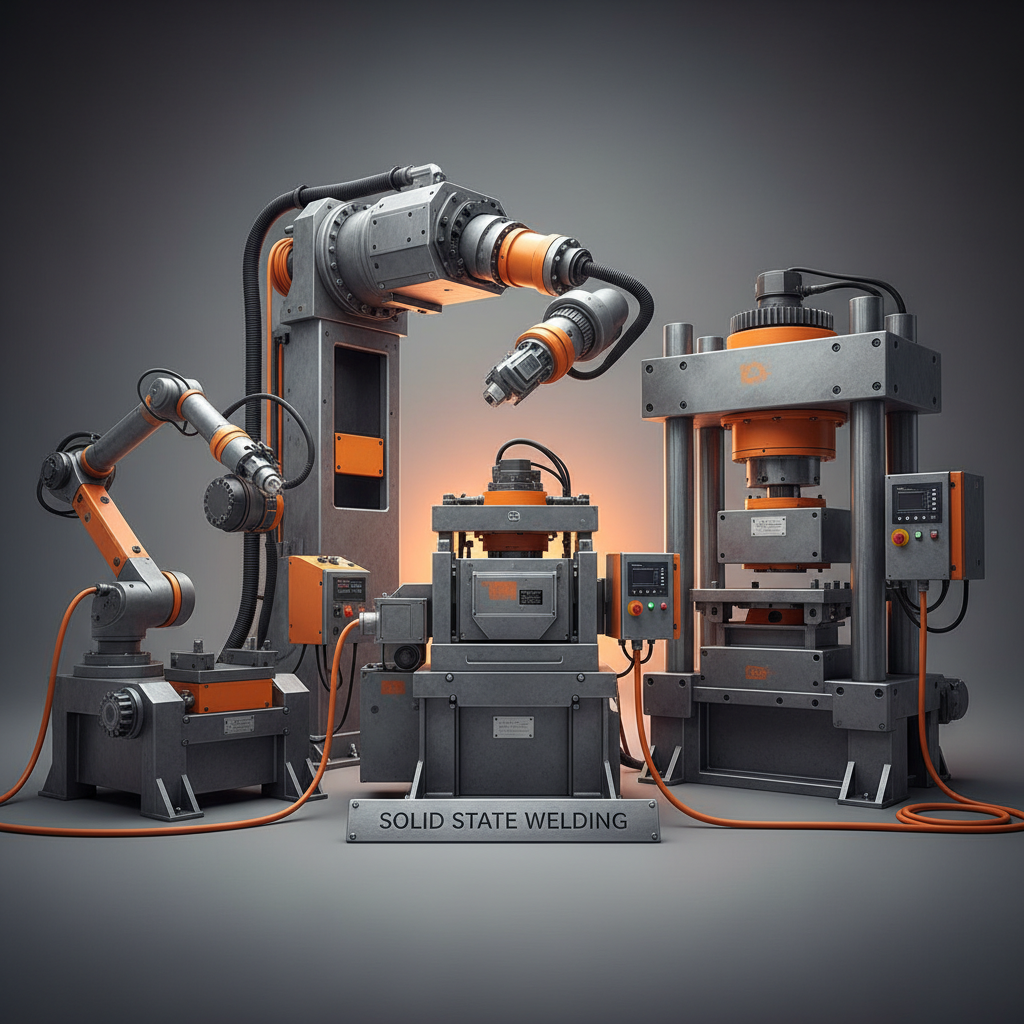
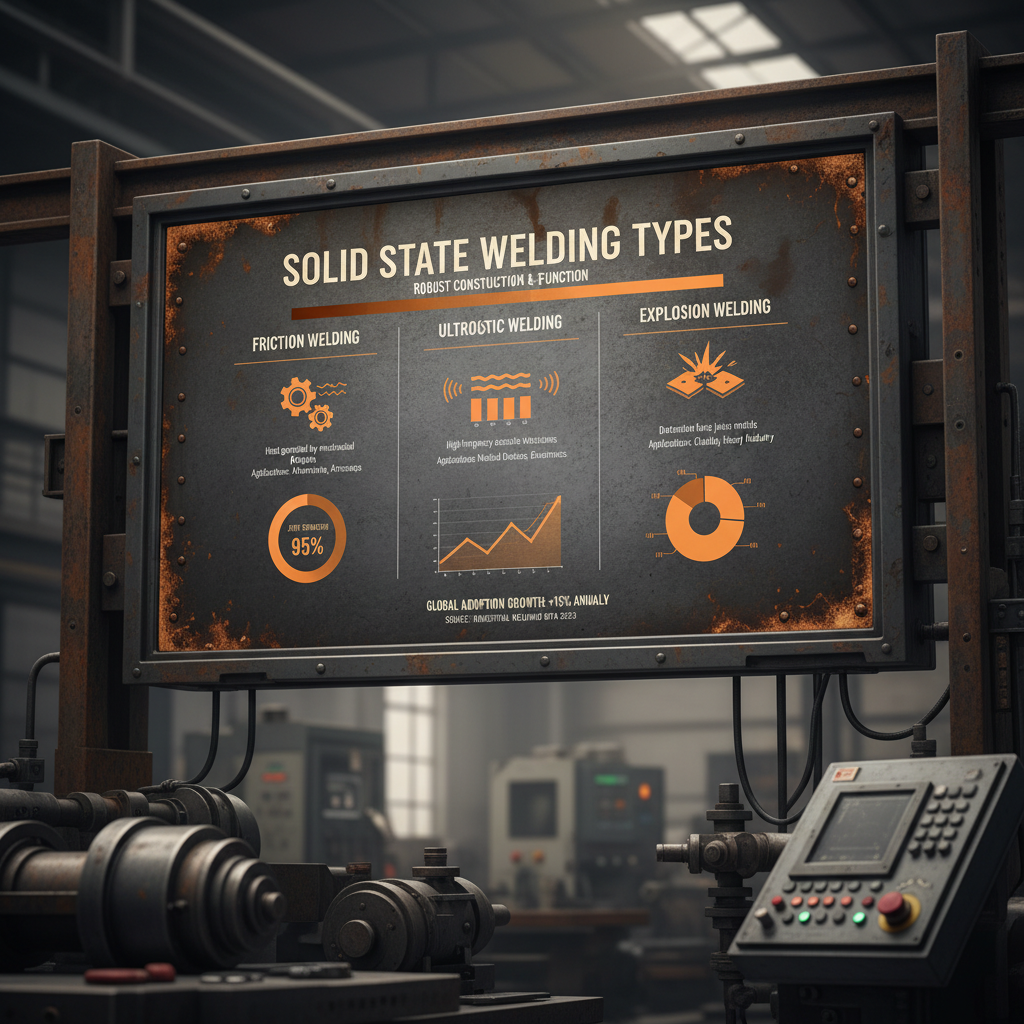
Solid state welding types represent a revolutionary approach to joining materials, differing significantly from traditional welding methods that rely on melting. These techniques offer numerous advantages, including reduced heat-affected zones, minimized distortion, and the ability to join dissimilar metals. Understanding these processes is crucial in modern manufacturing, aerospace, automotive, and numerous other industries where high-integrity joints are paramount. The growing demand for lightweight materials and energy-efficient processes further elevates the importance of solid state welding types.
Globally, the adoption of solid state welding types is steadily increasing, driven by the need for advanced materials and complex component designs. According to reports from the International Institute of Welding (IIW), the market for solid state joining technologies is projected to grow at a compound annual growth rate (CAGR) of approximately 6-8% over the next decade. This growth is particularly prominent in regions with strong manufacturing sectors, such as North America, Europe, and Asia-Pacific. The ability to create highly reliable and durable joints without the drawbacks of traditional welding positions solid state welding types as a key technology for future industrial advancements.
At its core, solid state welding types involve joining materials under pressure and temperature below the melting point of either material. This is achieved through various methods, all leveraging plastic deformation at the atomic level to create a strong metallurgical bond. This distinct characteristic sets it apart from fusion welding, leading to superior joint properties and a wider range of application possibilities. The benefits extend beyond material compatibility, including improved fatigue resistance and reduced susceptibility to cracking – critical considerations in high-stress environments.
Introduction to solid state welding types
Solid state welding types are a group of joining processes that create coalescence at a temperature below the melting point of the base materials. This contrasts with traditional fusion welding methods, offering a distinct set of advantages for specific applications. The importance of understanding these techniques lies in their ability to join dissimilar metals, minimize distortion, and achieve high-quality, durable joints.
The growing demand for lighter, stronger, and more energy-efficient materials is driving the increased adoption of solid state welding types. Industries like aerospace, automotive, and electronics are increasingly reliant on these processes to meet stringent performance and reliability requirements. By minimizing the heat-affected zone and preserving the material’s original properties, solid state welding types contribute to overall product longevity and performance.
Defining Solid State Welding Types
Solid state welding types are fundamentally different from fusion welding, where materials are melted and then solidified to form a joint. Instead, these techniques rely on the application of pressure, often combined with moderate heat, to induce plastic deformation and create a metallurgical bond between the surfaces. This process doesn't involve a liquid phase, resulting in significantly reduced distortion and the preservation of material properties.
These methods are critical in scenarios where maintaining the integrity of the base materials is paramount. For example, in aerospace applications, minimizing heat distortion is crucial to prevent stress concentrations and potential failure. Similarly, in joining dissimilar metals, solid state welding types avoid the formation of brittle intermetallic compounds that can compromise joint strength.
The significance of solid state welding types extends beyond material compatibility. These methods are also valuable in producing joints with minimal porosity and oxidation, leading to enhanced corrosion resistance and improved overall joint performance, especially when considering long-term exposure to harsh environments.
Key Characteristics of solid state welding types
Durability is a cornerstone characteristic of solid state welding types. Because the base materials aren't melted, the resulting joints often exhibit superior fatigue strength and resistance to cracking compared to fusion welds. This is especially crucial in applications subject to cyclic loading or vibration, such as aircraft structures and automotive components.
Scalability refers to the ability to adapt solid state welding types to various production volumes and geometries. Certain techniques, like friction stir welding, are well-suited for both small-batch prototyping and high-volume manufacturing. This flexibility makes these processes attractive to a wide range of industries. However, achieving consistent results across different scales requires careful process control and parameter optimization.
Cost efficiency is a complex factor, varying depending on the specific technique and application. While initial equipment costs for some solid state welding types can be higher than for traditional fusion welding, the reduced need for consumables (like filler metals and shielding gases) and the elimination of post-weld heat treatment can often result in lower overall costs. Furthermore, the improved joint quality and reduced rework associated with solid state welding types contribute to long-term cost savings.
Applications Across Industries
In the aerospace industry, solid state welding types like friction stir welding (FSW) are extensively used to join aluminum alloys for aircraft fuselages and wing structures. FSW’s ability to create high-strength, lightweight joints with minimal distortion is essential for maintaining structural integrity and reducing fuel consumption. The process also excels in joining dissimilar alloys.
The automotive industry utilizes solid state welding types for manufacturing engine blocks, transmission housings, and chassis components. These processes offer advantages in joining aluminum alloys to steel, creating lighter vehicles with improved performance and fuel efficiency. Furthermore, the reduced heat input minimizes distortion, enabling precise component alignment.
The electronics industry leverages solid state welding types, particularly ultrasonic welding, for bonding components in microelectronic devices and circuit boards. This technique provides precise, localized joining without damaging sensitive electronic components. It is especially suitable for joining dissimilar materials with varying thermal expansion coefficients.
Comparison of solid state welding types Methods
Advantages and Long-Term Value
The cost savings associated with solid state welding types extend beyond material consumption. Reduced rework, minimized distortion, and the elimination of costly post-weld heat treatments contribute significantly to overall project efficiency. This is particularly important in industries where precision and quality are paramount.
From a sustainability perspective, solid state welding types generally consume less energy and produce fewer emissions compared to traditional fusion welding. The elimination of fumes and spatter also creates a safer working environment, reducing health risks for welding personnel. By reducing waste and minimizing environmental impact, solid state welding types align with growing global sustainability initiatives.
Future Trends and Innovations
Ongoing research focuses on developing hybrid solid state welding techniques, combining multiple processes to achieve synergistic effects. For example, combining friction stir welding with ultrasonic vibrations can further enhance joint properties and expand the range of materials that can be joined.
The integration of artificial intelligence (AI) and machine learning (ML) is poised to revolutionize process control in solid state welding types. AI algorithms can analyze real-time data from sensors to optimize welding parameters, predict defects, and ensure consistent joint quality. This will lead to increased automation and improved efficiency.
Further development of advanced materials, such as nanostructured alloys, will broaden the application scope of solid state welding types. These materials offer unique properties that can be fully realized through the precision and control offered by these joining processes.
Challenges and Solutions in solid state welding types
One of the primary challenges in solid state welding types is achieving consistent results with dissimilar metal combinations. Variations in thermal properties and plastic flow characteristics can lead to defects and reduced joint strength. Careful selection of welding parameters and the use of interlayer materials can mitigate these challenges.
Process monitoring and control remain crucial areas for improvement. Real-time monitoring of key parameters like temperature, pressure, and tool wear is essential for ensuring consistent joint quality. Implementing closed-loop control systems based on feedback from sensors can optimize welding parameters and minimize deviations.
Another challenge lies in the geometric limitations of some solid state welding types. Certain processes, like friction stir welding, require specific joint configurations and can be difficult to apply to complex geometries. Developing innovative tooling and process variations is necessary to overcome these limitations and expand the applicability of solid state welding types.
Summary of Challenges and Solutions for solid state welding types
| Challenge |
Material Compatibility |
Process Control |
Geometric Limitations |
| Description |
Difficulty joining dissimilar metals due to varying properties. |
Maintaining consistent weld quality requires precise control. |
Certain processes are limited by joint geometry. |
| Impact |
Reduced joint strength, potential defects. |
Inconsistent weld quality, increased rework. |
Restricts application to specific designs. |
| Solution |
Use of interlayer materials, parameter optimization. |
Real-time monitoring, closed-loop control. |
Tooling innovation, process adaptation. |
| Implementation Cost |
Moderate - requires material selection & testing (Rating: 6/10) |
High - sensors, software, & integration (Rating: 8/10) |
Moderate - design & tooling changes (Rating: 7/10) |
| Long-Term Benefits |
Increased material versatility, improved joint reliability. |
Consistent quality, reduced waste, & improved efficiency. |
Expanded application range, greater design flexibility. |
| Risk Factor |
Material incompatibility not always predictable. |
System complexity & maintenance requirements. |
Potential for reduced weld strength in modified processes. |
FAQS
Solid state welding types offer several key advantages over fusion welding, including reduced heat input, minimized distortion, the ability to join dissimilar metals, and improved joint properties like fatigue strength and corrosion resistance. Because the base materials aren’t melted, the resulting joints typically have a finer grain structure and fewer residual stresses, leading to greater durability and reliability. They also often require less post-weld heat treatment.
The aerospace, automotive, and electronics industries are at the forefront of solid state welding types adoption. Aerospace benefits from lightweight, high-strength joints for aircraft structures. Automotive utilizes the technology for joining aluminum alloys to steel for improved fuel efficiency. Electronics rely on its precision for bonding delicate components. These industries all require high-performance materials and complex component designs that are well-suited to solid state welding types.
Friction stir welding can be limited by geometric constraints, particularly for complex shapes or internal joints. It also requires robust fixturing to withstand the significant forces involved. Addressing these limitations involves developing specialized tooling, employing multi-axis machines for enhanced accessibility, and optimizing process parameters to reduce clamping forces. Furthermore, careful joint design can minimize accessibility issues.
The initial investment in solid state welding equipment can be higher than for traditional fusion welding. However, the reduced need for consumables (like filler metals and shielding gases), the elimination of post-weld heat treatment, and decreased rework often lead to lower overall costs, especially for high-volume production. The enhanced joint quality and improved reliability also contribute to long-term cost savings.
AI and machine learning will be crucial for optimizing process control in solid state welding types. AI algorithms can analyze real-time data from sensors to predict defects, adjust welding parameters dynamically, and ensure consistent joint quality. This will lead to increased automation, reduced human error, and improved efficiency. The use of AI will also enable the development of new welding strategies for challenging materials and geometries.
Generally, yes. Solid state welding types typically consume less energy and produce fewer emissions compared to fusion welding processes. The elimination of fumes and spatter creates a cleaner and safer working environment. By reducing material waste and improving energy efficiency, these processes contribute to more sustainable manufacturing practices. The reduction in the need for shielding gases also supports environmental sustainability.
Conclusion
Solid state welding types represent a significant advancement in joining technology, offering numerous advantages over traditional fusion welding methods. From enhanced joint properties and material versatility to improved cost-efficiency and sustainability, these processes are reshaping industries like aerospace, automotive, and electronics. Understanding the nuances of different solid state welding types and their respective applications is crucial for engineers and manufacturers seeking to optimize performance and innovation.
As research continues to advance and new materials emerge, the potential of solid state welding types will only grow. The integration of AI, machine learning, and innovative tooling promises to overcome current limitations and expand the application scope of these processes. Investing in the development and implementation of solid state welding types is not merely adopting a new technology; it's investing in a future of stronger, lighter, and more sustainable products. Visit our website at www.aistubemill.com to learn more about our solid state welding solutions.

 Tel:86-15176910262