

Selecting a professional cold roll forming machine factory is a critical strategic decision for any enterprise operating within the general equipment and metal products manufacturing sector. As the demand for precision structural components, automotive frames, and solar mounting systems grows, the ability to transform flat metal coils into complex profiles with high dimensional stability becomes a primary competitive advantage.
Many manufacturers struggle with inconsistencies in profile geometry, excessive material waste, or equipment that cannot scale with increasing production volumes. These challenges often stem from a mismatch between the machine's technical configuration and the specific material properties of the steel or aluminum being processed, leading to operational downtime and increased labor costs.
This analysis provides a comprehensive framework for evaluating roll forming capabilities, focusing on technical parameters, integration with tube mill lines, and the specific criteria required to select a manufacturing partner that ensures long-term equipment reliability and production efficiency.

The Core Mechanics of Cold Roll Forming

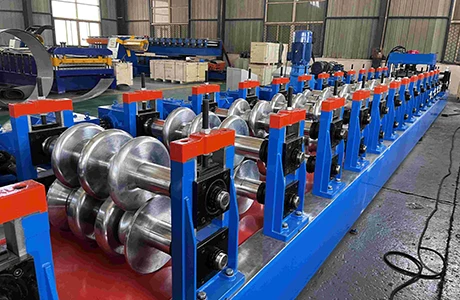
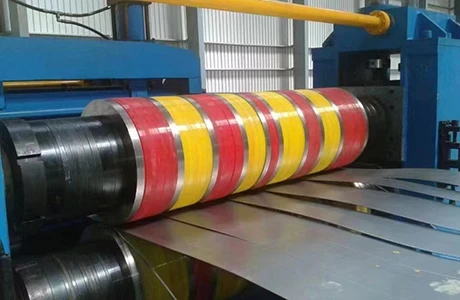
Cold roll forming is a continuous bending operation that shapes flat metal strips into specific profiles by passing them through a series of rollers. Unlike press braking, which forms the metal in a single stroke, roll forming distributes the deformation across multiple stations. This gradual process prevents material stress and ensures that the final product maintains a consistent cross-section over long lengths, which is essential for structural integrity in construction and automotive applications.
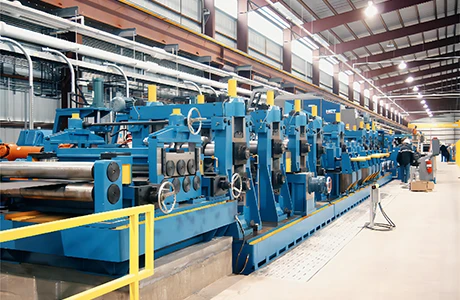
In a professional cold roll forming machine factory, the engineering focus is on the "roll pass design." Each pair of rollers is precisely calculated to bend the metal by a specific degree without exceeding the material's elastic limit. When producing specialized profiles like CZLU purlins or Hat profiles, the precision of these rollers determines the final product's alignment and the ease with which it can be assembled in the field.
Essential Components for High-Precision Lines
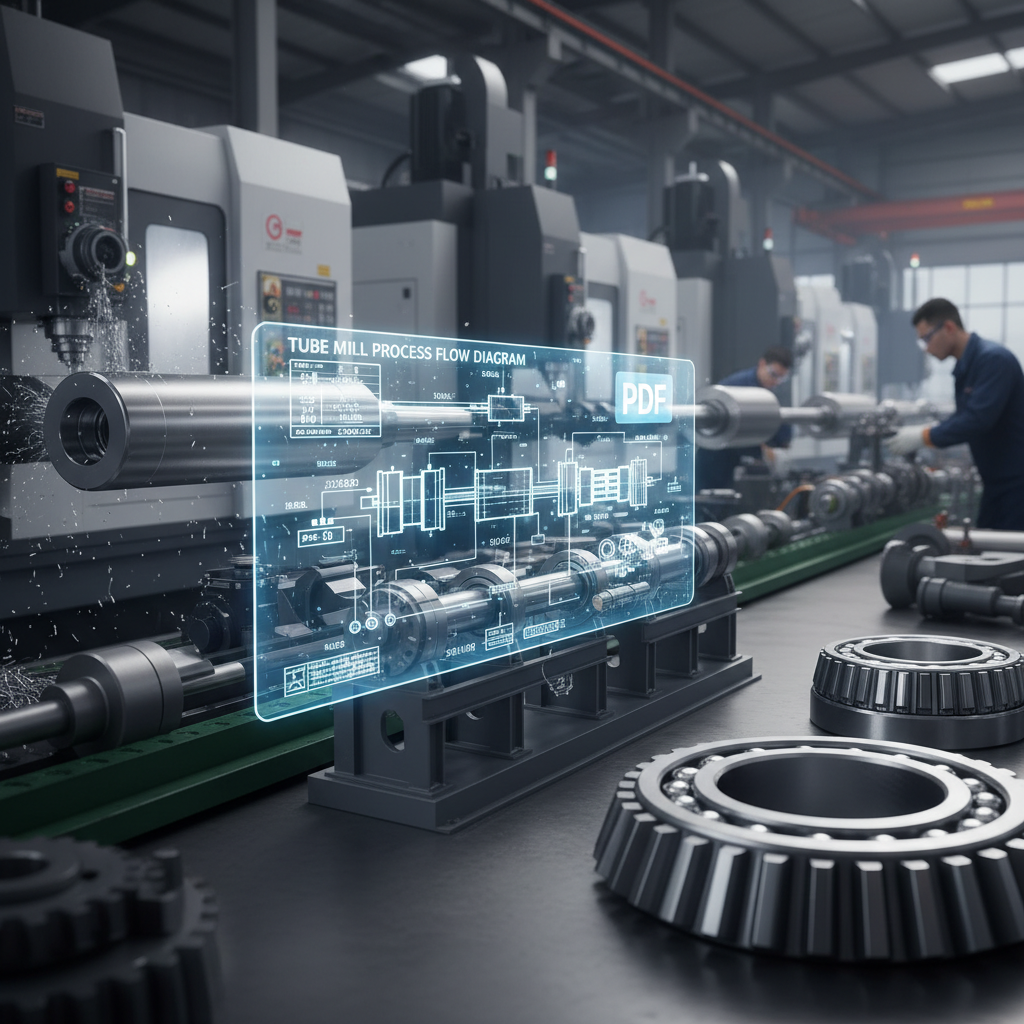
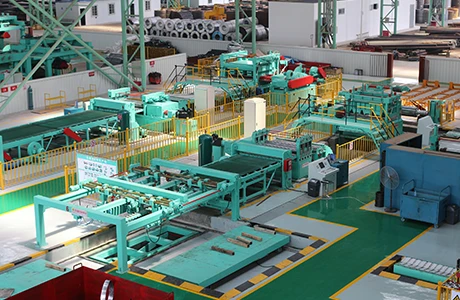
A complete production line extends far beyond the forming section. To ensure continuous operation and minimize waste, a factory must integrate auxiliary equipment that manages the material flow. The process typically begins with a coil car and an uncoiler, followed by a strip flattener to remove the coil set and a strip shear and welder to ensure the line never stops during coil changes.
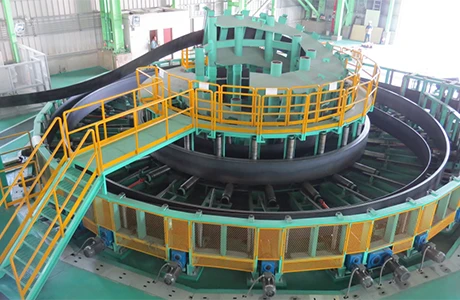
For high-volume ERW tube mills, the inclusion of an accumulator—such as a vertical cage or horizontal loop accumulator—is vital. These components act as a buffer between the continuous forming process and the intermittent cutting process. By storing a reserve of formed pipe, the mill can continue running while the cutting machine completes its cycle, significantly increasing the overall throughput of the plant.
Integrating Finishing Equipment for Mass Production
The quality of the final metal product is often determined in the finishing section. After the forming and sizing sections, the pipes or profiles undergo straightening and end-facing. Advanced factories implement automated finishing tools, such as chamfering machines and hydro testers, to ensure every piece meets strict safety and industry standards before packaging.
A standout efficiency booster in modern lines is the Hydraulic Multi-Head Tube Cutting Machine. Rather than cutting one pipe at a time, this system utilizes multiple cutting heads driven by a coordinated hydraulic system to perform several cuts in a single cycle. This is particularly effective for carbon steel and stainless steel tubes used in furniture and automotive components, where consistency in length is non-negotiable for robotic assembly.
Operational Efficiency Metrics in Metal Forming
Evaluating the performance of a roll forming line requires looking at a combination of speed, precision, and downtime. The relationship between the number of forming stations and the final product quality is a key metric; more stations generally allow for a smoother bend and better surface finish, but increase the machine's footprint and initial cost.
The illustrative framework above demonstrates the relative impact of different technical investments on production outcomes. While automating the cutting section (via multi-head systems) provides the most immediate jump in throughput, investing in high-precision CNC-milled rollers and carburized gears ensures long-term stability and reduces the frequency of tool replacement.
Critical Selection Criteria for Factory Partners
When auditing a cold roll forming machine factory, buyers should look beyond the price tag and evaluate the engineering depth of the supplier. A reliable partner will focus on the heat treatment process of the rollers and the precision of the gear drives. For example, the use of spiral bevel gears and drum gear couplings with carburization is a sign of a machine built for heavy-duty, low-noise operation with minimal wear.
Furthermore, the capability to provide a complete turnkey solution is essential. This includes not just the machinery, but the technical support for installation and employee training. The ability of a supplier to provide machine test running videos prior to shipment and lifelong technical support indicates a commitment to the operational success of the client rather than a simple transactional sale.
Common Engineering Risks and Mitigations
One of the most frequent risks in roll forming is "spring-back," where the metal attempts to return to its original shape after leaving the rollers. To mitigate this, engineers must calculate the over-bend angle based on the material's yield strength. A factory that utilizes CNC positioning and milling for all key grooves and lathes is better equipped to handle these tolerances.
Another common failure point is the wear and tear of the tooling. Using D2 or D3 tool steel for rollers and ensuring proper quenching of gear teeth can extend the lifespan of the equipment. Regular maintenance of the HF welder induction coils and the use of high-quality PTFE piping are also necessary to prevent electrical failures and ensure a consistent weld seam in ERW tube mills.
Comparing Production Approaches for Tube Mills
Depending on the production volume and the required precision, manufacturers must choose between different cutting and forming strategies. The following table compares the conventional single-head approach with the industrial-scale multi-head system typical of a high-capacity cold roll forming machine factory.
| Feature | Single-Head Cutting | Multi-Head Cutting | Impact on ROI |
|---|---|---|---|
| Cutting Efficiency | Low | Very High | Higher Throughput |
| Production Capacity | Small Batch | Mass Production | Reduced Unit Cost |
| Labor Requirement | Higher | Lower | Lower OpEx |
| Initial Investment | Lower | Higher | Long-term Gain |
| Application | Small Workshops | Industrial Plants | Scalability |
| Cycle Time | 1 Tube/Cycle | 2-10 Tubes/Cycle | Time Optimization |
While the initial investment for multi-head systems is higher, the reduction in labor costs and the exponential increase in output make it the only viable choice for factories targeting the automotive, construction, or solar energy sectors.
Frequently Asked Questions
Depending on the configuration, typically 2 to 10 tubes can be cut simultaneously in one cycle, significantly increasing mass production efficiency.
These machines are designed for carbon steel, stainless steel, and aluminum pipes, covering a wide range of industrial applications.
Yes, they can be configured for either fixed lengths or adjustable cutting lengths depending on the specific production requirements.
The accumulator (vertical or horizontal) is the most critical, as it prevents the mill from stopping during the cutting and packing stages.
Using high-grade D2 or D3 tool steel and ensuring proper heat treatment and quenching will significantly extend the tool life.
You should provide the tube diameter, wall thickness, required cutting length, desired tubes per cycle, and your overall target production capacity.
Conclusion
The efficiency of a metal production plant depends on the seamless integration of precision roll forming technology, robust auxiliary equipment, and high-speed finishing tools. By focusing on technical specifications such as carburized gearing, CNC-milled tooling, and multi-head cutting systems, manufacturers can achieve the consistency and throughput required for modern industrial scales.
For enterprises looking to optimize their production lines or implement new tube mill solutions, detailed technical specifications and configuration options can be reviewed at www.aistubemill.com to ensure the equipment matches the intended application.