

Selecting a reliable cold roll forming machine supplier is a strategic decision that directly impacts the structural integrity and production efficiency of metal pipe and profile manufacturing. In the high-precision environment of ERW tube milling, the difference between a standard machine and a professionally engineered system often manifests in the weld quality and surface finish of the final product.
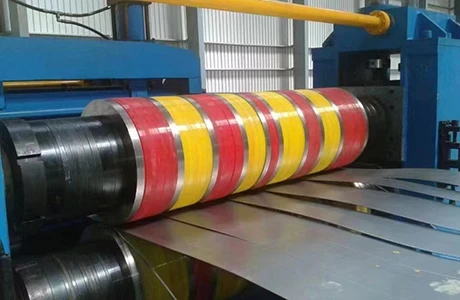
For manufacturers producing API pipes, solar support piles, or automotive structural components, the procurement process extends beyond simple hardware acquisition. It requires an evaluation of the supplier's ability to integrate auxiliary equipment—such as carbon steel coil slitting lines and solid state HF welders—into a seamless, high-speed production flow.
This guide examines the technical benchmarks and procurement criteria necessary to identify a partner capable of delivering customized, reliable cold roll forming solutions that minimize downtime and optimize material utilization.

Critical Components of a Modern Roll Forming Line

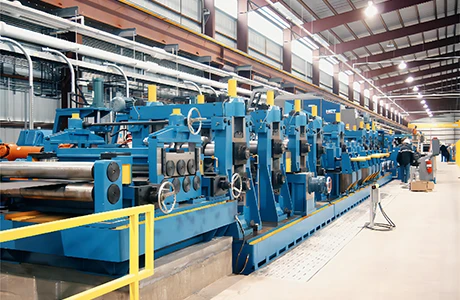
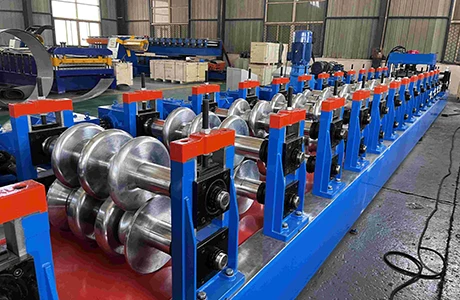
A comprehensive production line is not a single machine but a synchronized ecosystem. It begins with the uncoiler and strip flattener, ensuring the raw carbon steel coil is free of tension and deformations before entering the forming section. The precision of these initial stages determines the dimensional stability of the subsequent tube.
The core of the process lies in the forming and sizing sections, where the strip is incrementally bent into its final profile. In ERW (Electric Resistance Welding) mills, this is coupled with a high-frequency welder and squeeze rolls to create a longitudinal seam without the use of filler metal, making it an efficient choice for high-volume industrial pipes.
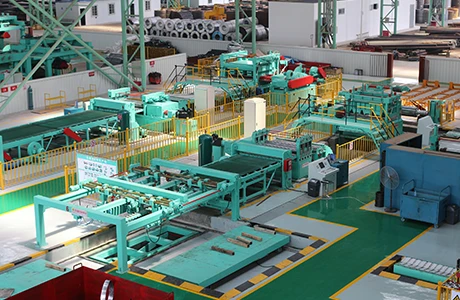
To complete the line, auxiliary equipment such as flying saws for precise length cutting and conveyors for run-out management are essential. A supplier providing a turnkey solution—integrating everything from the slitting line to the final packaging machine—significantly reduces the risk of compatibility issues and operational bottlenecks.
Technical Value of Precision Tooling and Scarfing
One of the most overlooked yet critical aspects of tube mill quality is the management of the external weld bead. After the HF welding process, an external bead is naturally formed, which can compromise the surface finish and interfere with subsequent sizing operations if not removed efficiently.
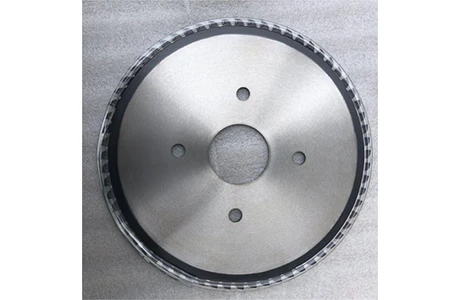
Outside scarfing inserts, typically manufactured from high-grade tungsten carbide, are mounted on tool holders to continuously remove the weld bead. These inserts come in various configurations, such as 4-edge square, 6-edge hexagonal, or 8-edge octagonal shapes. The higher the number of edges, the longer the service life and the lower the tooling cost per meter of pipe produced.
The effectiveness of the scarfing system depends on the operator's ability to adjust the cutting angle and depth relative to the pipe size and wall thickness. When properly calibrated, this process eliminates the need for secondary finishing work, allowing for stable, high-speed production without compromising surface quality.
Industrial Applications Across Metal Fabrication Sectors
The versatility of cold roll forming technology allows it to serve diverse industries with vastly different tolerance requirements. In the renewable energy sector, for instance, solar panel frame machines and solar pile production lines require high repeatability to ensure structural stability in outdoor installations.
In the construction and infrastructure domain, CZLU purlin machines and hat profile forming machines are indispensable for creating lightweight yet strong structural supports. These profiles must adhere to strict geometric standards to ensure they can be easily integrated into larger building frameworks.
Furthermore, the automotive and furniture industries rely on DFT direct square forming tube mills to produce precise hollow sections. Whether it is an API pipe for oil and gas or a low-pressure fluid conduit, the ability of the equipment to handle different materials and wall thicknesses defines its commercial value.
Evaluating Production Efficiency and Performance Metrics
Evaluating the performance of a tube mill involves measuring the balance between production speed and the rate of defective outputs. High-speed mills can produce thousands of meters per hour, but without precise sizing and cooling sections, thermal expansion can lead to ovality or dimensional drift.
Key metrics include the tool life of carbide inserts, the energy efficiency of the HF welder, and the downtime required for profile changeovers. Systems designed with optimized gear couplings and CNC-milled components generally exhibit lower noise levels and higher stability during continuous operation.
cold roll forming machine supplier Performance Metrics
The chart indicates that while standard equipment provides basic functionality, a specialized solution from a professional supplier improves critical areas such as surface smoothness and tool longevity, which directly translates to a lower total cost of ownership (TCO).
Strategic Procurement and Supplier Evaluation Framework
When vetting a potential partner, procurement managers should look beyond the initial price tag and evaluate the supplier's engineering depth. A capable supplier does not just sell a machine; they provide a technical solution based on the specific material grade and production volume of the client.
Verify the supplier's quality control processes, including their use of CNC machining for key grooves and heat treatment for gears to ensure wear resistance. Furthermore, the availability of custom-manufactured inserts and tool holders based on specific drawings is a strong indicator of a supplier's technical maturity.
Finally, consider the after-sales infrastructure. In the metalworking industry, fast response times for spare parts—such as replacement carbide inserts or welder components—are essential to prevent costly production halts in a 24/7 manufacturing environment.
Future Trends in Automated Tube Mill Engineering
The trajectory of cold roll forming is moving toward increased automation and the integration of real-time monitoring systems. We are likely to see more sophisticated sensors integrated into the sizing section to detect dimensional deviations instantly, allowing for automated adjustments without stopping the line.
Material science is also playing a role, with new tungsten carbide grades offering even higher wear resistance, which could further extend the intervals between tool replacements. The shift toward energy-efficient solid-state HF welders is expected to reduce the carbon footprint of pipe production plants.
Additionally, the demand for customized profiles in the green energy sector, such as highly specialized solar piles, will drive suppliers to develop more flexible, multi-functional tube mills that can switch between different profiles with minimal downtime.
Comparative Analysis of Roll Forming System Configurations
Choosing the right configuration depends on the intended output and the required precision. For example, a standard tube mill may suffice for low-pressure fluid pipes, but API-grade pipe production requires more rigorous sizing and testing equipment.
The following table compares different system approaches based on typical industrial requirements to help buyers align their technical needs with the right equipment category.
| System Type | Primary Application | Technical Focus | Maintenance Level |
|---|---|---|---|
| Standard ERW Mill | General Water/Gas Pipe | Production Volume | Moderate |
| API Pipe Mill | Oil & Gas Pipeline | Wall Thickness Precision | High |
| Solar Pile Line | Renewable Energy | Repeatability & Speed | Low-Moderate |
| DFT Square Mill | Automotive/Furniture | Corner Squareness | Moderate |
| CZLU Purlin Line | Steel Structures | Profile Geometry | Low |
| Custom Profile Mill | Specialized Industrial | Tooling Flexibility | High |
Ultimately, the best selection is one that balances the initial capital expenditure with the projected operational costs and the required quality certifications of the target market.
Frequently Asked Questions
Conclusion
Achieving excellence in metal pipe production requires more than just raw machinery; it demands a holistic approach to engineering, from the initial coil slitting to the final scarfing of the weld bead. A professional partner provides the necessary technical depth to customize these systems for specific industrial applications, ensuring that production is both stable and scalable.
Manufacturers evaluating their current capabilities or planning a new production line can review the detailed product ranges and technical solutions available through www.aistubemill.com to ensure their equipment aligns with global quality standards.