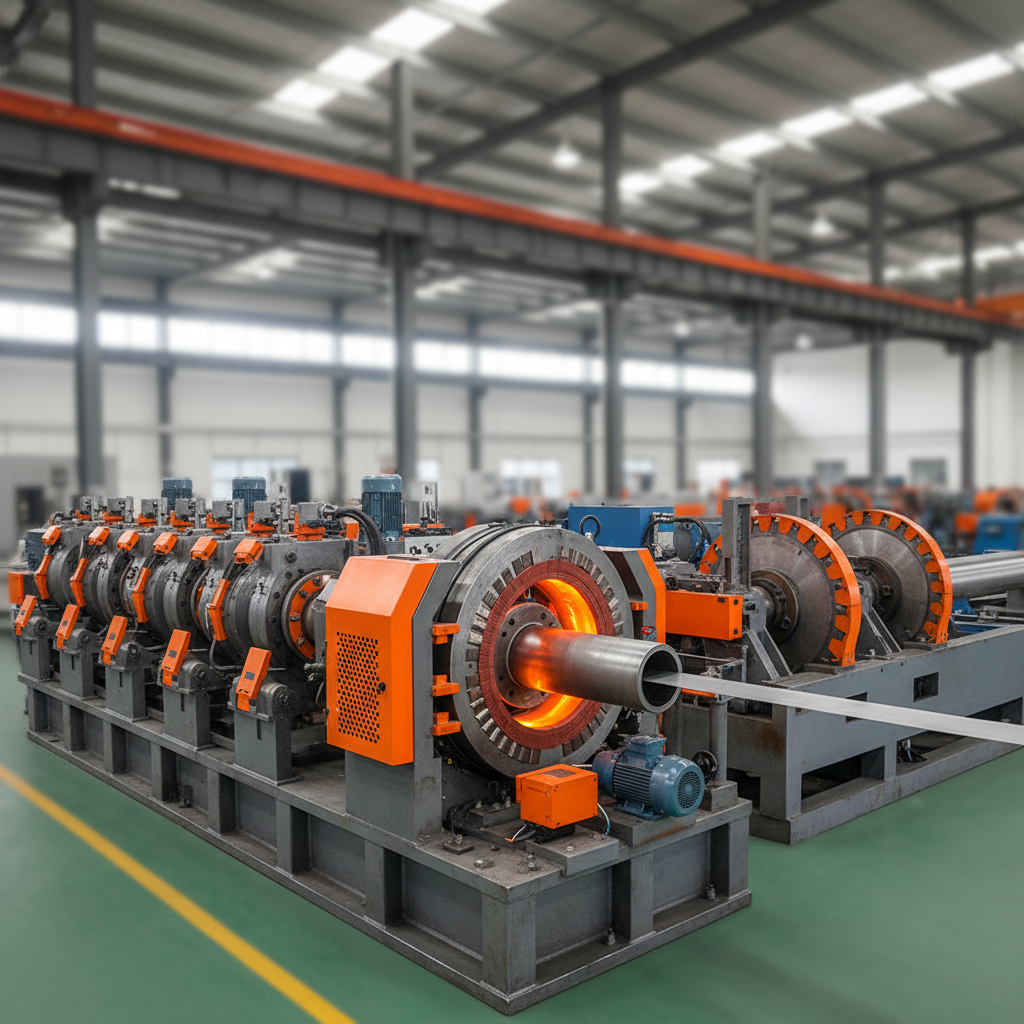
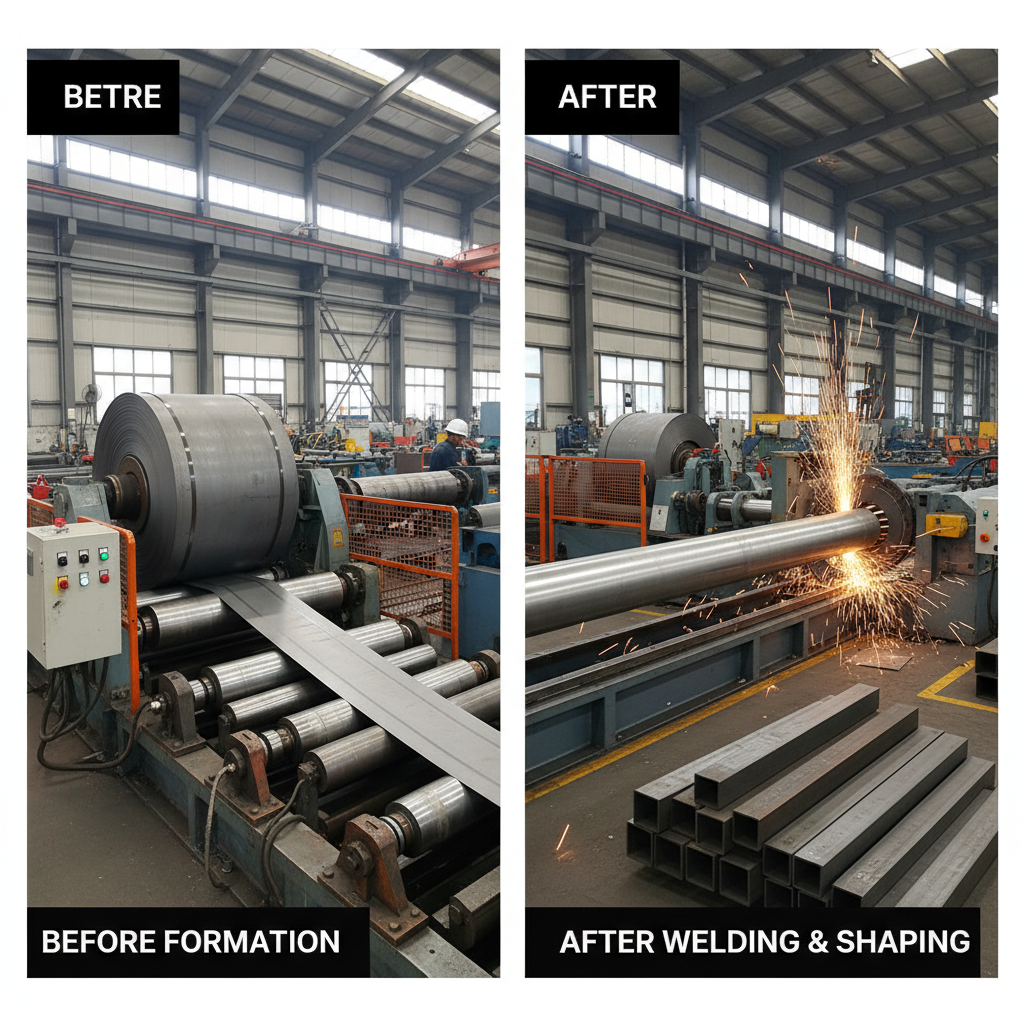
When exploring the fundamentals of metal fabrication, one of the most common questions for newcomers and industry professionals alike is: what is a tube mill? At its core, a tube mill is a sophisticated industrial machine designed to transform flat steel strips or coils into seamless-looking hollow cylindrical or shaped tubes through a process of continuous rolling and welding. This technology is the backbone of modern infrastructure, providing the essential piping and structural tubing required for everything from skyscraper frames to automotive chassis.
Understanding the mechanics of these machines is crucial because the efficiency of a tube mill directly impacts the cost and quality of downstream products. From the initial uncoiling of the raw material to the final cutting of the finished tube, every stage is engineered for precision. Whether it is an ERW (Electric Resistance Welding) mill or a specialized cold roll forming machine, the goal remains the same: to create a high-strength, durable conduit with minimal material waste and maximum structural integrity.
In a global market where sustainability and material efficiency are paramount, knowing what is a tube mill and how it operates allows manufacturers to optimize their production lines. By integrating advanced auxiliary equipment and precise sizing sections, companies can produce tubes that meet rigorous ISO and ASTM standards, ensuring safety and reliability in critical applications such as oil and gas transport, solar panel framing, and architectural design.
The Fundamental Definition of a Tube Mill
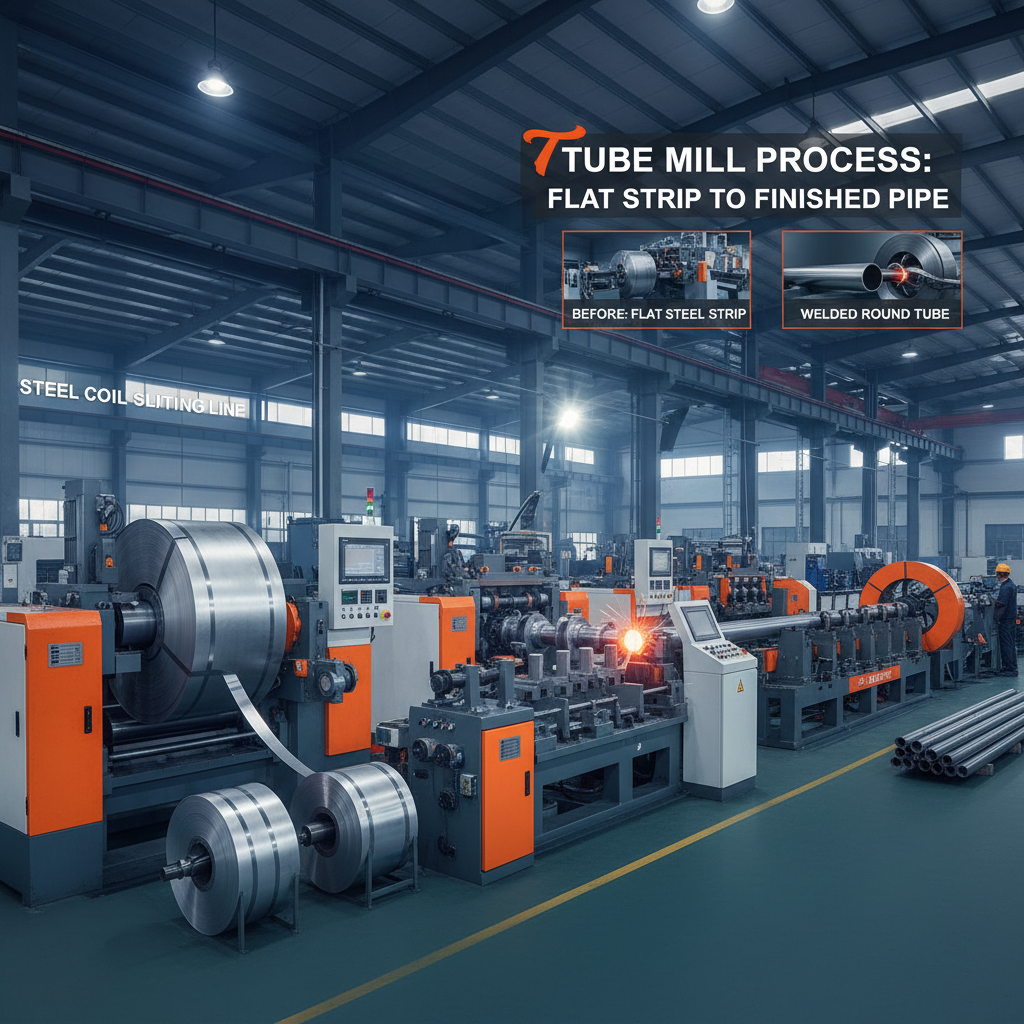
To answer the question "what is a tube mill" in simple terms, it is a continuous production line that bends a flat strip of metal into a tubular shape and then seals the seam. Unlike seamless pipes which are bored out of a solid billet, the tube mill utilizes a process called roll forming. The metal strip passes through a series of rollers that gradually curve the material until the edges meet, at which point a welding system—typically High Frequency (HF) induction—fuses the edges together without the need for filler metal.
This process is highly valued in the metal tools and products industry because it allows for massive scale and consistency. By utilizing an ERW Carbon Steel Tube Mill or a specialized DFT Direct Square Forming Tube Mill, manufacturers can produce miles of piping with incredibly tight tolerances. This efficiency makes the tube mill indispensable for the mass production of structural components used in everything from furniture and automotive parts to heavy-duty industrial scaffolding.
Core Components and Technical Architecture
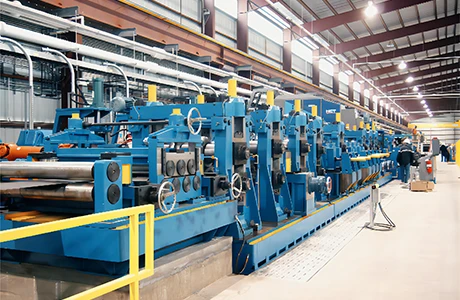
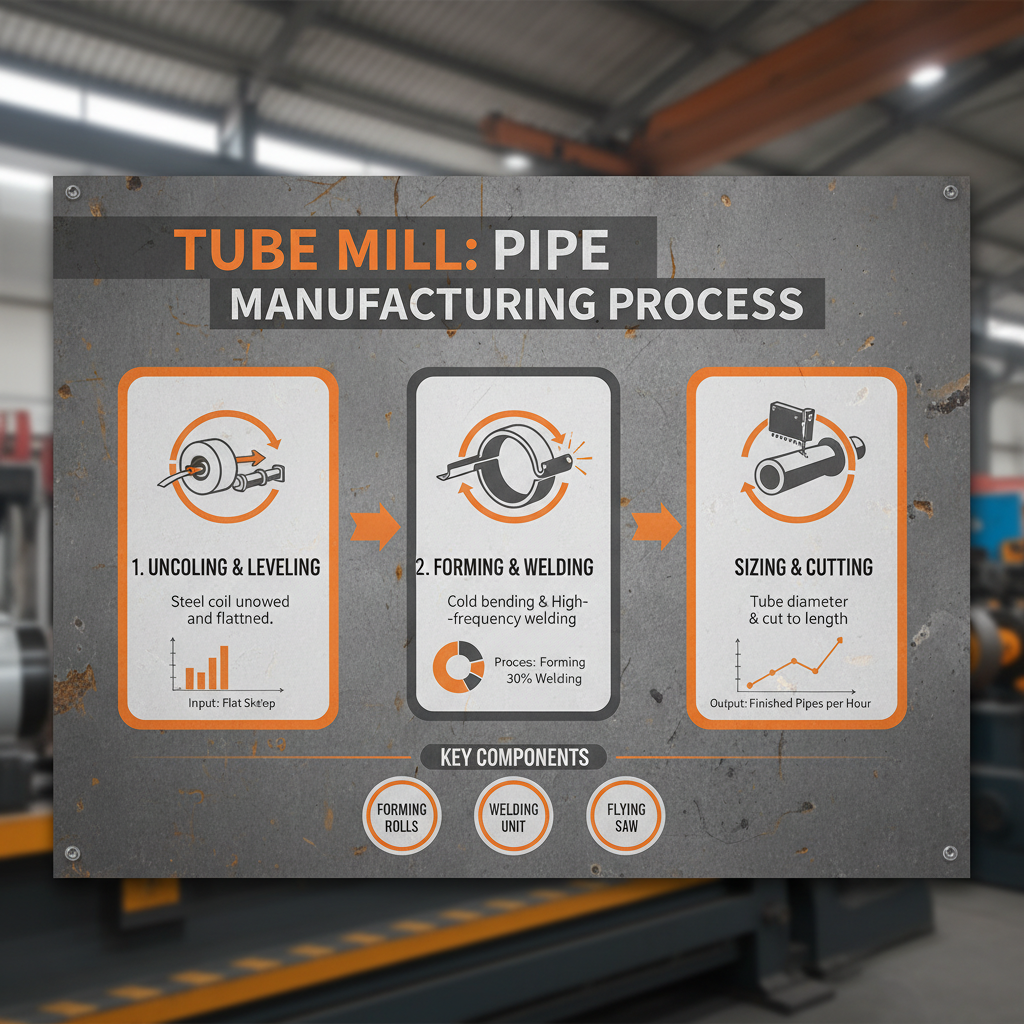
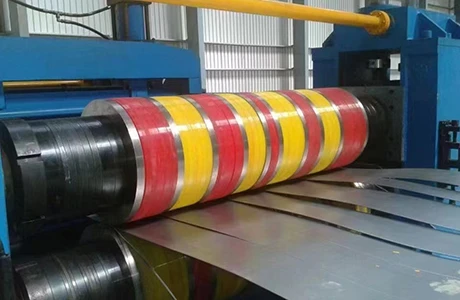
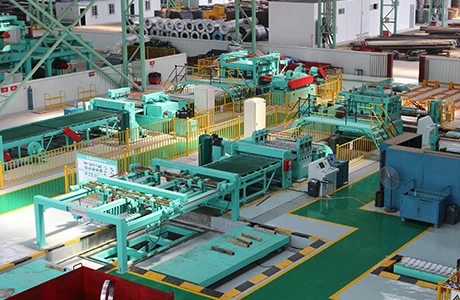
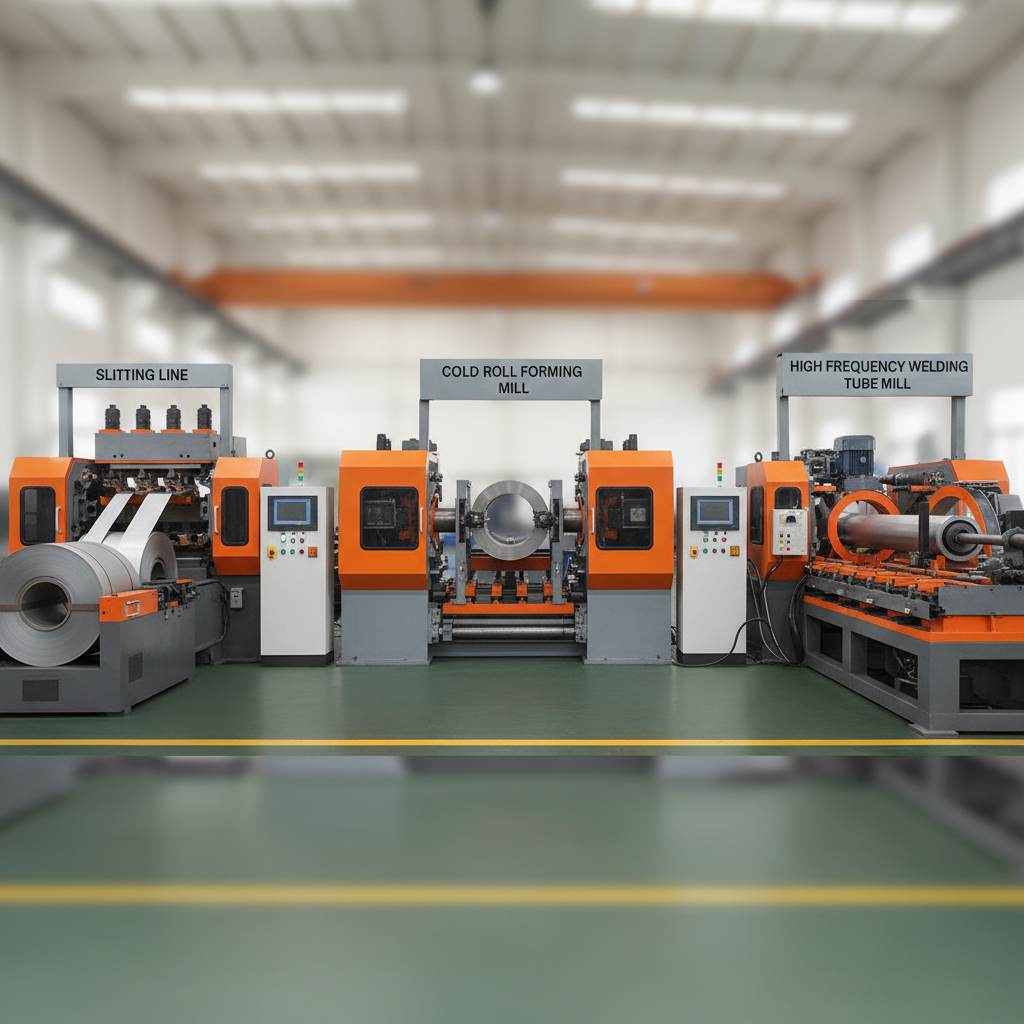
A comprehensive understanding of what is a tube mill requires a look at its constituent parts. The process begins with the Uncoiler, which holds the massive carbon steel coil and feeds the strip into the line. To ensure the material is perfectly flat and free of tension, a Strip Flattener and Strip Shear and Welder are employed. These components prevent warping and ensure that the subsequent forming stages occur under uniform conditions, reducing the risk of structural defects in the final tube.
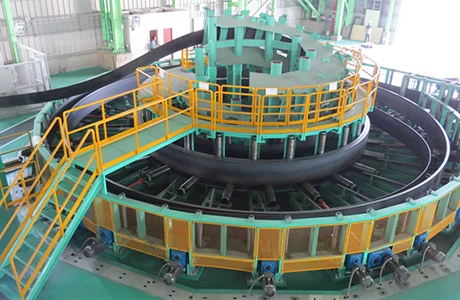
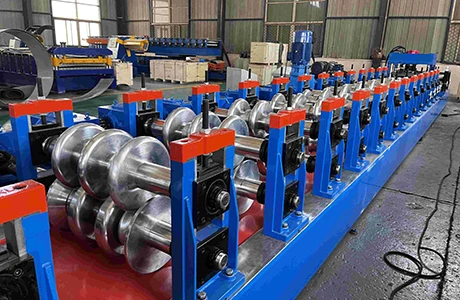
The heart of the machine is the Forming and Sizing section. Here, a sequence of precision-engineered rollers gradually shapes the strip into a circle, square, or rectangle. The precision of these rollers determines the wall thickness and diameter consistency of the product. Once the shape is formed, the Solid State HF Welder applies a high-frequency current to the edges, creating a localized heat zone that fuses the metal instantly upon contact, ensuring a weld that is as strong as the parent material.
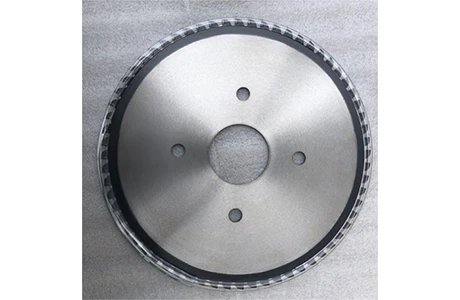
Finally, the line concludes with the Flying Cold/Friction/Milling Saw and the Run-out table. The flying saw is a critical piece of auxiliary equipment that cuts the continuously moving tube to specific lengths without stopping the production flow. This seamless integration of uncoiling, forming, welding, and cutting is what makes the modern tube mill an engineering marvel of the general equipment manufacturing sector.
Critical Operational Factors for Quality
When analyzing the operational efficiency of a system, one must ask what is a tube mill's primary determinant of quality? The answer lies in the precision of the roll forming sequence. If the rollers are not perfectly aligned, the resulting tube will suffer from eccentricity or "out-of-roundness," which can lead to failure in high-pressure environments.
Another vital factor regarding what is a tube mill performance is the synchronization between the welding speed and the forming speed. If the HF welder is not perfectly timed with the feed rate, the weld seam may experience "burn-through" or insufficient penetration, compromising the structural integrity of the tube and failing safety inspections.
Lastly, the choice of raw material and the use of a Strip Flattener are non-negotiable for high-end output. Impurities in the carbon steel coil or residual stresses in the strip can cause the tube to twist during the cooling phase. By implementing rigorous material pre-treatment, manufacturers ensure that the finished tube maintains its linear precision over long spans.
Global Industry Applications and Use Cases
The versatility of the technology that answers "what is a tube mill" is evident in its global application. In the renewable energy sector, Solar Panel Frame machines (which are specialized tube mills) are used to create the lightweight yet rigid aluminum or steel frames that support photovoltaic panels. These frames must withstand decades of wind load and environmental exposure, requiring the exact precision that only a high-quality roll forming line can provide.
Beyond green energy, these machines are critical in remote industrial zones for infrastructure development. For instance, in the construction of oil pipelines or irrigation systems in developing regions, ERW Tube Mills are deployed to produce heavy-duty conduits that can be transported easily and welded on-site. Similarly, the automotive industry relies on these mills to produce chassis components and exhaust systems that balance weight reduction with crash-safety requirements.
Performance Comparison of Tube Mill Configurations
Economic Advantages and Long-Term Value
From a commercial perspective, the answer to what is a tube mill is "a profit-multiplier." The primary advantage is the drastic reduction in material waste. Because the process is continuous and based on precise roll-forming, there is almost zero scrap compared to traditional machining or casting methods. This sustainability not only lowers the cost per unit but also aligns with global ESG (Environmental, Social, and Governance) standards.
Furthermore, the scalability of tube mill production provides immense long-term value. A facility equipped with a Tube Mill Machine Compose, including auxiliary equipment like Coil Cars and Conveyors, can quickly pivot between producing different tube diameters and shapes by simply changing the roller sets. This agility allows manufacturers to respond to market shifts—such as a sudden increase in demand for CZLU Purlin Machines for warehouse construction—without investing in entirely new production lines.
Future Trends in Tube Mill Automation
The evolution of the tube mill is currently being driven by the "Industry 4.0" digital transformation. We are seeing a shift toward fully automated, AI-driven control systems that monitor the weld seam in real-time using ultrasonic sensors. This means that the system can automatically adjust the HF welder's power or the roller pressure the millisecond a deviation is detected, virtually eliminating human error and reducing the rate of defective products to near zero.
Another significant trend is the move toward "Green Steel" processing. Future tube mills are being designed to handle recycled steel coils with higher efficiency and lower energy consumption. By integrating regenerative braking systems in the motors and high-efficiency induction heaters, the carbon footprint of producing a ton of steel tubing is plummeting, making the process more eco-friendly.
Finally, modularity is becoming the standard. Modern manufacturers are designing "plug-and-play" tube mill components. This allows a factory to start with a basic ERW line and later add a Flying Saw or a specialized Sizing section as their business grows. This modular approach lowers the barrier to entry for smaller metalworking shops and encourages innovation in specialized niche tubing products.
Challenges and Engineering Solutions
Despite the efficiency, operating a tube mill comes with inherent challenges. One of the most persistent issues is "weld bead" inconsistency. If the pressure rollers in the sizing section are not perfectly calibrated, the external weld seam can be too prominent, requiring expensive secondary grinding. To solve this, engineers are now implementing CNC-controlled sizing sections that provide micron-level precision, ensuring a smooth finish directly from the mill.
Another challenge is the wear and tear on the forming rollers. Because they are constantly subjected to high pressure and friction from carbon steel coils, the rollers eventually lose their profile, which degrades the tube's dimensions. The solution has been the development of advanced tungsten carbide coatings and heat-treatment processes that extend the lifespan of the rollers by up to 300%, reducing downtime for maintenance.
Lastly, maintaining consistent tension in the strip is a constant battle. Fluctuations in tension can lead to "camber" (bending) in the finished tube. By integrating advanced Strip Flatteners and synchronized tension-control uncoilers, manufacturers can ensure that the material enters the forming section in a state of neutral stress, resulting in perfectly straight pipes every time.
Comparison of Tube Mill Engineering Solutions for Common Defects
| Common Defect |
Root Cause |
Engineering Solution |
Impact Score (1-10) |
| Weld Bead Protrusion |
Incorrect Sizing Pressure |
CNC Sizing Section |
9 |
| Tube Camber/Bending |
Uneven Strip Tension |
Synchronized Uncoiler |
8 |
| Wall Thinning |
Improper Roll Gap |
Precision Gap Sensors |
7 |
| Weld Burn-through |
Excessive HF Power |
Automatic Power Feedback |
10 |
| Surface Scratches |
Roller Surface Wear |
Tungsten Carbide Coating |
6 |
| Ovality (Out-of-round) |
Misaligned Forming Rolls |
Laser Alignment Tools |
9 |
FAQS
A tube mill creates a pipe by rolling a flat strip of metal and welding the seam (ERW), whereas a seamless pipe mill pierces a solid cylindrical billet of hot steel. Tube mills are generally faster, more cost-effective for standard structural use, and produce more consistent wall thicknesses, while seamless pipes are preferred for extremely high-pressure applications where any weld seam could be a point of failure.
Yes, absolutely. By changing the configuration of the forming rollers, a tube mill can produce square, rectangular, oval, or even specialized profiles like "C" or "Z" purlins. Specialized machines like the DFT Direct Square Forming Tube Mill are specifically designed for high-speed production of square and rectangular tubing used in furniture and construction.
With proper maintenance, a high-quality tube mill can operate for 20-30 years. The key is the regular replacement of wear parts, such as the forming rollers and cutting blades of the flying saw. Utilizing high-grade alloys for rollers and implementing a strict lubrication schedule significantly extends the machine's operational lifespan.
For continuous high-speed production, High Frequency (HF) induction welding is vastly superior. It is faster, requires no filler material, and creates a weld that is structurally integrated with the base metal. TIG or MIG welding are typically reserved for short runs, custom sizes, or the final sealing of tube ends, rather than the continuous forming process.
A complete setup requires an Uncoiler to feed the material, a Strip Flattener to remove coil set, a Flying Saw for precision cutting, and a Conveyor/Run-out table for handling the finished product. Additionally, a Coil Car is often used to load the heavy steel coils onto the uncoiler safely and efficiently.
Achieving ASTM or ISO standards requires a combination of high-quality raw material (certified carbon steel coils) and precision machinery. Ensure your tube mill has a calibrated Sizing section and implement a rigorous testing protocol, including hydrostatic pressure tests and ultrasonic weld inspections, to verify the integrity of every batch.
Conclusion
In summary, understanding what is a tube mill reveals it as more than just a machine; it is a cornerstone of modern industrial manufacturing. By seamlessly integrating uncoiling, precision roll forming, HF welding, and automated cutting, tube mills provide the global market with the essential structural components needed for sustainable urban development and technological advancement. The transition from raw steel coils to high-precision tubing is a testament to the synergy between mechanical engineering and material science.
Looking forward, the integration of AI, IoT monitoring, and green steel will continue to redefine the efficiency and environmental impact of tube milling. For manufacturers looking to scale their production or improve quality, investing in advanced auxiliary equipment and precision sizing sections is the most viable path toward long-term competitiveness. To learn more about the latest in tube mill technology and equipment, visit our website: www.aistubemill.com

 Tel:86-15176910262