-
 Tel:86-15176910262
-

Search
 Tel:86-15176910262
Search
Achieving uninterrupted production in high-speed tube milling requires more than just a robust forming section; it demands a sophisticated synchronization of material flow. For many operators, the transition between steel coils is the primary point of vulnerability, where downtime directly impacts daily output and operational efficiency.
The challenge lies in maintaining a constant strip supply to the welding line while the uncoiler is being swapped. This technical bottleneck has driven the adoption of advanced buffering systems, transforming how manufacturers handle strip tension and material continuity in the entry section of the mill.
Exploring the mechanics of a cold roll forming machine china reveals how the integration of disc-type accumulators and precision control systems minimizes waste and maximizes uptime for modern ERW pipe production.


The primary objective of a buffering system in a roll forming line is to decouple the uncoiling process from the welding process. In a traditional setup, when a coil ends, the entire mill must stop, leading to significant productivity loss and increased scrap during restart.
By utilizing a vertical or horizontal buffer, the system stores a specific length of steel strip dynamically. When the coil changeover occurs, the accumulator releases its stored material, allowing the main welding line to continue operating at a constant speed.
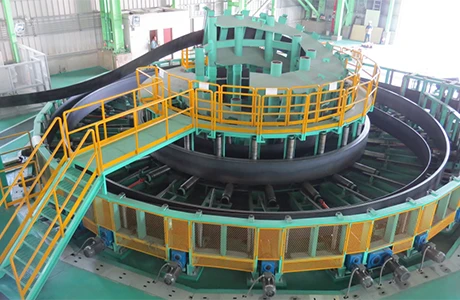
A professional disc-type accumulator consists of several critical modules that work in synchronization. The Upper and Lower Disc Modules are the physical foundation, where steel discs are arranged in a vertical layout to guide the strip into a controlled loop. This structure ensures that the strip remains stable and does not oscillate during high-speed feeding.
The intelligence of the system resides in the Tension Detection and Control System. By employing high-precision sensors or encoders, the machine monitors the real-time tension of the strip. This feedback is processed by a PLC, which then adjusts the Variable Frequency Drive (VFD) system to synchronize the feeding speed with the downstream forming and sizing sections.
Safety and alignment are managed by the Entry Guide System and comprehensive safety guards. The guide system ensures the strip enters the accumulator path without misalignment, while emergency stop switches and protective guards mitigate the risks associated with high-tension steel handling.
When designing the entry section of a tube mill, engineers often choose between disc-type accumulators and traditional loop cages. While both serve the purpose of material storage, their impact on strip stability and installation complexity differs significantly.
Disc-type accumulators provide a controlled path that eliminates the strip "swing" or "wave" common in loop cages, making them the superior choice for high-automation ERW mills requiring space efficiency and precise tension control.
From a maintenance perspective, disc systems are generally quicker to install and easier to service. Loop cages often involve complex structural frameworks that are more prone to mechanical wear and require more extensive safety enclosures to prevent the strip from jumping the track.
The efficiency of a buffer system can be measured by its ability to handle various material specifications without compromising speed. Factors such as strip thickness (typically 0.8–5.0 mm) and width (200–800 mm) dictate the required disc diameter and total storage length.
In a typical high-performance setup, storage lengths can range from 3,000 to 8,000 meters. This capacity ensures that even with slower coil changeover procedures, the main mill remains in a state of uninterrupted production, effectively decoupling the upstream and downstream variables.
Integration begins at the uncoiler and flattening machine. For a seamless transition, the strip must be perfectly leveled before entering the accumulator's upper disc group. AIS Machinery integrates this entire sequence—from the coil car and uncoiler to the strip shearer and welder—to ensure a unified control logic.
In practical industrial settings, the synergy between the VFD system and the main welding line prevents material bunching or over-tensioning. This coordination allows the mill to operate at speeds up to 120 m/min while maintaining the structural integrity of the strip, which is crucial for producing high-quality API or structural pipes.
The transition from manual tension adjustment to closed-loop PLC control has fundamentally changed the reliability of cold roll forming. Early systems relied on operator intuition and mechanical clutches, which often resulted in strip breakage or surface scratches.
Modern systems utilize high-frequency feedback loops. When the tension sensors detect a deviation, the VFD adjusts the motor speed in milliseconds. This level of precision is essential when working with varying material grades, where the elastic limit of the steel can vary significantly.
Looking forward, the industry is moving toward predictive maintenance. By analyzing the load patterns on the accumulator discs and the frequency of VFD adjustments, manufacturers can anticipate component wear and schedule maintenance without unplanned shutdowns.
Selecting the right buffering equipment requires a balanced analysis of production volume, available floor space, and material variety. A manufacturer producing heavy-wall API pipes will have entirely different requirements than one producing thin-walled solar panel frames.
The primary trade-off usually involves cost versus stability. While a basic loop cage may have a lower initial price point, the long-term costs associated with strip instability and slower automation integration often make the disc-type system more economical over the equipment's lifecycle.
The following framework provides a relative assessment of different buffering solutions based on key operational priorities.
| Evaluation Factor | Disc Type Accumulator | Loop Cage System | Passive Buffer |
|---|---|---|---|
| Strip Stability | High / Controlled | Moderate / Swing | Low / Variable |
| Automation Level | Full PLC Integration | Semi-Automated | Manual/Passive |
| Floor Space Req. | Compact Vertical | Large Horizontal | Minimal |
| Setup Complexity | Rapid Installation | Complex Structure | Simple |
| Material Versatility | High (0.8-5.0mm) | Moderate | Limited |
| Lifecycle Value | High (Low Waste) | Moderate | Low |
The primary difference is the level of control over the strip path. A disc accumulator uses a series of fixed steel discs to guide the strip in a tight, vertical loop, which virtually eliminates the "swing" or waving motion found in loop cages. This resulting stability is critical for high-speed lines because it prevents the strip from jumping out of the guides and ensures consistent tension entering the welding section.
While specifications can be customized, typical industrial disc accumulators are designed to handle strip thicknesses ranging from 0.8 mm to 5.0 mm and widths from 200 mm to 800 mm. The maximum storage length typically varies between 3,000 and 8,000 meters depending on the disc diameter and the specific path design required for the production volume.
Yes, provided the existing mill has sufficient space in the entry section. Integration requires the installation of a PLC and VFD system to synchronize the accumulator's motor with the existing mill's drive system. Most modern retrofits focus on replacing passive loop cages with disc-type accumulators to improve automation and reduce material waste during coil changeovers.
The Variable Frequency Drive (VFD) controls the speed of the accumulator's feeding motor. By receiving real-time data from tension sensors, the VFD accelerates the feed when the main line is running faster than the uncoiler and slows it down when the opposite occurs. During a coil change, the VFD ramps up the speed to use the stored material, ensuring the welding line never has to stop.
For very small-scale production with infrequent coil changes and low speed requirements, a passive buffer or a simple loop cage may have lower upfront costs. However, if the goal is to scale production or reduce scrap, the disc-type accumulator offers better long-term value through reduced downtime and higher material utilization, even in mid-sized operations.
Safety is managed through a combination of physical barriers and electronic controls. Disc accumulators typically feature enclosed paths and safety guards to prevent accidental contact with the moving strip. Additionally, emergency stop switches are strategically placed, and the PLC system is programmed to trigger an immediate halt if tension sensors detect a critical failure or strip breakage.
The move toward fully automated, continuous production in the metal forming industry is no longer an option but a necessity for remaining competitive. By implementing precision buffering systems like the disc-type accumulator, manufacturers can effectively eliminate the most significant source of downtime in the tube mill process.
Ultimately, the choice of a cold roll forming machine china depends on the alignment between technical specifications—such as material thickness and desired storage length—and the overall production goals of the facility. Investing in integrated tension control and stable material flow is the most reliable path to increasing yield and ensuring consistent product quality.



Send a Message
Dear customer, thank you for your attention! We provide high-quality machinery and equipment and look forward to your orders. Please inform us of your needs and we will respond quickly!