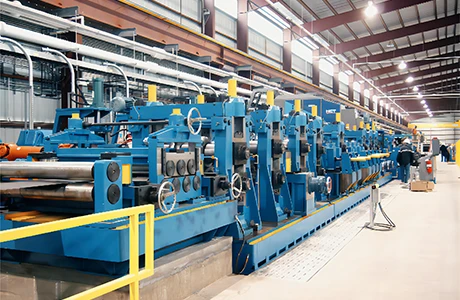
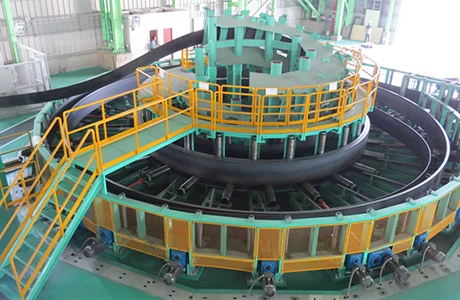
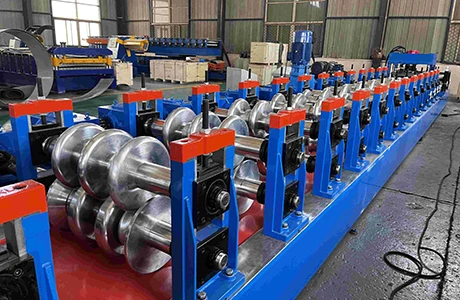
You know, it’s been a crazy year running around construction sites. Everyone's talking about prefabrication now, right? It's not just a buzzword anymore. They want everything modular, quick to assemble… and honestly, the demand for good pipe mill manufacturers has skyrocketed. Used to be, you could take your time, spec things out leisurely. Not anymore. Everyone’s in a rush.
And the pressure isn’t just on speed. Sustainability is a huge deal now, too. Clients are asking about recycled content, low-VOC coatings… things we didn’t even consider five years ago. It's forcing manufacturers to innovate, which, honestly, is a good thing, but adds a whole layer of complexity.
But here's the thing: a lot of these so-called “innovations” are just marketing fluff. I’ve seen a lot of designs that look great on paper, but fall apart as soon as you actually try to build with them. That's where experience really counts.
The Current Landscape of Pipe Mill Manufacturing
To be honest, the industry’s changed a lot in the last decade. It's not just about cranking out steel tubes anymore. You’ve got specialized mills focusing on stainless, others on high-frequency welding, and a growing number doing composite pipes. The Chinese manufacturers… well, they've really upped their game. Quality control used to be a huge concern, but it’s improved dramatically. Still, you gotta inspect everything yourself, you know? Don’t just trust the paperwork.
And it's not just about the mills themselves. The whole supply chain is getting squeezed. Raw material costs are volatile, shipping is a nightmare, and skilled labor is hard to find. Finding reliable pipe mill manufacturers is getting tougher and tougher.
Common Design Pitfalls in Pipe Manufacturing
Have you noticed how engineers love to over-engineer things? I encountered this at a water treatment plant in Texas last time. They spec’d out this ridiculously thick-walled pipe for a low-pressure section. Complete overkill. Cost a fortune, made installation a pain, and for what? A tiny, negligible increase in safety margin.
Another common mistake is ignoring the welding process. They'll design a complex pipe network with a bunch of tight bends and angles, then wonder why the welds are cracking. Welding introduces stress, and those stress points need to be accounted for in the design. It’s not rocket science, but people seem to forget it.
And don't even get me started on corrosion. People will use carbon steel in a corrosive environment and then be shocked when it rusts. You need to select the right material for the application. It's common sense, really.
Materials and Their Real-World Characteristics
Now, materials… that’s a whole other topic. Stainless steel, obviously, is great for corrosion resistance. But it's expensive, and it's not always necessary. Sometimes a good epoxy coating on carbon steel will do the job just as well.
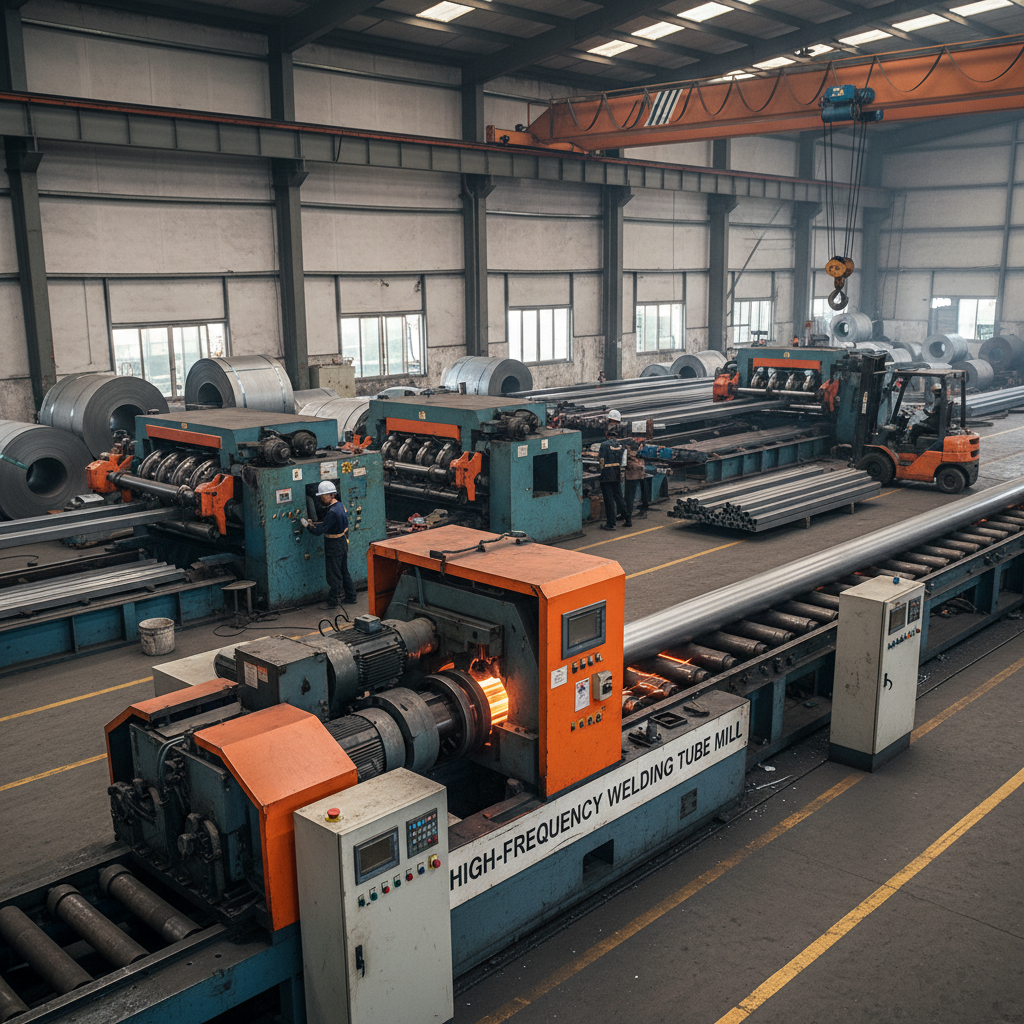
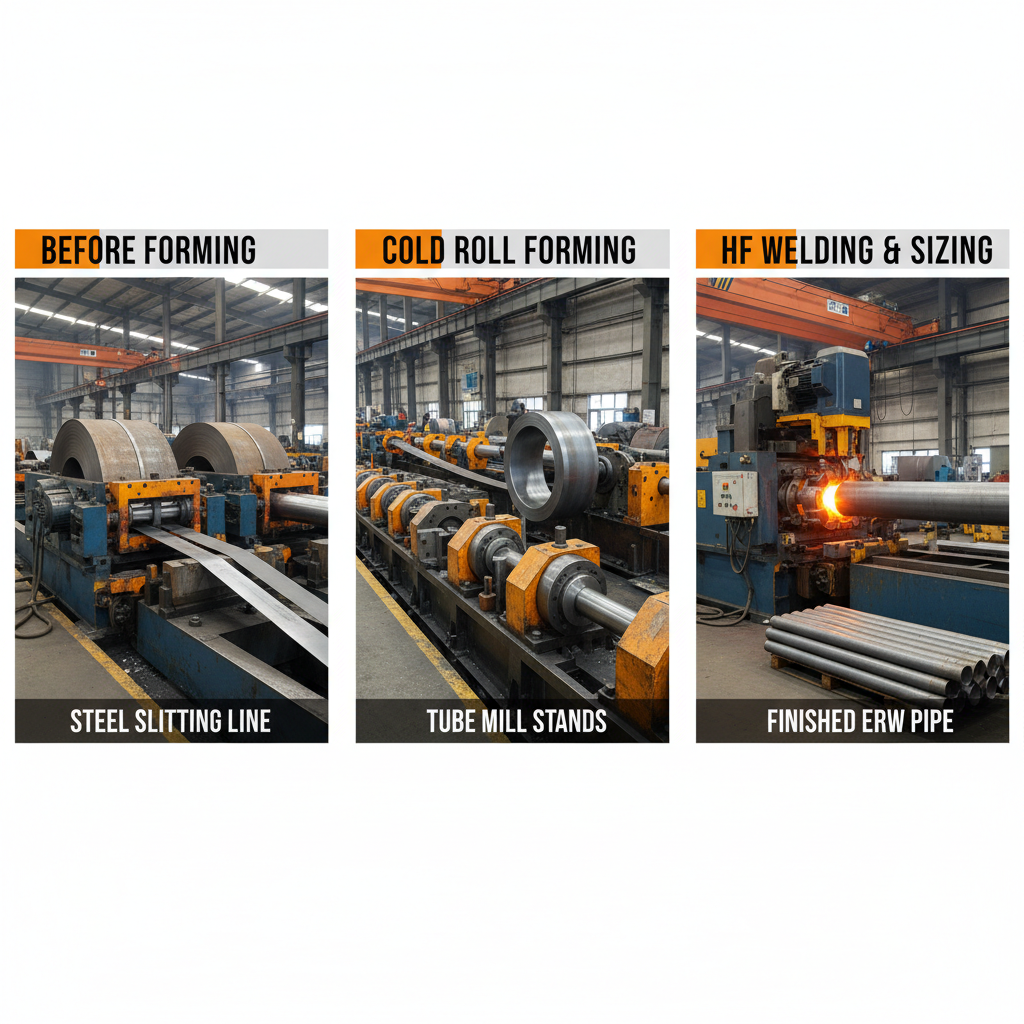
I've been working with ERW (Electric Resistance Welded) pipe a lot lately. It's cost-effective, but you really gotta pay attention to the weld seam. A bad weld can fail catastrophically. I can smell a bad weld seam from 20 feet away, honestly. It has this weird burnt odor.
And then there’s PVC. Lightweight, easy to install, but brittle in cold weather. I once saw a whole PVC irrigation system shatter during a freeze. It wasn’t pretty. Feels kinda cheap in your hands too, you know? Doesn't have that solid, reassuring weight of steel.
Composite pipes are getting more popular, but I’m still skeptical. They’re strong, lightweight, and corrosion-resistant, but they’re also expensive and difficult to repair. And I’m not convinced they’ll hold up over the long term. They feel a little… artificial, if that makes sense. Not like a material built to last.
Galvanized steel… it’s okay. It offers some corrosion protection, but the zinc coating wears away over time. And when it does, it creates a mess. You get white rust running down the pipe. It's unsightly and can contaminate whatever's flowing through it.
Testing Procedures: Beyond the Lab
Lab tests are fine, but they don't tell the whole story. I’ve seen pipes pass all the lab tests and still fail in the field. You need to stress-test them in real-world conditions. We're talking hydrostatic testing, impact testing, corrosion testing… everything.
Strangely enough, one of the best tests is just watching how the workers handle it on site. If they're constantly bending it, denting it, or complaining about the weight, that's a bad sign. Workers are practical people. They'll tell you what's wrong with a product faster than any engineer.
Pipe Mill Manufacturer Testing Effectiveness
Actual User Applications vs. Intended Use
You design a pipe for a specific application, but users will always find a way to misuse it. That's just a fact of life. I saw a guy using a pressure pipe as a handrail on a scaffolding once. A handrail!
Anyway, I think the key is to understand how the product will actually be used, not just how it’s supposed to be used. Talk to the installers, talk to the operators, talk to the maintenance guys. They’ll tell you what works and what doesn’t.
Advantages, Disadvantages, and Customization Options
Look, these things are strong, durable, and relatively easy to install. That’s a big plus. But they can be expensive, especially if you need a specialized material or coating. And they can be a pain to modify in the field.
Customization is definitely possible, though. Last month, that small boss in Shenzhen who makes smart home devices insisted on changing the interface to for some reason. Said it was “more modern”. It added a week to the lead time and cost him a small fortune, but he was adamant about it. He was a tough negotiator.
But honestly, most of the time, people just need standard sizes and materials. They don't want anything fancy.
Real-World Case Studies and Performance Analysis
We did a project in Singapore a couple of years ago, a big seawater desalination plant. They needed highly corrosion-resistant pipes. We went with duplex stainless steel. Expensive, yes, but it performed flawlessly for five years and still going.
Then there was that mess in Louisiana. Hurricane Ida ripped through, and a lot of the cheaper plastic pipes fractured. The steel pipes held up, but they corroded rapidly in the saltwater. It highlighted the importance of choosing the right material for the environment.
Later... Forget it, I won't mention it. Another project where a client tried to save a few bucks on pipe thickness. It was a disaster.
Key Performance Indicators of Pipe Mill Manufacturers
| Material Composition |
Corrosion Resistance Rating (1-10) |
Manufacturing Lead Time (Weeks) |
Average Cost per Meter ($) |
| Carbon Steel |
4 |
2 |
15 |
| Stainless Steel 304 |
8 |
4 |
30 |
| Duplex Stainless Steel |
9 |
6 |
50 |
| PVC |
3 |
1 |
5 |
| HDPE |
6 |
3 |
10 |
| Composite (Fiberglass) |
7 |
8 |
40 |
FAQS
Honestly, it's not considering the long-term environment. They look at the initial cost, and that's it. They don’t factor in corrosion, temperature fluctuations, UV exposure, or anything like that. A cheap pipe now can cost you a fortune in repairs later. It's always about balancing cost with durability. Don't skimp on the important stuff.
Certifications matter, but they're not a guarantee. They show that the manufacturer has a quality management system in place, but you still need to verify the quality yourself. I've seen ISO-certified mills produce bad pipes. Do your due diligence. Ask for test reports, visit the factory if you can, and talk to other customers.
Visual inspection is a good start, but it's not enough. Look for dents, scratches, weld defects, and anything else that looks suspicious. But you also need to do some random sampling and perform hydrostatic testing. Pressure test a few pipes from each batch. It’s tedious, but it can save you a lot of headaches down the road.
First, isolate the problem. Stop the flow, secure the area, and prevent further damage. Then, investigate the cause of the failure. Was it a manufacturing defect, improper installation, or something else? Document everything thoroughly. And most importantly, learn from your mistakes. It’s gonna happen, you just need to be prepared.
Definitely. Additive manufacturing (3D printing) is starting to show promise, especially for complex geometries. And there’s a lot of research going into new materials, like high-performance polymers and fiber-reinforced composites. But these technologies are still expensive and unproven in many applications. Keep an eye on them, but don’t jump on the bandwagon too quickly.
Honestly, I'm a bit skeptical. It sounds fancy, but it doesn’t change the fact that you still need to build a good pipe network in the first place. A digital twin can help you monitor performance and predict failures, but it can't fix a poorly designed or poorly installed system. It's a tool, not a magic bullet.
Conclusion
So, there you have it. Pipe mill manufacturing is a complex field. It's not just about making tubes; it’s about understanding materials, design principles, testing procedures, and real-world applications. The industry is evolving rapidly, with new materials and technologies emerging all the time.
Ultimately, whether this thing works or not, the worker will know the moment he tightens the screw. And that's the truth. If the pipe is easy to work with, fits properly, and feels solid, it's probably a good pipe. If it's a struggle, it's probably not. And if you're looking for a reliable pipe mill manufacturers, do your homework, talk to the experts, and trust your gut.

 Tel:86-15176910262