-
 Tel:86-15176910262
-

Search
 Tel:86-15176910262
Search
When sourcing high-precision steel processing equipment, identifying the right cut to length line manufacturers is often the difference between a seamless production flow and costly operational bottlenecks. For facilities handling heavy-gauge carbon steel or precision strips, the ability to transform massive coils into exact, flat sheets requires more than just a shearing machine; it requires a synchronized system of uncoiling, leveling, and cutting that maintains tight tolerances across the entire material width.
The complexity of these lines stems from the need to eliminate coil set—the natural curvature of the steel—while ensuring the shear edge remains square and burr-free. This technical challenge makes the choice of manufacturer critical, as the integration of strip flatteners and high-performance shearers determines the overall scrap rate and the downstream viability of the sheets for further fabrication in the metal products industry.
Understanding the technical nuances of different line configurations allows buyers to align their investment with actual throughput needs. This guide explores the essential technical criteria for evaluating cut to length line manufacturers, focusing on how structural integrity and precision control systems impact long-term ROI in modern metal processing plants.


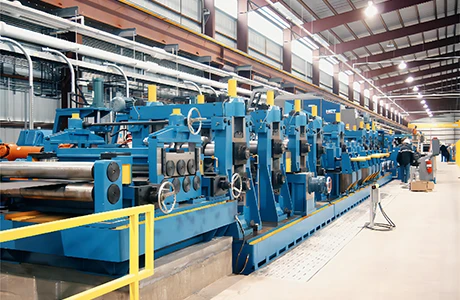
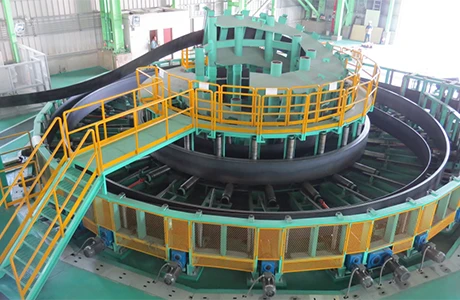
A professional cut-to-length line is a sequential processing system designed to convert wide steel coils into precise, flat rectangular sheets. The process begins at the uncoiler, where the coil is securely held and fed into the line. From there, the material passes through a strip flattener, which uses a series of staggered rollers to remove internal stresses and eliminate the "coil set," ensuring the final sheet is perfectly planar.
The final stage involves the shear and welder system, where the material is clamped and cut to a specific length with high repeatability. In advanced configurations, these lines are integrated with coil cars for efficient loading and conveyor run-out tables to manage the finished sheets. This systematic flow is essential for maintaining material integrity and preventing surface damage during high-speed processing.
Precision in a cut-to-length line is primarily governed by the rigidity of the machine frame and the accuracy of the leveling rollers. A robust frame prevents deflection under the immense pressure of high-gauge steel, which is vital for maintaining consistent thickness and flatness across the entire sheet width. If the frame flexes, the result is often "cupping" or "bowing," which renders the sheets unusable for precision CNC folding or laser cutting.
The critical intersection of flatness and squareness is determined by the synchronization between the strip flattener's tension and the shear's clamping pressure, which ensures that sheets remain stable and cut perfectly perpendicular to the rolling direction.
Furthermore, the quality of the cutting blades and the hydraulic control system directly impact the edge quality. High-grade alloy steel blades with precise gap settings minimize burrs and prevent deformation at the cut edge. For manufacturers operating at high speeds, the implementation of an accumulator can significantly increase efficiency by decoupling the uncoiling process from the shearing cycle, allowing the shear to operate continuously.
When comparing different line configurations, efficiency is measured not just by the speed of the shear, but by the overall material utilization and the reduction of setup times. Lines equipped with automated coil cars and advanced PLC controls allow for faster transitions between different coil widths and gauges, reducing downtime during shift changes or product swaps.
The following data illustrates the relative impact of specific technical upgrades on total system throughput and material yield, demonstrating why investing in higher-tier leveling and accumulation technology yields a disproportionate increase in daily output for heavy-duty operations.
Cut-to-length lines are indispensable in industries where raw material is supplied in coils but processed as sheets. In the automotive sector, these lines produce the precise blanks needed for stamping chassis components and body panels, where flatness is non-negotiable to avoid warping during the deep-drawing process. Similarly, in the appliance industry, they provide the base sheets for refrigerator and washing machine casings.
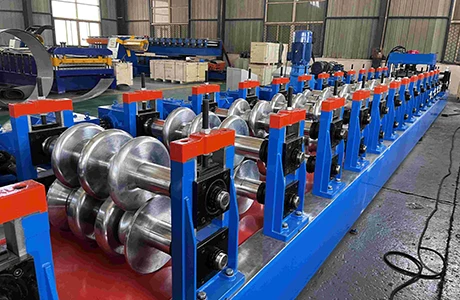
Beyond automotive, these systems are widely used in the production of solar panel frames and structural steel components. For these applications, the integration of the cut-to-length line with subsequent cold roll forming machines allows for a seamless transition from raw coil to finished profile, significantly reducing logistics costs and handling time within the factory.
The industry is moving toward "Industry 4.0" integration, where cut-to-length lines are no longer isolated machines but nodes in a connected digital factory. Modern systems now feature real-time monitoring of strip tension and leveling quality, using sensors to automatically adjust roller pressure based on the material's actual yield strength and thickness variations.
Another significant trend is the shift toward servo-driven feeding systems, which replace traditional hydraulic actuators. Servo motors provide micron-level precision in length control and faster acceleration/deceleration cycles, allowing manufacturers to achieve higher speeds without sacrificing the accuracy of the cut length.
Additionally, the integration of automatic stacking systems at the end of the line has reduced manual labor and improved safety. These systems precisely align and stack sheets of varying thicknesses, preparing them for immediate transport to the next stage of production or for shipping to the end customer.
One of the most common challenges in coil processing is "edge wave" or "center buckle," which occurs when the material is over-leveled or when the tension is improperly balanced. Solving this requires a sophisticated strip flattener with adjustable roller gaps and a precise sequence of deformation that neutralizes the internal stresses of the steel without introducing new defects.
Another operational hurdle is the wear and tear of the shearing blades, which leads to increased burrs and dimensional drift. The solution lies in implementing a scheduled maintenance regime and using high-performance materials for the blades, combined with precise gap-setting tools to ensure the shear remains sharp and accurate over thousands of cycles.
Integration with existing workflows also poses a challenge. For enterprises scaling their production, choosing a manufacturer like AIS Machinery, which offers turnkey projects and complete solutions—including coil cars and conveyor systems—ensures that the new line fits perfectly into the physical and digital architecture of the plant.
| Feature | Entry-Level Line | Industrial Grade | High-Precision Line |
|---|---|---|---|
| Leveling Type | Simple Roller | Multi-stage Flat | Precision Servo-Flat |
| Length Control | Manual/Basic PLC | Digital Encoder | High-Res Servo Sync |
| Edge Quality | Standard Shear | Precision Gap | Zero-Burr Technology |
| Throughput | Low-Medium | High Volume | Ultra-High Speed |
| Material Range | Thin Gauges | Mixed Gauges | Heavy-Duty Steel |
| Automation | Semi-Automatic | Fully Automatic | Smart Factory Ready |
A slitting line cuts a wide coil into several narrower coils (longitudinal cutting), whereas a cut to length line cuts a coil into flat, rectangular sheets (transverse cutting). While both start with an uncoiler and often include a flattener, the cut to length line ends with a shear and stacking system rather than a recoiler.
The leveling capacity depends on the material's yield strength, thickness, and the degree of "coil set" (curvature). Higher-strength steels require more robust flattening rollers and higher pressure to achieve the same level of flatness as softer carbon steels. Consulting with engineers to analyze your specific material specs is the best approach.
Yes, but the equipment must be configured for it. For galvanized or stainless steel, non-marking rollers and specialized blade coatings are often used to prevent surface scratches and avoid material galling. The leveling settings must also be adjusted to account for the different elastic properties of these metals.
An accumulator acts as a buffer between the uncoiler and the shear. It allows the uncoiler to run at a constant speed even when the shear is clamped and cutting. This prevents the line from stopping and starting repeatedly, which increases overall production speed and reduces mechanical wear on the motors.
Blade life depends on the material hardness and the volume of cuts. Generally, blades should be inspected every 3-6 months, but for high-volume industrial lines, sharpening may be required more frequently. The first sign of replacement is an increase in edge burrs or a slight deviation in the squareness of the cut.
Priority should be given to the manufacturer's ability to provide customized solutions based on your specific material gauge and required tolerances. Look for certifications (ISO, CE), a proven track record in turnkey projects, and a comprehensive support system for spare parts and technical maintenance to ensure long-term uptime.
Investing in a high-performance cut to length line is a strategic decision that impacts every stage of the metal fabrication process. By prioritizing structural rigidity, precision leveling, and synchronized control systems, manufacturers can eliminate material waste and ensure their sheets meet the stringent requirements of modern industrial applications. The shift toward automated, data-driven processing is no longer an option but a necessity for maintaining competitiveness in the global metal products market.
For businesses seeking to optimize their coil processing capabilities, partnering with a supplier that understands the full ecosystem—from uncoiling to final stacking—is essential. If you are evaluating new equipment or upgrading an existing facility, you can find reliable technical specifications and comprehensive processing solutions at https://www.aistubemill.com to help you achieve maximum operational efficiency.

Send a Message
Dear customer, thank you for your attention! We provide high-quality machinery and equipment and look forward to your orders. Please inform us of your needs and we will respond quickly!