


Top Cold Roll Forming Machine Suppliers for ERW Tube Mills
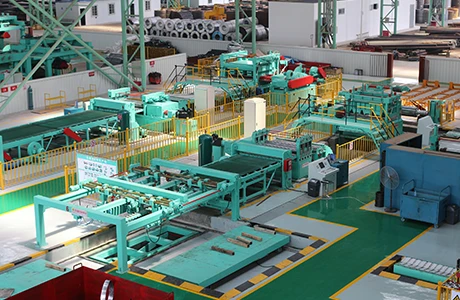
In the high-capacity production of ERW tube mills, maintaining a seamless flow of steel strip is the primary challenge for operational efficiency. A cage accumulator serves as the critical buffer between the initial uncoiling and welding stage and the subsequent forming mill. By storing the steel strip helically around a vertical frame, this equipment prevents production interruptions during coil changes or butt welding, ensuring the forming mill operates at a constant speed. For manufacturers seeking reliable cold roll forming machine suppliers, integrating a high-performance accumulator is essential for maximizing throughput and reducing scrap rates. Whether processing carbon steel, alloy, or stainless steel, the ability to stabilize strip tension directly impacts the dimensional accuracy and surface quality of the final pipe product.

Understanding the Role of Cage Accumulators in Tube Mill Efficiency
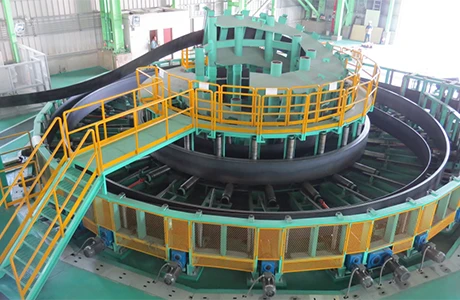
The cage accumulator is an indispensable material storage device designed specifically for ERW (Electric Resistance Welding) production lines. Its primary function is to act as a kinetic energy reservoir, storing a predetermined length of steel strip. This allows the front end of the line—comprising the uncoiler, shear, and butt welder—to stop momentarily for welding operations without forcing the main forming mill to stop. In the context of cold roll forming machine suppliers, this component is what transforms a batch-style feeding process into a continuous automated stream.
Operationally, the strip is guided into the cage in a helical pattern. When the butt welder is active, the accumulator releases the stored strip to feed the forming mill. Once the weld is complete, the uncoiler accelerates to refill the cage. This cycle happens rapidly and automatically, often managed by PLC systems to synchronize speeds. Without this buffer, every coil change would require a full line shutdown and restart, leading to significant downtime and a higher volume of "end-of-coil" waste.
- Continuous Production: Eliminates idling time for the sizing and welding sections.
- Tension Stabilization: Maintains a consistent pull, reducing the risk of strip buckling.
- Material Versatility: Capable of handling various thicknesses from 0.5mm to 4.5mm.

Technical Architecture and Engineering Requirements
A professional-grade cage accumulator is not merely a frame but a precision-engineered system. The cage frame must be constructed from high-strength welded alloy steel, treated with shot blasting and anti-corrosion coatings to withstand the harsh environment of a steel mill. Precision is paramount in the rotating parts; the use of imported bearings ensures that the equipment operates without vibration, even at maximum strip speeds of 120m/min.
One of the most critical engineering aspects is the tension control system. If the strip is too loose, it may jump or tangle; if too tight, it can cause breakage or surface scratches. Modern systems utilize electric or pneumatic controls to respond instantly to speed changes. Additionally, for high-speed lines, anti-strip-jumping devices and emergency braking systems are mandatory to meet CE and local safety standards, protecting both the operator and the machinery.
For those requiring specialized production, such as stainless steel pipes, a non-contact strip guiding system is recommended. This prevents any direct metal-to-metal friction that could mar the polished surface of the material, ensuring the final product meets strict aesthetic and technical specifications.
Application Solutions for Different Production Capacities
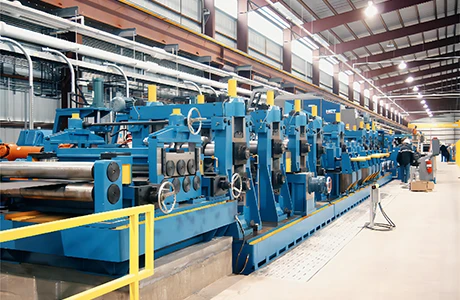
Depending on the target output and material thickness, different configuration levels are deployed. For standard ERW mills, a Standard Solution typically follows the sequence: Uncoiler → Shear & Butt Welder → Cage Accumulator → Forming Mill. This is the most cost-effective approach for medium-duty production of water, gas, and structural pipes.
For high-volume manufacturers, a High-Speed Upgrade is necessary. This integrates a double-head shear and butt welder with PLC-based speed synchronization. This setup allows the line to run at speeds exceeding 100m/min, significantly increasing the daily tonnage. For heavy-duty applications involving high-strength steel (thickness 3.0mm–4.5mm), a Reinforced Solution is used, featuring a strengthened cage frame and servo-controlled tensioning to handle the increased mechanical load of thicker strips.
These solutions are widely applied across various industries, including solar support piles, oil pipelines, automotive components, and furniture manufacturing. The adaptability of the accumulator ensures that whether a factory is producing small-diameter tubes or large API pipes, the line remains stable and efficient.
Cage Accumulator vs. Disk Accumulator Comparison
| Feature | Cage Accumulator | Disk Accumulator | Impact on Production | Recommendation |
|---|---|---|---|---|
| Investment Cost | Lower | Higher | Initial CAPEX | Cage for budget-conscious |
| Applicable Speed | Medium to High (120m/min) | Ultra-High (200m/min+) | Throughput Rate | Disk for mass production |
| Footprint | Moderate | Larger | Factory Layout | Cage for limited space |
| Maintenance | Low (Mechanical) | High (Servo/Complex) | OpEx & Downtime | Cage for easy servicing |
| Typical Use | Standard ERW Mills | Ultra-high speed lines | Market Segment | Cage for general utility |
Selection Guide for ERW Line Material Storage
Selecting the right accumulator requires a deep analysis of the production line parameters. The basic criteria are strip width and thickness. For strips under 200mm, a light-duty small-size accumulator is sufficient. However, as widths increase toward 400mm and beyond, a reinforced heavy-duty structure is required to prevent the cage from flexing under the weight of the stored material.
Line speed is the second deciding factor. While a standard mechanical safety setup works for lines under 80m/min, any line running between 80–120m/min must be equipped with enhanced tension control and reinforced guardrails. This ensures that the strip does not "jump" out of the helical path during rapid acceleration or deceleration phases.
Finally, consider the factory's physical constraints. Vertical cage accumulators are preferred for their moderate footprint, saving approximately 30% of floor space compared to horizontal loop accumulators. If the factory ceiling is low, a custom low-profile design may be necessary to accommodate the equipment without compromising the storage capacity (typically between 100m to 250m).
Quality Control and Manufacturer Reliability
When evaluating equipment providers, the manufacturing process is as important as the technical specifications. High-quality equipment depends on rigorous heat treatment and precision machining. For instance, the use of CNC milling for key grooves and lathes ensures that all components fit perfectly, reducing vibration and wear over time. Gear systems, including spiral bevel gears and drum gear couplings, should undergo carburization and quenching to extend their service life.
Reliable suppliers implement a dedicated quality department to inspect raw materials before fabrication and conduct smooth-running tests before shipment. This commitment to quality ensures that the equipment arrives ready for installation and operates consistently in high-pressure industrial environments. Furthermore, professional after-sales support—including on-site installation, employee training, and a comprehensive warranty—is vital for minimizing the learning curve and ensuring the machinery is utilized to its full potential.
By focusing on optimized design and high-grade material selection, manufacturers can provide a stable, efficient, and low-noise driving system that minimizes the total cost of ownership through reduced maintenance and high energy efficiency.
Common Questions Regarding Pipe Mill Accumulators
What is the main difference between a cage accumulator and a loop accumulator?
A cage accumulator stores the strip helically around a vertical frame, making it more space-efficient and suitable for medium-to-high speeds. A loop accumulator typically stores the strip in a horizontal pattern, which can offer larger storage capacities but requires significantly more floor space.
Can a cage accumulator handle stainless steel strips without damaging the surface?
Yes, provided that the equipment is configured with a non-contact strip guiding system. This prevents direct friction between the strip and the machinery, which is critical for maintaining the surface finish of stainless steel.
How do I determine the required storage capacity for my accumulator?
Capacity depends on the time required for your shear and butt welder to complete a cycle. You must store enough strip to feed the forming mill for the entire duration of the welding process plus a safety margin. Typical capacities range from 100m to 250m.
What are the typical maintenance requirements for this equipment?
Maintenance is primarily mechanical. It involves regular lubrication of the bearings, checking the tension of the guiding system, and inspecting the frame for any signs of wear or corrosion. Because it has fewer complex electronics than disk accumulators, servicing is generally low-cost.
Is PLC integration standard for modern cage accumulators?
Yes, most high-efficiency lines use PLC control to synchronize the speed of the uncoiler and the forming mill, ensuring the accumulator is filled and emptied smoothly without causing strip slack or breakage.
What happens if the strip speed exceeds the accumulator's limit?
Exceeding the rated speed (typically 120m/min for standard models) can cause strip instability or "jumping." This is why emergency braking and anti-jump fences are critical safety features for high-speed production lines.
Technical Resources & Industry Standards
- ISO International Standards for Machinery Safety
- ASME Standards for Pressure Piping and Fabrication
- American Petroleum Institute (API) Pipe Specifications
- CE Marking Requirements for Industrial Equipment
Optimizing your tube mill's entry section with the right material storage solution is the first step toward achieving true continuous production. By balancing cost, speed, and space, manufacturers can ensure a stable feed that maximizes the lifespan of their forming rollers and increases overall profitability.
Related Articles



 English
 Albanian
 Arabic
 French
 German
 Indonesian
 Italian
 Japanese
 Kazakh
 Korean
 Latin
 Macedonian
 Portuguese
 Russian
 Spanish
 Thai
 Turkish
 Ukrainian
 Uzbek