
-
 Tel:86-15176910262
-

Search

Automatic vs Semi Automatic Shear and Welder: Which Coil Joining System Is Best for Your Tube Mill?
Aug . 05, 2026 09:48
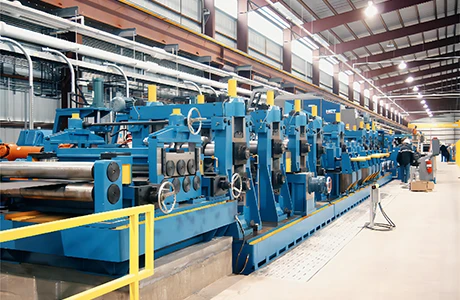
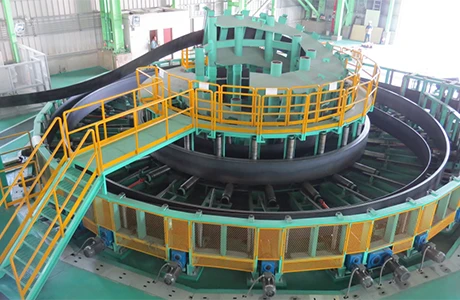
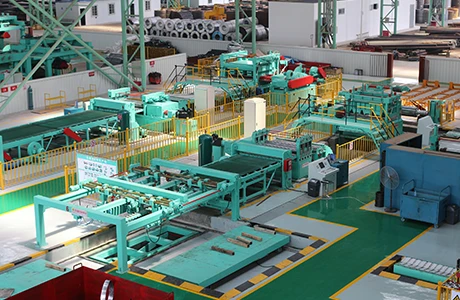
A Shear and Welder is installed in the entry section of an ERW tube mill, typically between the decoiler and the strip accumulator.
Its primary functions are:
✅Cut the tail end of the previous coil
✅Cut the head of the new coil
✅Align both strip ends accurately
✅Weld the two strips together
✅Allow continuous production without stopping the tube mill
Without a reliable coil joining system, every coil change would require stopping the entire production line, greatly reducing productivity.
Automatic Shear and Welder
An Automatic Shear and Welder performs nearly the entire coil joining process automatically.
After the operator loads the strip, the machine automatically completes:
- Strip clamping
- End trimming
- Accurate positioning
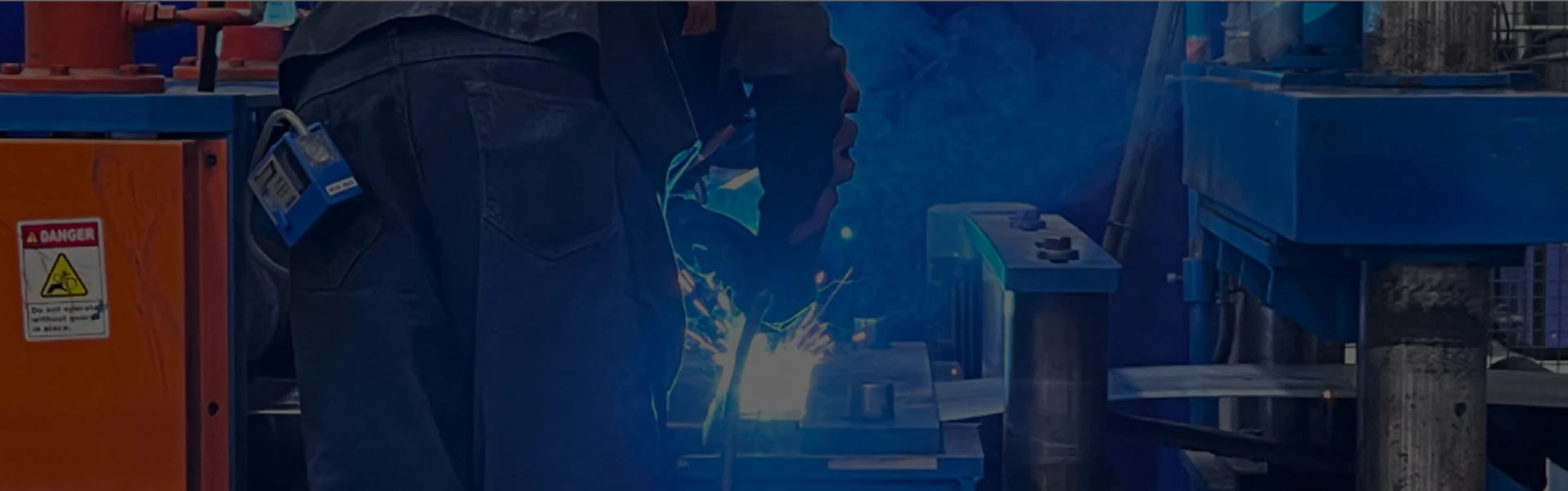
- TIG butt welding
- Weld release
The welding parameters are controlled by a PLC, ensuring stable weld quality and excellent repeatability.
Best Applications📍
- ♦ High-speed ERW tube mills
- ♦ Large production capacity
- ♦ Multiple work shifts
- ♦ Continuous manufacturing
- ♦ Factories requiring maximum uptime


Semi Automatic Shear and Welder
A Semi Automatic Shear and Welder combines manual operation with automatic functions.
The operator manually positions and aligns the strip ends before the machine performs shearing and welding.
Compared with a fully automatic system, it has a simpler structure while still delivering reliable weld quality.
Best Applications📍
- ♦ Small and medium tube mills
- ♦ Lower production volumes
- ♦ Start-up factories
- ♦ Customers with limited budgets
- ♦ Production lines with fewer coil changes


Automatic vs Semi Automatic Shear and Welder
| Feature | Automatic Shear and Welder✂️ | Semi Automatic Shear and Welder⚡ |
|---|---|---|
| Automation Level | Fully automatic | Partially automatic |
| Strip Alignment | Automatic | Manual |
| Welding Process | Automatic TIG welding | Semi-automatic TIG welding |
| Production Efficiency | Higher | Medium |
| Operator Requirement | Low | Moderate |
| Labor Cost | Lower | Higher |
| Investment Cost | Higher | More economical |
| Welding Consistency | Excellent | Good |
| Best for | High-speed production | Medium-speed production |
How to Choose the Right Shear and Welder?
Selecting the correct machine depends on your production requirements rather than simply choosing the highest automation level.
📌Choose an Automatic Shear and Welder if:
- Your tube mill runs at high production speeds.
- Coil changes occur frequently.
- You want to reduce manual labor.
- Consistent welding quality is essential.
- You operate multiple production shifts.
⚙️Choose a Semi Automatic Shear and Welder if:
- Your production volume is moderate.
- Budget is an important consideration.
- Operators are available for manual alignment.
- Production speed is not extremely high.
- You need a reliable and cost-effective solution.


What Information Should Be Provided Before Ordering?
To recommend the most suitable coil joining system, manufacturers typically require:
- • Steel strip width
- • Strip thickness
- • Material type (Carbon Steel / Stainless Steel / Galvanized Steel)
- • Tube mill production speed
- • Accumulator type
- • Coil weight
- • Annual production capacity
These parameters help determine the appropriate shearing capacity, welding system, clamping force, and automation level.
Why Choose a TIG Welding Shear and Welder?
Compared with conventional joining methods, Automatic TIG Welding provides several important advantages:
- Clean, high-quality welds
- Stable arc and excellent weld consistency
- Small heat affected zone
- Minimal weld deformation
- Reliable performance for continuous tube production
- Smooth weld surface that passes easily through the accumulator
For modern ERW Tube Mill production lines, TIG butt welding remains one of the most reliable and widely adopted coil joining technologies.

Related Products





Related News

2026-11-10 01:16:30
How to Choose a Run Out Table for an ERW Tube Mill
Choose a run out table for an ERW tube mill by matching pipe size, length, weight, conveyor type, speed, and finishing-section layout.

2026-11-02 02:23:25
ERW Pipe Mill for Sale: Buyer FAQs for a 76 mm Line
Review the 21.3 mm to 76 mm range, materials, equipment, speed, power, cutting methods, and production controls for an ERW pipe mill for sale.

2026-10-29 00:44:48
High-Speed Steel Coil Slitting Line FAQ: Specifications, Ordering and Support Questions
Get direct answers about High-Speed Steel Coil Slitting Line specifications, material compatibility, component layout, process steps, quality standards, and after-sales support from HEBEI AIS MACHINERY EQUIPMENT CO.,LTD.

2026-10-28 00:06:34
Learn the key working requirements and integration criteria for selecting a steel pipe making machine manufacturer. Covers diameter range, wall thickness, strip grade, HF welding power, footprint, and electrical supply using the 10inch 273mm ERW Pipe Making Machine from HEBEI AIS MACHINERY EQUIPMENT CO.,LTD.

2026-10-28 00:05:55
Choosing a Flying Cold Saw: Working Requirements and Integration Fit
Learn the key selection criteria for a flying cold saw — pipe diameter, line speed, cut precision, blade type, and PLC integration — to find the right cold cutting flying saw machine for your ERW tube mill.

2026-10-28 00:05:28
Evaluate whether the GGP 100kw Solid State High Frequency Induction Heating Welding Machine fits your ERW pipe production line. This guide covers power requirements, cooling infrastructure, electrical supply, and control integration criteria.

2026-10-28 00:04:41
Choosing Quick-Change System for Forming & Sizing Section: Application Fit and Specification Checks
Learn the key selection criteria for a Quick-Change System for Forming & Sizing Section in ERW tube mills — covering changeover frequency, cassette structure, pneumatic couplings, and application scope for structural, automotive, and export tube production.

2026-10-23 17:54:55
Compare a steel pipe seam annealing machine and a pipe threading machine: function, published ranges, PLC/HMI and CNC controls, operating steps and maintenance.
Send a Message
Dear customer, thank you for your attention! We provide high-quality machinery and equipment and look forward to your orders. Please inform us of your needs and we will respond quickly!
 English
 Albanian
 Arabic
 French
 German
 Indonesian
 Italian
 Japanese
 Kazakh
 Korean
 Latin
 Macedonian
 Portuguese
 Russian
 Spanish
 Thai
 Turkish
 Ukrainian
 Uzbek