
-
 Tel:86-15176910262
-

Search

How to Choose a Run Out Table for an ERW Tube Mill
Nov . 10, 2026 01:16
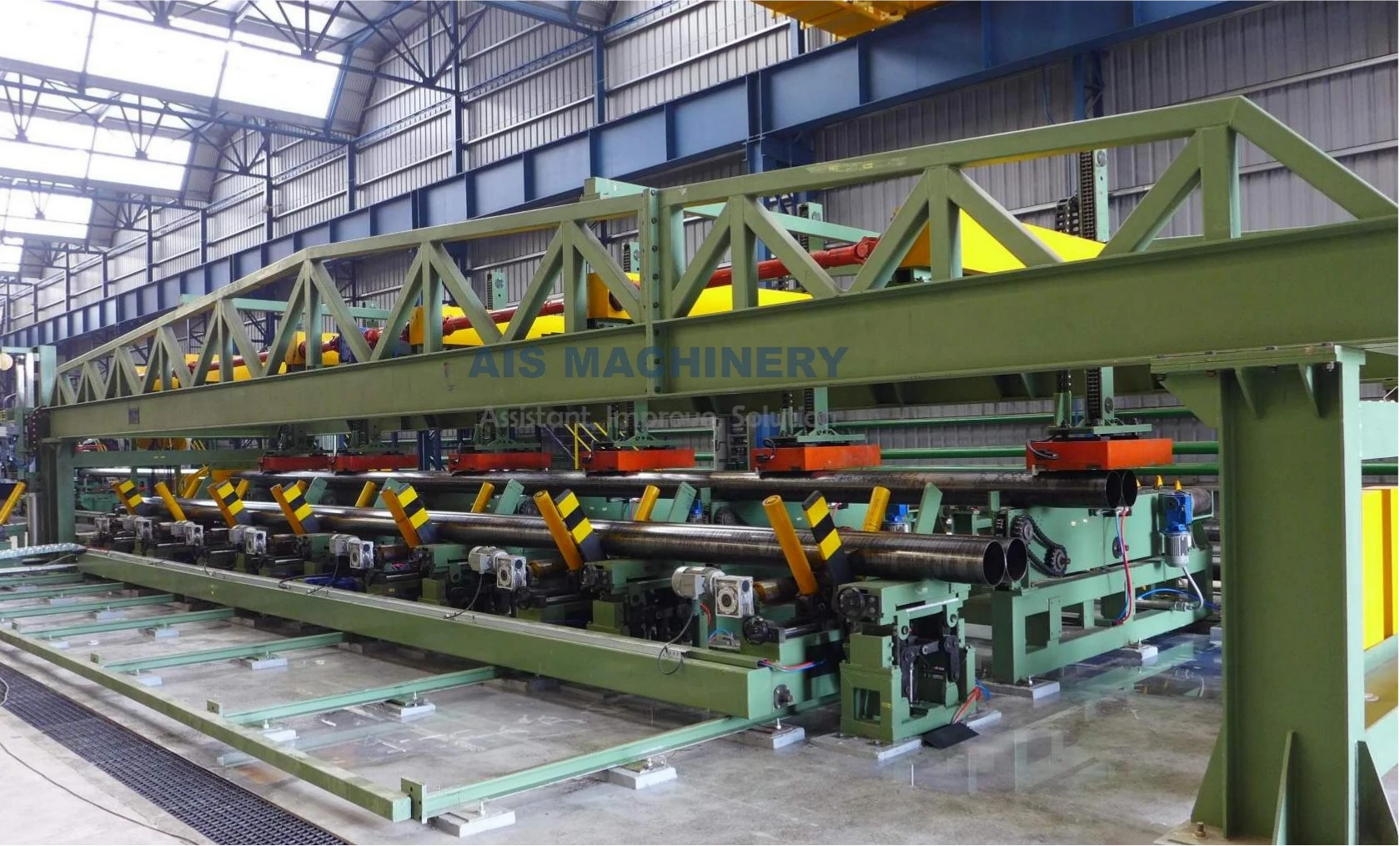
A run out table must match pipe diameter, length, weight, line speed, and the space between cutting and packing. Our conveyor and run out table supports post-cut pipe transfer, alignment, and buffering, with roller or chain conveyor options, driven or gravity operation, and layouts tailored to the mill. Use the production range and workshop layout to define the right configuration.
Pipe diameter, cut length, and maximum piece weight must fit the selected support and transfer capacity.
Conveyor type, drive mode, speed, and layout must match the cut-off discharge and the next inspection, stacking, or packing process.
The table length, roller arrangement, and access space must suit the workshop layout and maintenance routine.
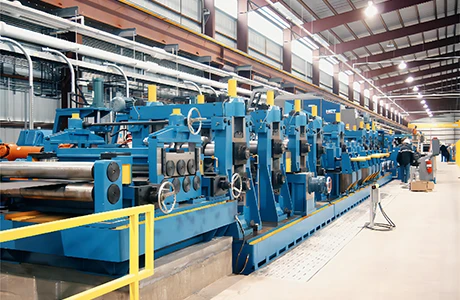
A run out table sits after the flying cut-off or cold saw and before inspection, stacking, or packing. Its job is to receive finished pipe, support it during discharge, keep it aligned, and provide enough buffer for the next finishing step. For an ERW tube mill, the correct choice depends on the pipe range, cut length, load, transfer speed, and available workshop space.
Start with the pipe range
Pipe diameter is the first sizing check. Our conveyor and run out table can be configured for pipe diameters from Ø20 to Ø325 mm, while a typical configuration covers Ø20 to Ø168 mm. The wider range is relevant when one finishing section must handle different tube sizes. A line dedicated to smaller welded pipe may use the typical configuration, while a mixed-production mill should send its complete diameter range for layout and load selection.
Pipe length affects the support area and the discharge layout. The system is used with pipe lengths from 3 to 12 m, and conveyor lengths of 6 to 12 m are listed for a typical configuration. A 12 m pipe needs a layout that supports its movement and discharge without allowing the product to overhang into an unsafe or inconvenient handling zone. Send the shortest and longest cut lengths when requesting a design.
Weight also changes the selection. The typical conveyor specification has a load capacity of up to 2,000 kg, while the wider system range can reach up to 3 tons depending on design. If your line produces heavy-wall or long pipe, use the maximum piece weight, not average bundle weight, when defining the table.
Match the conveyor type to the transfer task
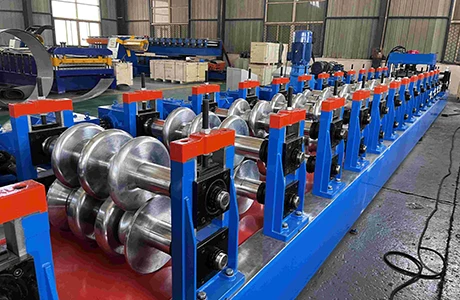
Roller conveyors suit lines where rollers guide the pipe forward through the discharge section. Rollers may be steel or rubber-coated. A rubber-coated roller can be considered where surface contact is a major handling concern, while steel rollers provide a direct mechanical support surface for the transfer arrangement.
Chain-driven conveyors are suitable when the pipe needs a driven transfer path through the run-out section. The conveyor may use a chain or belt drive for roller transmission, with a motor and gear reducer supplying power to driven rollers. A gravity-type run out table is another option for a layout where the table supports discharge without a driven transfer mechanism.
Our system can use motor-driven or gravity operation. The decision should follow the handoff after cutting: a powered conveyor fits a controlled transfer toward inspection or packing, while gravity operation fits a layout designed around supported discharge and the available movement path. We match the conveyor speed to the tube mill, and a typical configuration allows adjustable speeds from 10 to 30 m/min.
Check integration after the cut-off
The run out table must fit the process sequence, not sit as a separate platform beside it. The normal arrangement is forming and welding, sizing, flying cut-off or cold saw, run out table and conveyor, then inspection, stacking, or packing. The table therefore receives each cut pipe at the point where cutting ends and finishing begins.
Speed synchronization matters when the cutting section is running continuously. Our conveyor speed can be synchronized with the cut-off unit so the pipe moves into the finishing section in a controlled way. For a high-output line, include the mill speed and cut length in the configuration request. For a lower-speed line, the layout may place greater emphasis on buffering, manual inspection, or packing access.
Picture a 6 m pipe leaving the saw and entering a 6 to 12 m transfer section. The rollers or chain conveyor need to support the pipe as it moves toward inspection, while the run-out support table provides a stable receiving area after forming or cutting. Measure the distance from the saw discharge point to the next process and compare it with the required conveyor length before ordering.
Allow for alignment, buffering, and maintenance
Alignment is a practical selection criterion because the next operation may require the pipe to arrive in a consistent position. The frame supports roller alignment, and the system can collect and buffer finished pipes before the next process. This helps separate the timing of cutting from inspection, stacking, or packing when the layout requires a short holding area.
The frame is a heavy-duty steel structure designed to provide rigidity during continuous operation. The mechanical structure remains accessible for inspection and maintenance. Routine checks include the motor, reducer, rollers, bearings, and transmission parts. Chain or belt tension needs periodic inspection, and roller surfaces should be kept clean so debris does not build up at the contact points.
A buyer planning manual handling should also leave access around the discharge area for pipe removal and inspection. An automatic finishing section needs the table outlet aligned with the following equipment. Give us the next process, available floor space, and access direction so we can set the table length and layout around the real line.
Choose the product configuration that fits your mill
The Conveyor and Run Out Table fits an ERW tube mill that needs post-cut pipe support, transfer, alignment, and buffering. Choose a roller conveyor when roller-guided movement matches the finishing layout. Choose a chain-driven conveyor when the pipe needs powered transfer. Choose a gravity-type run out table when the discharge arrangement is designed for non-powered movement.
A typical specification includes a 6 to 12 m conveyor, 89 to 159 mm roller diameter, 2.2 to 5.5 kW motor power, adjustable 10 to 30 m/min conveyor speed, pipe diameter of Ø20 to Ø168 mm, and load capacity up to 2,000 kg. Larger pipe ranges and heavier loads can be configured around the production requirement, with the wider system range reaching Ø20 to Ø325 mm and up to 3 tons depending on design.
Questions to settle before ordering
Can the run out table handle 12 m pipe?
Yes, the system is used with pipe lengths from 3 to 12 m, and a typical conveyor length is 6 to 12 m. The table length and layout still need to match the discharge route, the next process, and the available workshop space. Send the maximum cut length and the distance to inspection, stacking, or packing so we can define the support arrangement.
What motor power is used for the driven conveyor?
A typical configuration uses a 2.2 to 5.5 kW motor. The required selection depends on pipe diameter, piece weight, conveyor length, and transfer speed. A driven conveyor also uses a motor and gear reducer for the rollers, with chain or belt transmission available. Include the heaviest pipe and the required speed when requesting the drive arrangement.
Is a gravity run out table available?
Yes, gravity-type run out tables are available alongside motor-driven conveyor arrangements. Gravity operation suits a discharge layout where the pipe can move through the supported table without powered transfer. If the pipe must be moved in a controlled path toward inspection or packing, a driven roller or chain conveyor may be the better fit. Define the outlet direction and next operation first.
Send the line details for a matched layout
Choose our Conveyor and Run Out Table when your ERW tube mill needs an organized path from cutting to inspection, stacking, or packing. We can configure roller, chain-driven, or gravity handling around the pipe range and workshop layout. Send the pipe diameter, cut length, maximum piece weight, mill speed, conveyor length, and outlet process for a quotation.

About the author
The company
HEBEI AIS MACHINERY EQUIPMENT CO.,LTD
Hebei AIS Machinery Equipment located in Shijiazhuang city, Hebei Province, China CN.Factory have passed the certification of ISO, CE and SGS which is a professional supplier of ERW Tube Mill Machine, High-Frequency Longitudinal Welded Pipe Making Machine, API Pipe Mill, FFX Induction Welding Pipe Making Machine, DFT Direct Forming to Square Pipe Mill, Cold Roll Forming Machine, Multi-functional Tube Mill Machine , Steel Coil Slitting line, Cut to Length Line and other Spare Parts.…
About Us ↗Visit company website ↗
Related Products






Related News

2026-11-10 01:16:30
How to Choose a Run Out Table for an ERW Tube Mill
Choose a run out table for an ERW tube mill by matching pipe size, length, weight, conveyor type, speed, and finishing-section layout.

2026-11-02 02:23:25
ERW Pipe Mill for Sale: Buyer FAQs for a 76 mm Line
Review the 21.3 mm to 76 mm range, materials, equipment, speed, power, cutting methods, and production controls for an ERW pipe mill for sale.

2026-10-29 00:44:48
High-Speed Steel Coil Slitting Line FAQ: Specifications, Ordering and Support Questions
Get direct answers about High-Speed Steel Coil Slitting Line specifications, material compatibility, component layout, process steps, quality standards, and after-sales support from HEBEI AIS MACHINERY EQUIPMENT CO.,LTD.

2026-10-28 00:06:34
Learn the key working requirements and integration criteria for selecting a steel pipe making machine manufacturer. Covers diameter range, wall thickness, strip grade, HF welding power, footprint, and electrical supply using the 10inch 273mm ERW Pipe Making Machine from HEBEI AIS MACHINERY EQUIPMENT CO.,LTD.

2026-10-28 00:05:55
Choosing a Flying Cold Saw: Working Requirements and Integration Fit
Learn the key selection criteria for a flying cold saw — pipe diameter, line speed, cut precision, blade type, and PLC integration — to find the right cold cutting flying saw machine for your ERW tube mill.

2026-10-28 00:05:28
Evaluate whether the GGP 100kw Solid State High Frequency Induction Heating Welding Machine fits your ERW pipe production line. This guide covers power requirements, cooling infrastructure, electrical supply, and control integration criteria.

2026-10-28 00:04:41
Choosing Quick-Change System for Forming & Sizing Section: Application Fit and Specification Checks
Learn the key selection criteria for a Quick-Change System for Forming & Sizing Section in ERW tube mills — covering changeover frequency, cassette structure, pneumatic couplings, and application scope for structural, automotive, and export tube production.

2026-10-23 17:54:55
Compare a steel pipe seam annealing machine and a pipe threading machine: function, published ranges, PLC/HMI and CNC controls, operating steps and maintenance.
Send a Message
Dear customer, thank you for your attention! We provide high-quality machinery and equipment and look forward to your orders. Please inform us of your needs and we will respond quickly!
 English
 Albanian
 Arabic
 French
 German
 Indonesian
 Italian
 Japanese
 Kazakh
 Korean
 Latin
 Macedonian
 Portuguese
 Russian
 Spanish
 Thai
 Turkish
 Ukrainian
 Uzbek