
-
 Tel:86-15176910262
-

Search

Steel Pipe Seam Annealing Machine vs Pipe Threading Machine: Operating Requirements, Interfaces and Maintenance
Oct . 23, 2026 17:54
SIDE BY SIDE
Steel Pipe Seam Annealing Machine vs Pipe Threading Machine: Operating Requirements, Interfaces and Maintenance
A bounded comparison of the steel pipe seam annealing machine and the pipe threading machine from HEBEI AIS MACHINERY EQUIPMENT CO.,LTD. Both appear in the finishing section of a welded pipe line, but they do different jobs: one heat-treats the weld seam, and the other cuts threads on pipe ends. The article compares their function, working principle, published ranges, control interfaces, operating steps and maintenance points using only published product data.
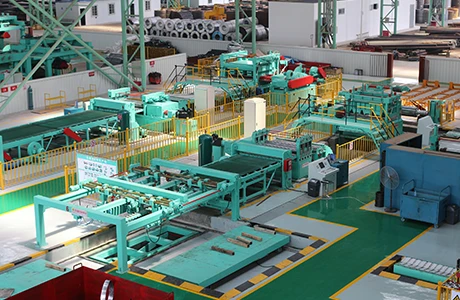
Steel pipe seam annealing machine (HEBEI AIS MACHINERY EQUIPMENT CO.,LTD)
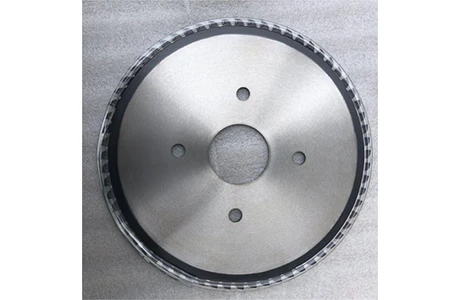
Pipe threading machine (HEBEI AIS MACHINERY EQUIPMENT CO.,LTD)
Why compare these two machines?
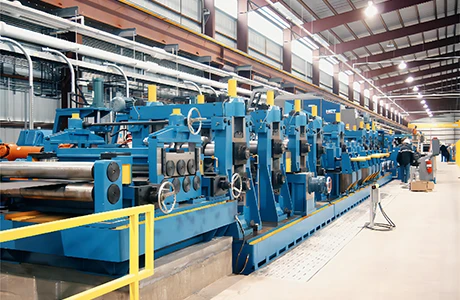
HEBEI AIS MACHINERY EQUIPMENT CO.,LTD lists both the steel pipe seam annealing machine and the threading machine as equipment for the finishing section of a welded pipe line. If you are planning that section, you need to know what each machine does, what it needs to run, how operators control it and what upkeep the published material describes.
The two machines are not alternatives to each other. They do different jobs, so this comparison does not pick a winner. It puts the published information side by side under common criteria. If a criterion has no published data for one machine, the article says so.
At a glance
| Criterion | Steel pipe seam annealing machine | Pipe threading machine |
|---|---|---|
| Primary function | Anneals the weld seam after welding to remove welding stress, improve microstructure and improve corrosion resistance | Cuts internal or external threads on the ends of metal pipes |
| Working principle | Induction heating of the seam area, closed-loop temperature control, then air or water cooling | The pipe is clamped in a chuck and rotated (or the tool rotates), and the tool feeds along the pipe axis |
| Published pipe size range | Φ10 mm to Φ168 mm diameter (typical) | 1/2" to 6" (optional up to 8"+ on request) |
| Wall thickness | 0.4 mm to 5.0 mm (typical) | |
| Power data | Output power 30 kW to 300 kW; power source frequency 50 kHz to 400 kHz, customized per pipe size | Motor power 3 kW to 11 kW (varies by model) |
| Speed-related data | Line speed compatibility 10 to 120 m/min | Spindle speed 20 to 300 rpm (stepless or stepped adjustment) |
| Process-specific data | Annealing temperature range 850°C to 1100°C; temperature control accuracy ±5°C; heating zone length 100 mm to 300 mm (adjustable) | Max thread length 300 mm to 600 mm; pitch tolerance ≤ ±0.05 mm; thread types include NPT, BSPT, API, BSPP, G and RC |
| Control system | PLC + HMI (touchscreen interface) | Manual, semi-automatic or CNC |
| Cooling | Air cooling or water cooling, used to cool the seam quickly after heating | Circulating or mist cooling, used to keep the cutting area cool |
| Materials named in the source | Especially suited to continuous production of stainless steel pipes, titanium alloy pipes and other high-requirement metal tubes | Round pipes, black pipes, galvanized pipes, seamless steel and stainless steel |
A note on units: The annealing machine's sizes are published in millimetres. The threading machine's sizes are published in inches. This article does not convert between them, because the source does not say whether the inch values are nominal pipe sizes or actual outside diameters. Confirm the size basis with the supplier before you match the two machines to the same product range.
Function and position in the line
The source describes the steel pipe seam annealing machine as a key piece of heat treatment equipment in welded pipe production lines. It works on the weld seam after welding and is intended to support longer service life of the pipe.
The pipe threading machine works on pipe ends. The source lists applications in pipeline manufacturing, oil and gas, construction and firefighting systems. These include API casing and drill pipe threading, threading galvanized and black steel pipe for water supply and drainage, and threading electrical conduit and HVAC pipe.
In short, the annealing machine changes the condition of the welded seam, while the threading machine prepares the pipe ends for threaded connections. Which one a project needs depends on the pipe product and the specification it must meet. The published material does not set these requirements.
Operating requirements
Steel pipe seam annealing machine
The published workflow for the seam annealing machine is:
- Startup: Check the cooling system and the power, air and water connections. Start the PLC and enter the preset temperature, speed and power level.
- Heating start: Turn on the induction power so the coil generates a magnetic field. Feed the pipe into the coil automatically or manually.
- Real-time temperature control: An infrared thermometer monitors the weld seam, and the system adjusts power automatically to hold the set temperature.
- Cooling: The seam passes into the cooling zone, where its temperature drops quickly to form the desired microstructure.
- Shutdown and safety: When the process is finished, turn off the power and then the cooling, in sequence. Inspect the coils, grounding and pipes to confirm safe conditions.
This workflow shows that the machine relies on electrical power, cooling and air and water connections. It also has to be set to the line speed, which is published as compatible with 10 to 120 m/min. One detail to check: the working principle section gives a typical annealing temperature of 950°C to 1100°C, while the technical data table gives a range of 850°C to 1100°C. Confirm the correct setpoint range for your material with the supplier.
Pipe threading machine
The published working principle for the threading machine is:
- The chuck clamps the pipe, and either the pipe or the tool rotates.
- The feed mechanism moves the tool along the pipe axis.
- The cutting tool forms threads according to the set parameters.
- After threading, the tool retracts automatically or manually.
- The cooling system reduces thermal deformation and extends tool life.
The published material does not include a startup checklist or shutdown sequence for the threading machine. Buyers who need written operating and safety procedures should ask for the machine's operating manual.
Interfaces and controls
The steel pipe seam annealing machine uses a PLC control system that automates power, temperature and speed adjustments. Operators monitor and set parameters on a touchscreen human-machine interface (HMI). Temperature feedback comes from infrared or thermocouple sensors.
The pipe threading machine comes with manual, semi-automatic or CNC control. Its control panel handles rotation, feed speed and threading parameters. The feeding system can be manual or automatic. The chuck is a 3-jaw or 4-jaw type.
The published material does not say how either machine exchanges signals with upstream or downstream equipment. Ask the supplier to confirm line integration details, such as speed synchronization or data links.
Maintenance points in the published material
| Maintenance topic | Steel pipe seam annealing machine | Pipe threading machine |
|---|---|---|
| Inspection or wear items | Inspect the coils, grounding and pipes after shutdown | Change tools regularly during heavy-duty operation to keep thread quality (listed as a user tip) |
| Cooling system | Air or water cooling units; check the cooling system before startup | Circulating or mist cooling, described as extending tool life |
| Component design | Custom-designed induction coil (ring or U-type) surrounds the weld seam | User feedback in the source describes a modular design for quick part replacement |
| Maintenance intervals |
The threading machine's source page also includes a user feedback summary, with comments on precision, ease of use and maintenance. These are reported opinions, not measured results, and this article does not treat them as performance data.
Questions to confirm before you buy
- What pipe sizes, wall thicknesses and materials will each machine handle in your line?
- What annealing temperature setpoints does your seam material and pipe specification need?
- Which thread types and standards apply to your pipe ends, and which control type (manual, semi-automatic or CNC) fits your batch sizes?
- What power, air, water and cooling supply does each configuration need at your site?
- Do you need operating manuals, safety procedures and maintenance schedules for both machines?
Both machines are configured to the project, so ask HEBEI AIS MACHINERY EQUIPMENT CO.,LTD to confirm the final specifications for your pipe range before you treat any figure in this article as a commitment.
THE PEOPLE

About the author
THE COMPANY
HEBEI AIS MACHINERY EQUIPMENT CO.,LTD
Hebei AIS Machinery Equipment located in Shijiazhuang city, Hebei Province, China CN.Factory have passed the certification of ISO, CE and SGS which is a professional supplier of ERW Tube Mill Machine, High-Frequency Longitudinal Welded Pipe Making Machine, API Pipe Mill, FFX Induction Welding Pipe Making Machine, DFT Direct Forming to Square Pipe Mill, Cold Roll Forming Machine, Multi-functional Tube Mill Machine , Steel Coil Slitting line, Cut to Length Line and other Spare Parts.…
About Us ↗Visit company website ↗YOUR NEXT STEP
Bring your brief. Start a useful conversation.
Use case, specification, quantity and delivery window: make the next conversation specific.

Related Products






Related News

2026-11-02 02:23:25
ERW Pipe Mill for Sale: Buyer FAQs for a 76 mm Line
Review the 21.3 mm to 76 mm range, materials, equipment, speed, power, cutting methods, and production controls for an ERW pipe mill for sale.

2026-10-29 00:44:48
High-Speed Steel Coil Slitting Line FAQ: Specifications, Ordering and Support Questions
Get direct answers about High-Speed Steel Coil Slitting Line specifications, material compatibility, component layout, process steps, quality standards, and after-sales support from HEBEI AIS MACHINERY EQUIPMENT CO.,LTD.

2026-10-28 00:06:34
Learn the key working requirements and integration criteria for selecting a steel pipe making machine manufacturer. Covers diameter range, wall thickness, strip grade, HF welding power, footprint, and electrical supply using the 10inch 273mm ERW Pipe Making Machine from HEBEI AIS MACHINERY EQUIPMENT CO.,LTD.

2026-10-28 00:05:55
Choosing a Flying Cold Saw: Working Requirements and Integration Fit
Learn the key selection criteria for a flying cold saw — pipe diameter, line speed, cut precision, blade type, and PLC integration — to find the right cold cutting flying saw machine for your ERW tube mill.

2026-10-28 00:05:28
Evaluate whether the GGP 100kw Solid State High Frequency Induction Heating Welding Machine fits your ERW pipe production line. This guide covers power requirements, cooling infrastructure, electrical supply, and control integration criteria.

2026-10-28 00:04:41
Choosing Quick-Change System for Forming & Sizing Section: Application Fit and Specification Checks
Learn the key selection criteria for a Quick-Change System for Forming & Sizing Section in ERW tube mills — covering changeover frequency, cassette structure, pneumatic couplings, and application scope for structural, automotive, and export tube production.

2026-10-23 17:54:55
Compare a steel pipe seam annealing machine and a pipe threading machine: function, published ranges, PLC/HMI and CNC controls, operating steps and maintenance.

2026-10-04 16:13:15
HEBEI AIS MACHINERY at Tube & Wire Shanghai 2026 | Tube Mill Solutions
HEBEI AIS MACHINERY participated in Tube & Wire Shanghai 2026, meeting new and long-term customers to discuss ERW tube mills, steel processing equipment, new projects, and future cooperation.
Send a Message
Dear customer, thank you for your attention! We provide high-quality machinery and equipment and look forward to your orders. Please inform us of your needs and we will respond quickly!
 English
 Albanian
 Arabic
 French
 German
 Indonesian
 Italian
 Japanese
 Kazakh
 Korean
 Latin
 Macedonian
 Portuguese
 Russian
 Spanish
 Thai
 Turkish
 Ukrainian
 Uzbek