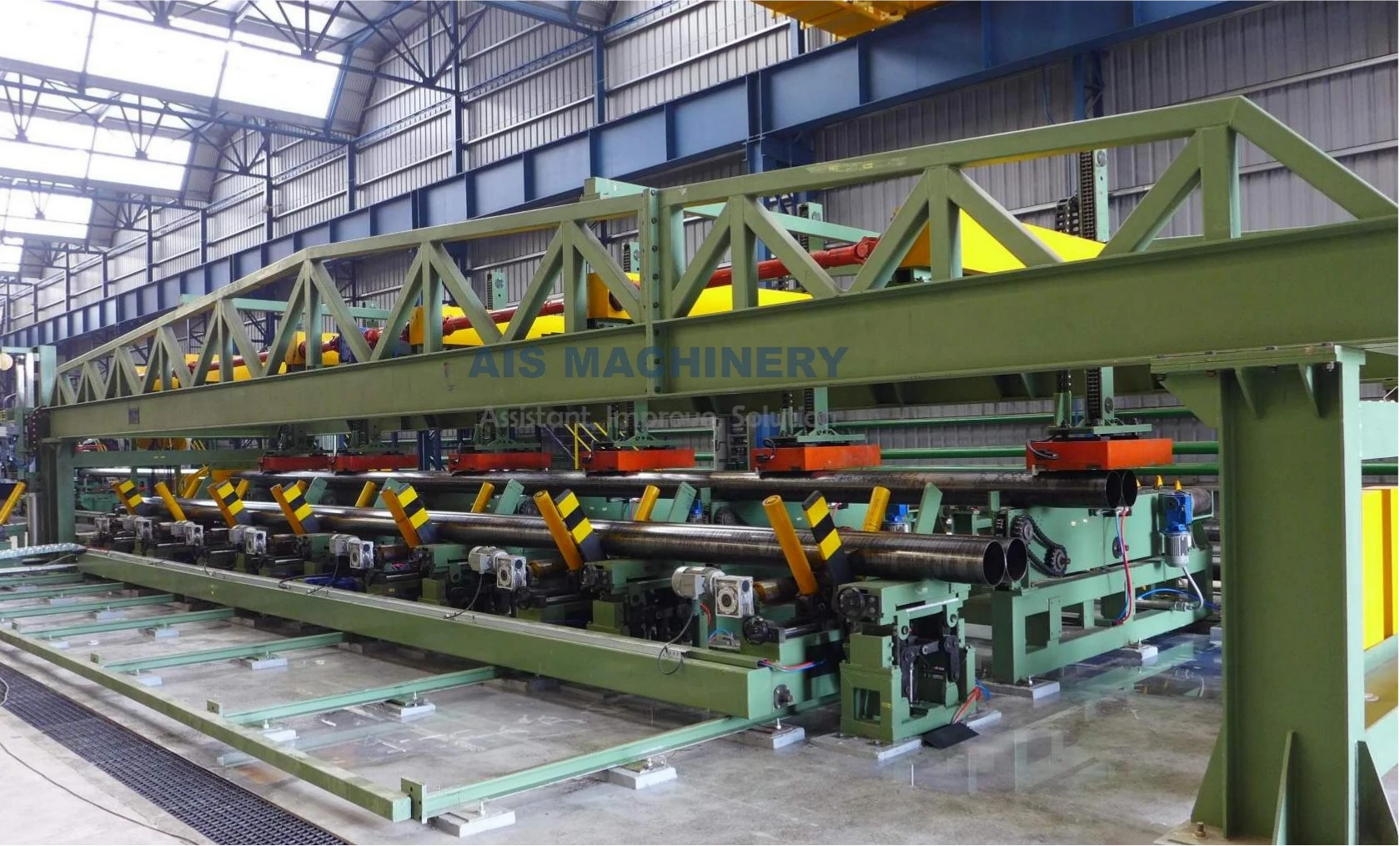
Steel Pipe Straightener Machine

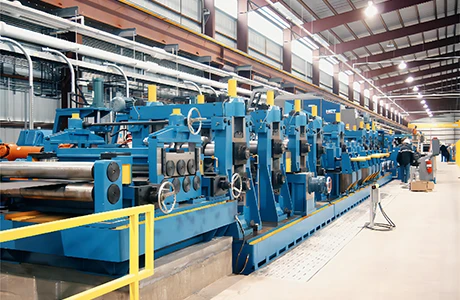
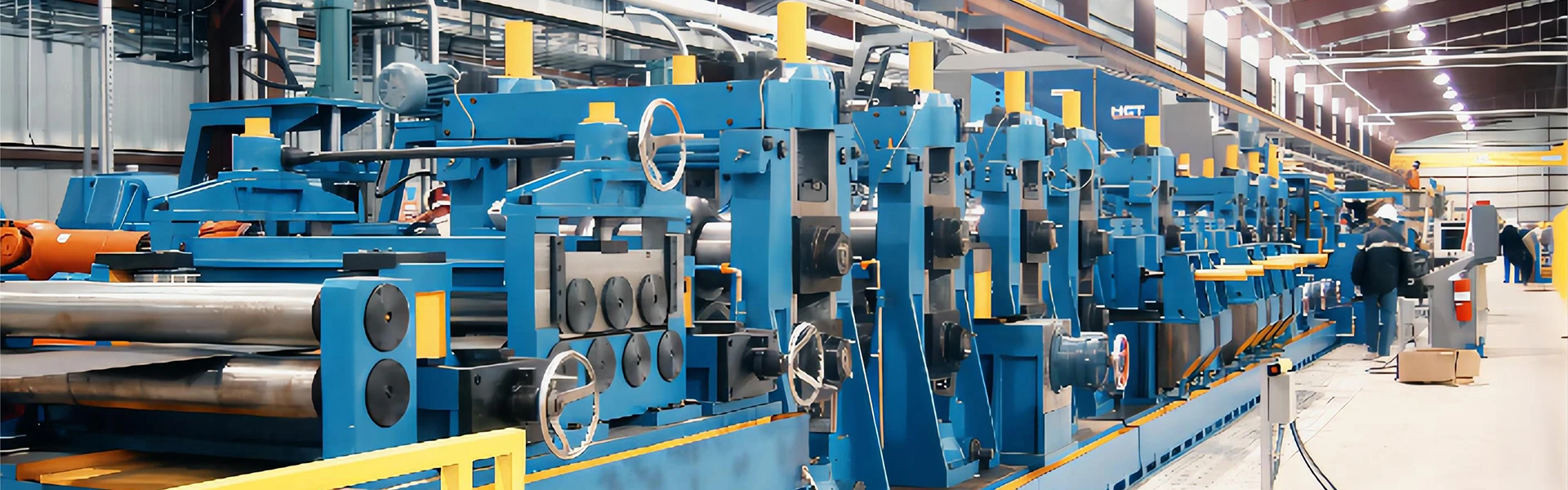
A Pipe Straightener Machine is designed to remove bending and deformation from steel tubes after forming and welding. Using multiple straightening rollers, it applies controlled pressure to improve tube straightness and overall product quality. The machine is suitable for round, square, and rectangular tubes and is widely used in ERW tube mills and finishing lines. With stable operation, easy adjustment, and reliable performance, it helps manufacturers meet strict straightness requirements while improving production efficiency and reducing material rejection.


Product Details

Contact Now

Product Details

Video


Product Description


A Pipe Straightener Machine is used to remove bending and deformation from steel tubes and pipes after production. It is an important piece of equipment in an ERW tube mill line and finishing line, helping ensure the final product meets straightness requirements before cutting, inspection, bundling, or packaging.

Whether producing round pipes, square tubes, rectangular tubes, or structural sections, a tube straightening machine improves product quality and appearance while reducing rejection rates.


Why Is a Pipe Straightener Machine Important?

During tube manufacturing, welding, cooling, sizing, transportation, and handling may cause slight bending or distortion of the pipe.

A pipe straightener machine helps:

✅ Improve pipe straightness

✅ Enhance product appearance

✅ Meet customer quality requirements

✅ Reduce downstream processing problems

✅ Improve packaging and stacking efficiency

  • Tube straightening machines
  • Tube Straightening Machine
  • adjust roll
  • working roll

Typical Applications

  • ERW Steel Pipe Production Lines
  • Carbon Steel Tube Mills
  • Stainless Steel Tube Mills
  • Structural Tube Production
  • Furniture Tubes
  • Construction Pipes
  • Mechanical Tubes
  • Automotive Tubes

Main Components

  • 🔍A typical Pipe Straightener Machine consists of the following components:

    Machine Base – Heavy-duty welded steel structure that provides stability and minimizes vibration during operation.

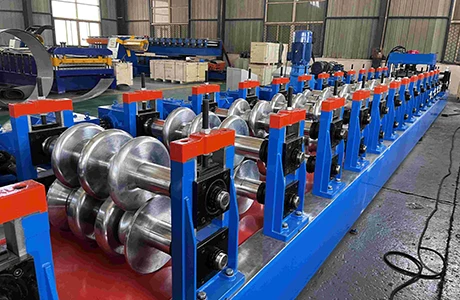
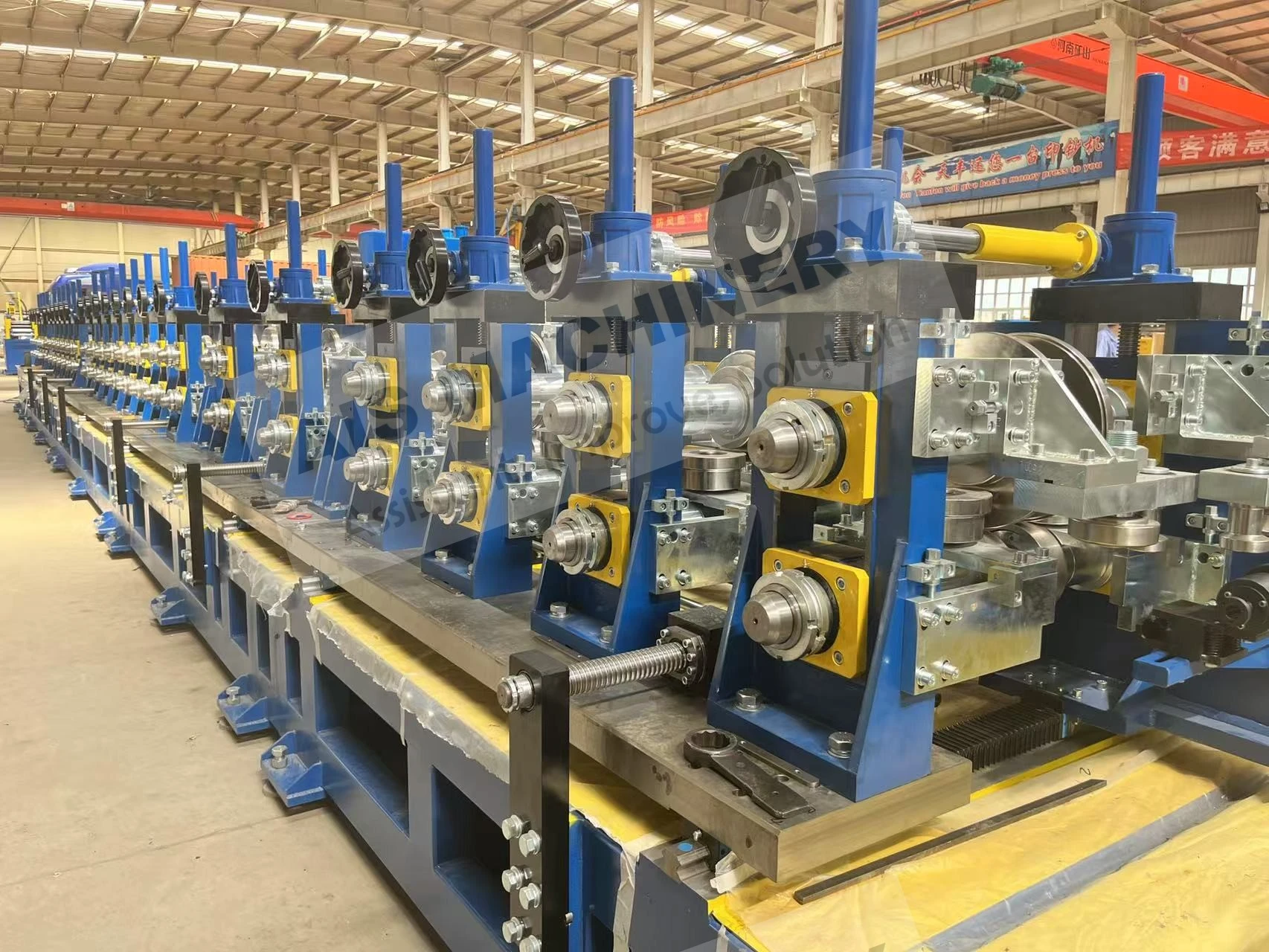
    Straightening Rollers – The core working components that apply controlled pressure to eliminate bends and improve tube straightness.

    Drive System – Composed of an AC motor, gearbox, and transmission components to drive the rollers smoothly and efficiently.

    Adjustment Mechanism – Allows precise adjustment of roller positions according to different pipe sizes and straightness requirements.

    Guide Device – Ensures the pipe enters and exits the machine smoothly while maintaining proper alignment.

    Control Panel – Used for machine operation, parameter setting, and monitoring of the straightening process.

    Safety Devices – Includes emergency stop buttons and protective measures to ensure safe operation.

The number of rolls varies according to pipe size and straightening requirements. Common designs use 5-roll, 6-roll, or 7-roll configurations.


Working Principle

The pipe passes through multiple straightening rolls arranged at specific angles and positions.

As the tube moves forward, the rolls apply controlled pressure to different points of the pipe surface. This creates small elastic-plastic deformation, gradually eliminating bends and restoring straightness.

The straightening process is continuous and does not significantly affect the pipe dimensions or surface quality when properly adjusted.


Common Technical Parameters

ItemTypical Range
Pipe Diameter10 – 219 mm
Square Tube Size10×10 – 150×150 mm
Wall Thickness0.5 – 8.0 mm
Straightening Speed20 – 120 m/min
Roll Quantity5 – 7 Rolls
Drive MotorAC Motor
Control SystemPLC + HMI (Optional)

Actual specifications depend on tube size, material, wall thickness, and production requirements.

⚠️Important: Square/rectangular tube straighteners are designed only for square and rectangular tubes. Round pipe straighteners are designed only for round pipes. One machine cannot normally straighten both shapes effectively.


How to Choose the Right Pipe Straightener Machine

When selecting a straightening machine, consider:

1. Tube Size Range📏

Confirm the minimum and maximum tube dimensions you plan to produce.

2. Wall Thickness🔧

Different wall thicknesses require different roll pressure and machine capacities.

3. Material Type🛠️

Carbon steel, stainless steel, and high-strength steel may require different straightening settings.

4. Production Speed🚀

Choose a machine that matches the output speed of your tube mill.

5. Straightness Requirements📐

Higher precision applications may require more roll stations and finer adjustment capability.


Advantages of AIS Machinery Pipe Straightener Machines

  • Stable and reliable operation
  • High straightening accuracy
  • Easy roll adjustment
  • Suitable for round and square tubes
  • Low maintenance requirements
  • Compatible with various tube mill configurations
  • Custom solutions available according to customer requirements
    • Pipe Straightening
    • Welded Pipe Straightening Machine

Frequently Asked Questions (FAQ)

Q1: Is a pipe straightener machine necessary in every tube mill?

Not always. However, for customers requiring high straightness and better finished product quality, a straightener machine is strongly recommended.

Q2: Can one machine straighten both round and square tubes?

Many machines can handle both round and square tubes within a specified size range. The exact capability depends on the machine design.

Q3: Will straightening damage the tube surface?

No. When properly adjusted, the machine straightens the tube without damaging the surface or affecting dimensional accuracy.

Q4: What is the typical straightening speed?

Most machines operate between 20 and 120 m/min, depending on tube size and production requirements.

Q5: How many rolls are commonly used?

The most common configurations are 5-roll, 6-roll, and 7-roll straightening machines.

Q6: Can the machine be integrated into an existing tube mill line?

Yes. Pipe straightener machines can usually be installed as part of a new production line or added to an existing tube mill finishing section.


  •  
  1. Enter Section Equipments
  2.  
  3. 1. Coil car and Storage
  4. 2.Single And Double Heads Un-coiler & Hydraulic And Pneumatic Un-coiler
  5. 3.Peeler and hold down roll arm
  6. 4.Flattening Machine
  7. 5.Automatic and Semi Auto Shearer & Butt Welder
  8. 6.Vertical Cage Accumulator​ & Horizontal Loop Accumulator & Landing Horizontal Spiral Loop Accumulator

Read More About impeder rod

Read More About ferrite impeder rods

Finishing Section
 
  1.  
  2. 1. Eddy current machine
  3. 2. Seam annealing machine
  4. 3. Straightener machine
  5. 4. Chamfer and end facer machine
  6. 5. Hydro Tester machine
  7. 6. Threading machine
  8. 7. Painting and oil machine
  9. 8. Automatic bundle and package machine

Read More About ferrite impeder rods

Read More About impeder rod

Spare Parts and Consumble Parts
 
  1.  
  2. 1. Rollers, Moulds, Dies, D2,D3 material to choose
  3. 2. Ferrite, Impeder, Fiberglass tube
  4. 3. HSS saw blades, TCT Saw blades, Friction saw blades
  5. 4. OD burr remove inserts, ID burr remover inserts
  6. 5. HF welder Induction Coil and other HF welder spare parts
  7. 6. Copper tube for induction Coil, PTFE pipe for Induction Coil
  8. 7. Mosfet, Boards
  9. 8. Steel pipe Strapping machine
  10. 9. Zinc Spray Machine, Zinc wire, Zinc spray gun

Read More About impeder rod

Read More About fiberglass tube

Certificate
 

Read More About erw tube mill china

Our Service
 
  1. Why Choose Us?
  2. 1.Leading Technology, Reliable Quality, Excellent Service! Optimized Design, High quality material select!  Heat treatment process guarantee!

  3. 2.Spiral bevel gear, drum gear coupling and carburization. Gear teeth quenching. Driven system stable, efficient and wearable with lower noise.

  4. 3.High precision wear resisting and Long life of toolings. All the machine Lathes, Key Grooves are positioned and Milled by CNC.

  5. 4.Quality department make sure the material of the raw materials quality, and ensure the machine running perfect.

Read More About impeder rod

After-sales service

  1. 1.Machine test running videos will supply to customer before shipment.
  2. 2.Online techenical support WHOLE LIFT FREE.
  3. 3.Professional engineers team to install the machine,  train your employee well.
  4. 4.One year warranty and life-long technical support.
  5. 5 .24 hours for engineer response.
  6. 6.Your business relationship with us will be confidential to any third party.
  7. 7.  We welcome customers to visit our factory anytime.

Read More About impeder rod

Get in Touch

If you are interested in our products, you can choose to leave your information here, and we will be in touch with you shortly.

* Name

* E-mail

Phone

*Message

Pipe Straightener Machine FAQs

What is a pipe straightener machine used for?

It is used to correct bending and deformation in pipes after forming or welding, ensuring the pipe is straight and suitable for further processing or final use.

Where is the straightener typically installed in a welded pipe line?

It is usually installed after the sizing and welding section, and before cutting or stacking, to ensure the pipes are geometrically accurate before final steps.

How many rollers are typically used?

Most machines use 8 to 10 rollers, configured as 5 over 3, 6 over 4, or similar combinations for optimal correction.

Is the straightening process automated?

Yes. Most modern machines are part of automated production lines and can be equipped with PLC controls and sensor feedback systems for precision.

Can the machine be integrated into an existing tube mill line?

Yes. Pipe straightener machines can usually be installed as part of a new production line or added to an existing tube mill finishing section.

Related News

ERW Pipe Mill for Sale: Buyer FAQs for a 76 mm Line

2026-11-02 02:23:25

ERW Pipe Mill for Sale: Buyer FAQs for a 76 mm Line

Review the 21.3 mm to 76 mm range, materials, equipment, speed, power, cutting methods, and production controls for an ERW pipe mill for sale.

High-Speed Steel Coil Slitting Line FAQ: Specifications, Ordering and Support Questions

2026-10-29 00:44:48

High-Speed Steel Coil Slitting Line FAQ: Specifications, Ordering and Support Questions

Get direct answers about High-Speed Steel Coil Slitting Line specifications, material compatibility, component layout, process steps, quality standards, and after-sales support from HEBEI AIS MACHINERY EQUIPMENT CO.,LTD.

Choosing a Steel Pipe Making Machine Manufacturer: Working Requirements and Integration Fit for the 10inch 273mm ERW Pipe Mill

2026-10-28 00:06:34

Choosing a Steel Pipe Making Machine Manufacturer: Working Requirements and Integration Fit for the 10inch 273mm ERW Pipe Mill

Learn the key working requirements and integration criteria for selecting a steel pipe making machine manufacturer. Covers diameter range, wall thickness, strip grade, HF welding power, footprint, and electrical supply using the 10inch 273mm ERW Pipe Making Machine from HEBEI AIS MACHINERY EQUIPMENT CO.,LTD.

Choosing a Flying Cold Saw: Working Requirements and Integration Fit

2026-10-28 00:05:55

Choosing a Flying Cold Saw: Working Requirements and Integration Fit

Learn the key selection criteria for a flying cold saw — pipe diameter, line speed, cut precision, blade type, and PLC integration — to find the right cold cutting flying saw machine for your ERW tube mill.

Choosing GGP 100kw Solid State High Frequency Induction Heating Welding Machine: Working Requirements and Integration Fit

2026-10-28 00:05:28

Choosing GGP 100kw Solid State High Frequency Induction Heating Welding Machine: Working Requirements and Integration Fit

Evaluate whether the GGP 100kw Solid State High Frequency Induction Heating Welding Machine fits your ERW pipe production line. This guide covers power requirements, cooling infrastructure, electrical supply, and control integration criteria.

Choosing Quick-Change System for Forming & Sizing Section: Application Fit and Specification Checks

2026-10-28 00:04:41

Choosing Quick-Change System for Forming & Sizing Section: Application Fit and Specification Checks

Learn the key selection criteria for a Quick-Change System for Forming & Sizing Section in ERW tube mills — covering changeover frequency, cassette structure, pneumatic couplings, and application scope for structural, automotive, and export tube production.

Steel Pipe Seam Annealing Machine vs Pipe Threading Machine: Operating Requirements, Interfaces and Maintenance

2026-10-23 17:54:55

Steel Pipe Seam Annealing Machine vs Pipe Threading Machine: Operating Requirements, Interfaces and Maintenance

Compare a steel pipe seam annealing machine and a pipe threading machine: function, published ranges, PLC/HMI and CNC controls, operating steps and maintenance.

HEBEI AIS MACHINERY at Tube & Wire Shanghai 2026 | Tube Mill Solutions

2026-10-04 16:13:15

HEBEI AIS MACHINERY at Tube & Wire Shanghai 2026 | Tube Mill Solutions

HEBEI AIS MACHINERY participated in Tube & Wire Shanghai 2026, meeting new and long-term customers to discuss ERW tube mills, steel processing equipment, new projects, and future cooperation.

Send a Message

Dear customer, thank you for your attention! We provide high-quality machinery and equipment and look forward to your orders. Please inform us of your needs and we will respond quickly!

If you are interested in our products, you can choose to leave your information here, and we will be in touch with you shortly.


en_USEnglish