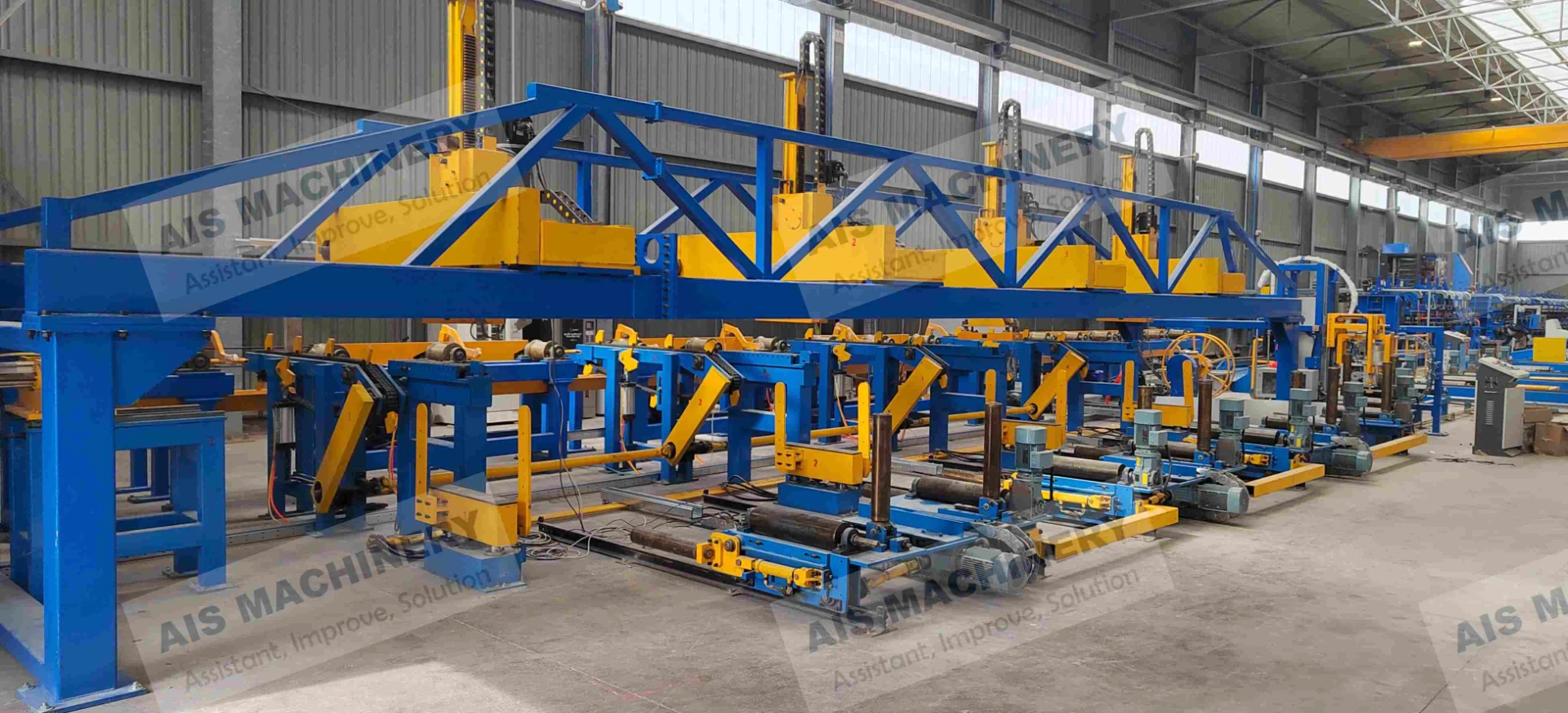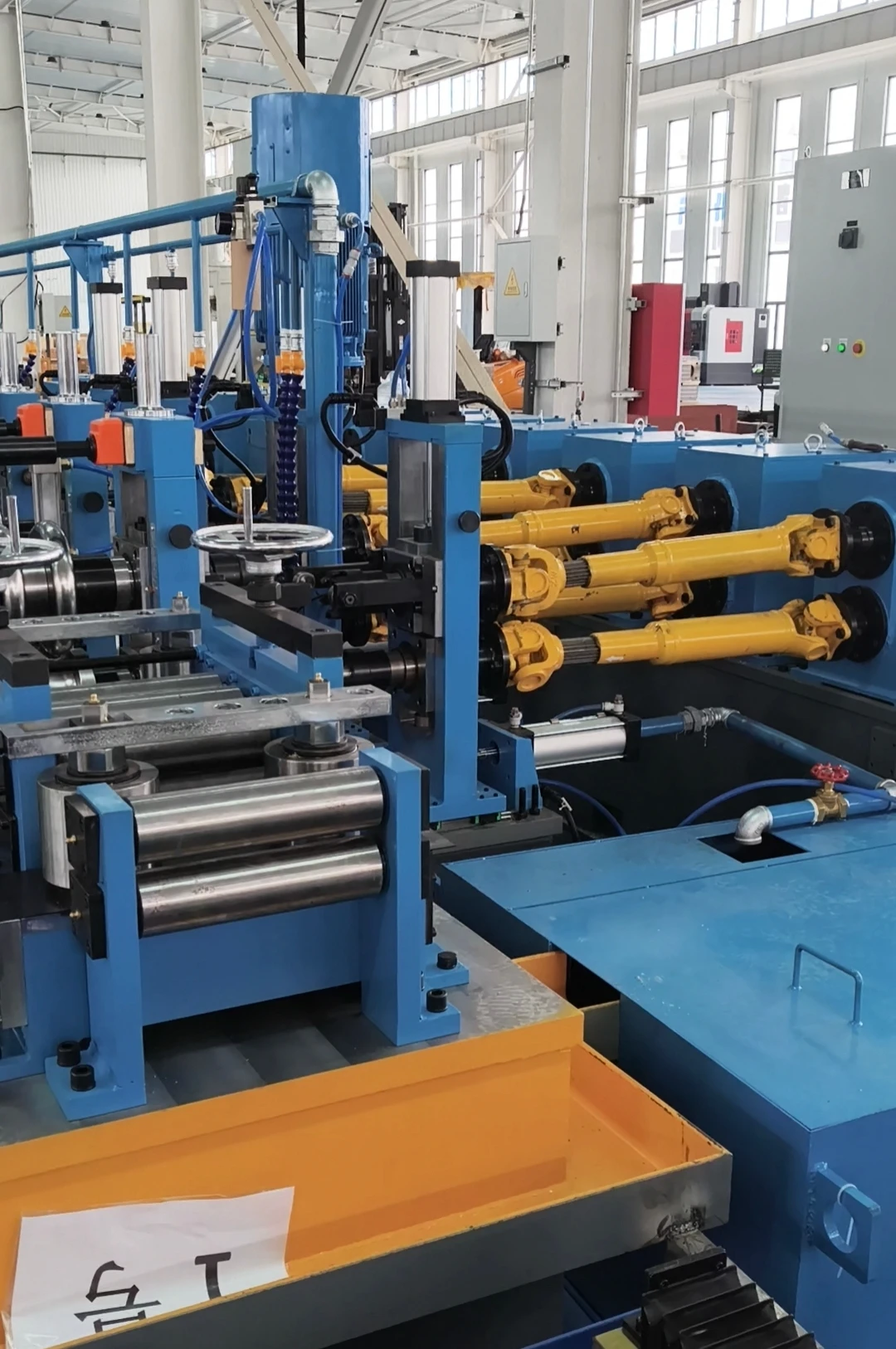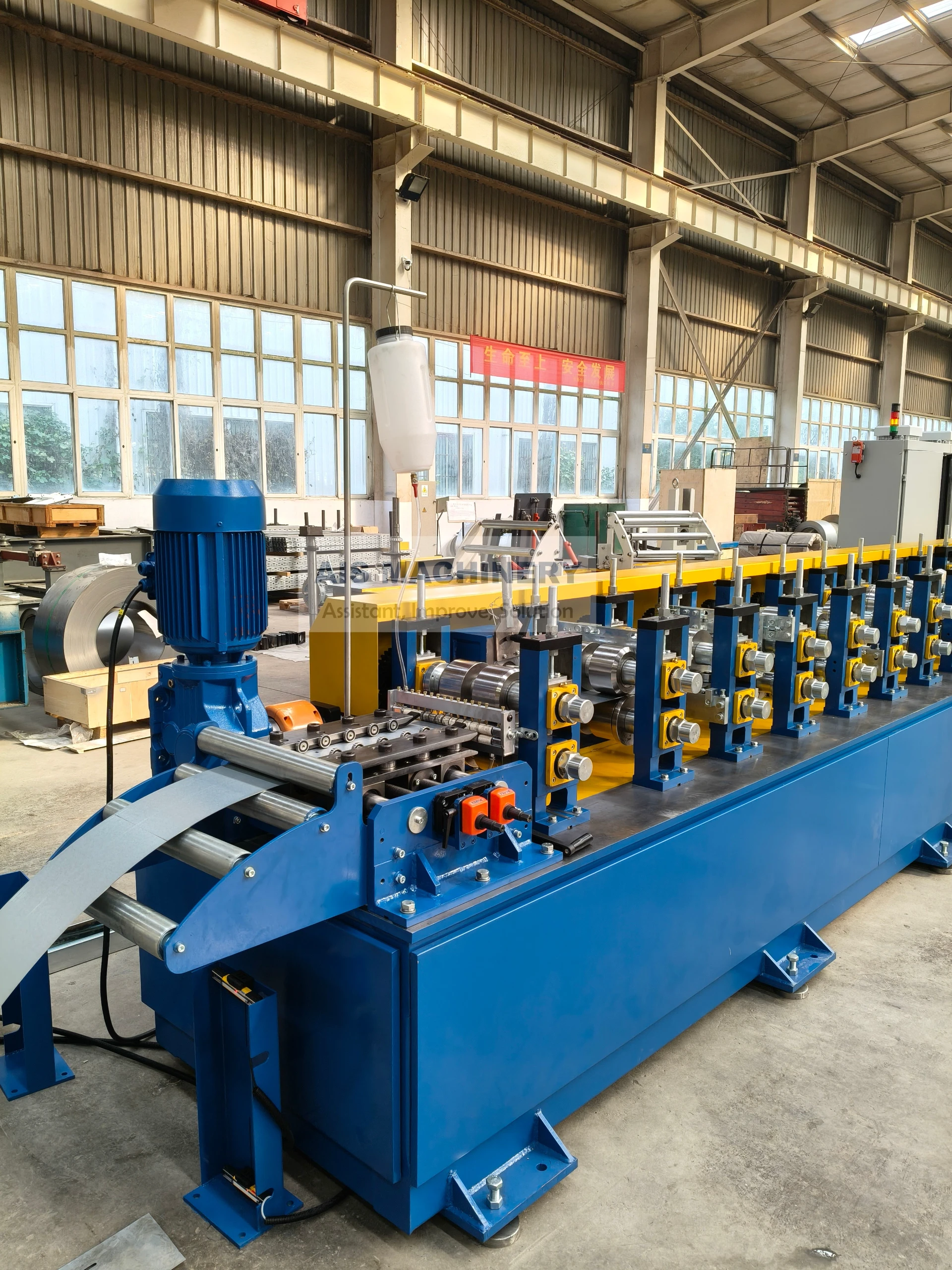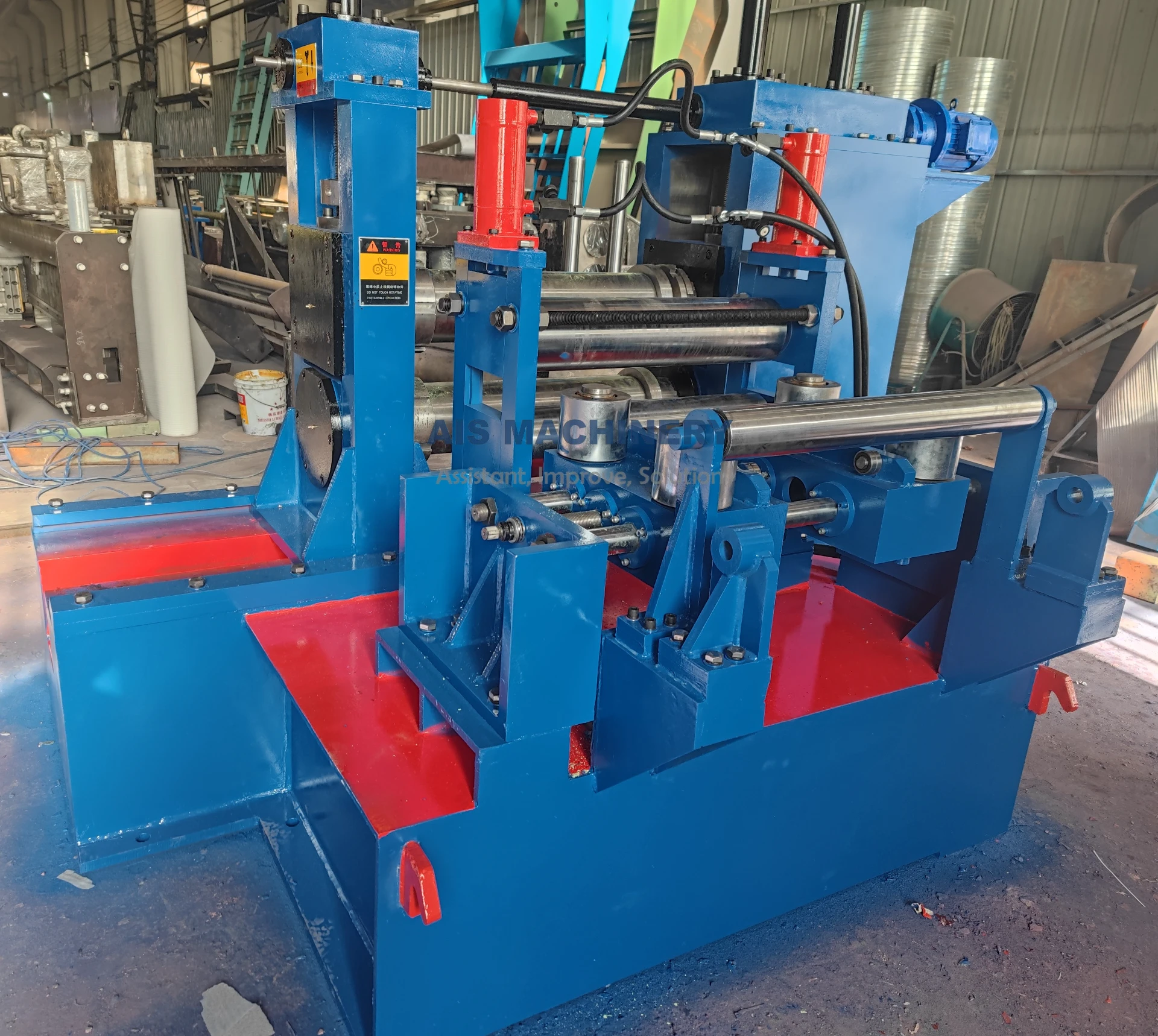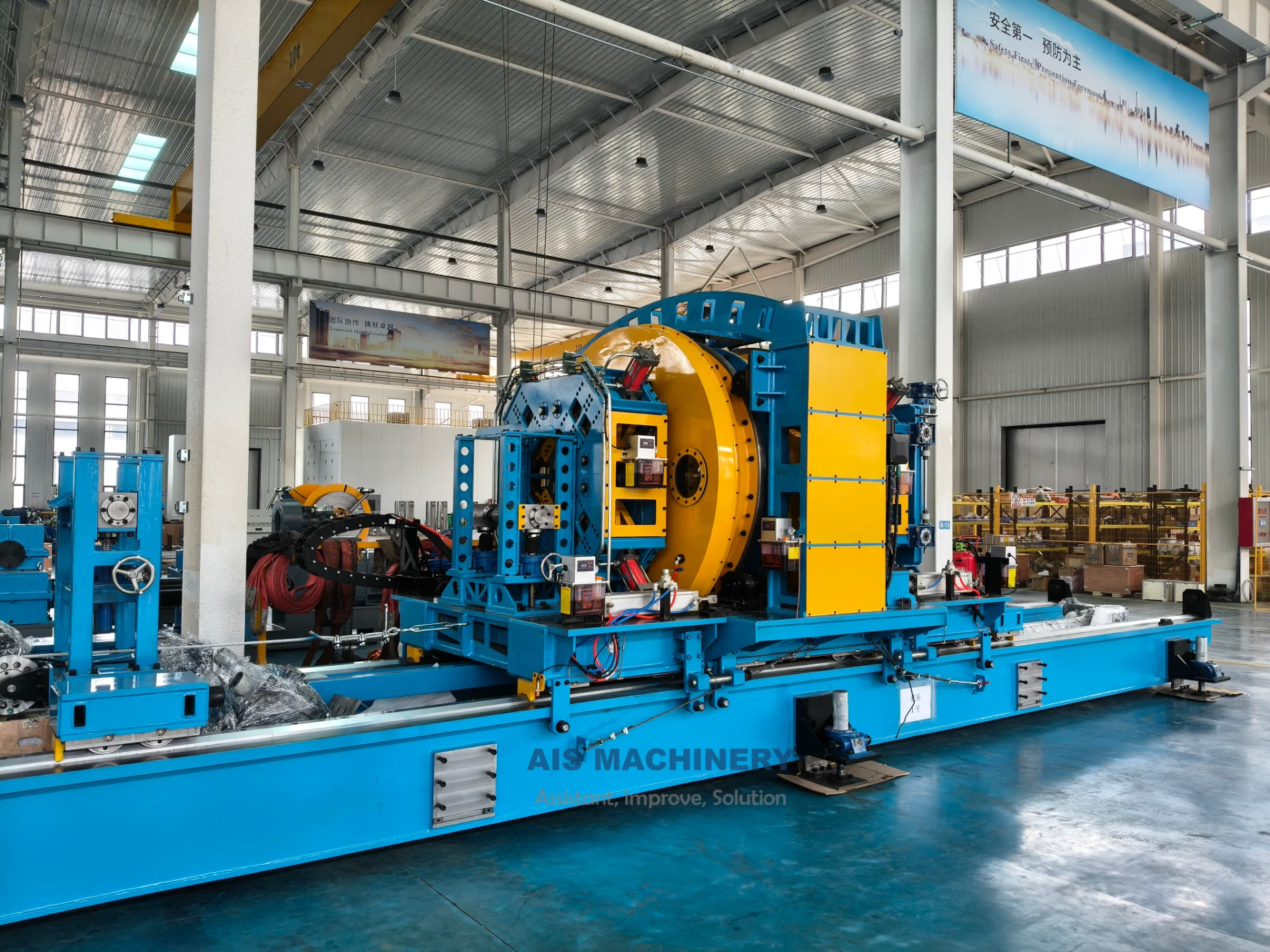
eddy current machine


The Eddy Current Flaw Detector is a high-sensitivity non-destructive testing (NDT) device that uses electromagnetic induction to detect surface and near-surface defects in conductive materials. In welded pipe production lines, it is typically used for online or offline inspection of weld seams to detect cracks, pores, incomplete fusion, inclusions, and other flaws.


Product Details

Contact Now

Product Details

Product Description


1. Basic Principle

  1. Electromagnetic Induction:
    The eddy current flaw detector uses a probe coil energized with high-frequency alternating current (AC), which generates an alternating magnetic field.

  2. Eddy Current Generation:
    When a conductive material (e.g., a welded steel pipe) passes through the coil, the changing magnetic field induces circulating electrical currents on the material’s surface—these are called eddy currents.

  3. Defect Disturbance:
    In defect-free material, eddy currents flow uniformly. If cracks, pores, inclusions, or lack of fusion exist, they disturb the electrical or magnetic properties, altering the eddy current distribution.

  4. Signal Detection & Analysis:
    These disturbances affect the coil's impedance (voltage, current, phase), which is amplified, filtered, and analyzed by the system’s electronics. The result appears as signals on a display for interpretation.


2. Functions and Applications

  • Weld Seam Inspection: Detects defects such as cracks, lack of fusion, porosity, and inclusions.

  • Quality Control: Ensures product quality and reduces scrap rate.

  • Automatic Sorting: Can be linked with rejection systems to automatically remove defective pipes.

  • High-Speed Detection: Suitable for high-speed production lines.

  • Non-Contact Detection: No physical contact with the pipe, reducing wear and tear.


3. Basic Specifications (Typical)

Item Specification
Pipe Diameter Range Ø5 mm – Ø120 mm
Testing Speed Up to 120 m/min
Operating Frequency 100 kHz – 1 MHz (adjustable)
Sensitivity Detects cracks smaller than Ø0.2 mm
Output Interfaces Alarm relay / RS485 / Ethernet
Probe Types Encircling coil, pancake coil, etc.
Display & Control Industrial touchscreen or PC software
 
  • Eddy Current Testing Equipment
  • Eddy Current Instruments - Flaw Detectors


  • Eddy Current Instruments
  • Eddy Current Technology (ECT)


4. Main Components

  1. High-Frequency Power Supply: Generates excitation current for the probe.

  2. Eddy Current Probe (Coil): Induces and detects eddy current changes.

  3. Signal Amplifier & Processor: Amplifies and filters detection signals.

  4. Alarm Unit: Provides audio/visual alerts for defects.

  5. Display and Control Panel: Interface for monitoring and parameter adjustment.

  6. Mechanical Fixture: Holds and positions the probe relative to the pipe.


  7.  


    • Eddy Current Inspection
    • Eddy Current Inspection1

5.Application in Welded Pipe Equipment

  1. Post-Weld Inspection:
    The eddy current tester is installed after the welding stage but before sizing, to inspect weld seams in real time.

  2. Continuous Online Testing:
    As the pipe moves through an encircling coil probe, the device continuously scans the weld area for flaws.

  3. Real-Time Alarm and Rejection:
    When a defect is detected, the system triggers an alarm and can activate an automated rejection mechanism to remove the defective pipe.

6. Operating Procedure       

  1. Installation & Calibration

    • Install the probe on the production line (typically after welding).

    • Adjust probe-to-pipe gap for optimal sensitivity.

  2. Parameter Setup

    • Set frequency, gain, and filters according to pipe size and material.

    • Calibrate using standard defect samples.

  3. Start Testing

    • Start both the flaw detector and production line.

    • The system performs real-time inspection of the pipe surface and weld seam.

  4. Defect Alarm & Handling

    • If a flaw is detected, the system triggers an alarm.

    • Defective pipes are automatically rejected via a mechanical system.

  5. Data Recording & Analysis

    • Test data can be saved for traceability.

    • Statistical reports can be generated for quality improvement.

7. Factors Affecting Test Performance

  • Operating Frequency:
    High frequencies detect surface flaws; lower frequencies penetrate deeper.

  • Material Type:
    Different conductivity and magnetic permeability affect eddy current response.

  • Probe Design:
    Must match pipe diameter and weld location.

  • Speed & Stability:
    High-speed operation requires stable signal acquisition and precise mechanical setup.


🔁 Summary

The core principle of eddy current testing is:
“Defects disturb eddy currents → Eddy currents alter coil impedance → Electrical signal changes are detected and analyzed.”
It is a non-contact, high-speed, and highly sensitive method ideal for inline weld inspection in pipe manufacturing.


  1.  
    •  

  •  
  1. Enter Section Equipments
  2.  
  3. 1. Coil car and Storage
  4. 2.Single And Double Heads Un-coiler & Hydraulic And Pneumatic Un-coiler
  5. 3.Peeler and hold down roll arm
  6. 4.Flattening Machine
  7. 5.Automatic and Semi Auto Shearer & Butt Welder
  8. 6.Vertical Cage Accumulator​ & Horizontal Loop Accumulator & Landing Horizontal Spiral Loop Accumulator

Read More About impeder rod

Read More About ferrite impeder rods

Finishing Section
 
  1.  
  2. 1. Eddy current machine
  3. 2. Seam annealing machine
  4. 3. Straightener machine
  5. 4. Chamfer and end facer machine
  6. 5. Hydro Tester machine
  7. 6. Threading machine
  8. 7. Painting and oil machine
  9. 8. Automatic bundle and package machine

Read More About ferrite impeder rods

Read More About impeder rod

Spare Parts and Consumble Parts
 
  1.  
  2. 1. Rollers, Moulds, Dies, D2,D3 material to choose
  3. 2. Ferrite, Impeder, Fiberglass tube
  4. 3. HSS saw blades, TCT Saw blades, Friction saw blades
  5. 4. OD burr remove inserts, ID burr remover inserts
  6. 5. HF welder Induction Coil and other HF welder spare parts
  7. 6. Copper tube for induction Coil, PTFE pipe for Induction Coil
  8. 7. Mosfet, Boards
  9. 8. Steel pipe Strapping machine
  10. 9. Zinc Spray Machine, Zinc wire, Zinc spray gun

Read More About impeder rod

Read More About fiberglass tube

Certificate
 

Read More About erw tube mill china

Our Service
 
  1. Why Choose Us?
  2. 1.Leading Technology, Reliable Quality, Excellent Service! Optimized Design, High quality material select!  Heat treatment process guarantee!

  3. 2.Spiral bevel gear, drum gear coupling and carburization. Gear teeth quenching. Driven system stable, efficient and wearable with lower noise.

  4. 3.High precision wear resisting and Long life of toolings. All the machine Lathes, Key Grooves are positioned and Milled by CNC.

  5. 4.Quality department make sure the material of the raw materials quality, and ensure the machine running perfect.

Read More About impeder rod

After-sales service

  1. 1.Machine test running videos will supply to customer before shipment.
  2. 2.Online techenical support WHOLE LIFT FREE.
  3. 3.Professional engineers team to install the machine,  train your employee well.
  4. 4.One year warranty and life-long technical support.
  5. 5 .24 hours for engineer response.
  6. 6.Your business relationship with us will be confidential to any third party.
  7. 7.  We welcome customers to visit our factory anytime.

Read More About impeder rod

Get in Touch

If you are interested in our products, you can choose to leave your information here, and we will be in touch with you shortly.

* Name

* E-mail

Phone

*Message

Eddy Current tester FAQs

Is it suitable for all pipe sizes?

Most testers support a specific pipe diameter range (e.g., Ø5 mm to Ø120 mm). Custom configurations are available for larger or smaller sizes.

Is eddy current testing contact-based?

No, it is non-contact. This allows testing at high speed without wearing down probes or damaging the product.

Can it work on a high-speed production line?

Yes. Modern systems can test pipes at speeds over 100 m/min, making them ideal for inline inspection.

How is the system calibrated?

The system is calibrated using standard test pieces (reference standards) with known defects to ensure consistent sensitivity and accuracy.

Can it be integrated with other systems?

Yes. Most testers support PLC integration, rejection systems, data export, and even remote diagnostics.

Related News

HF Welder Spare Parts: Key Components for Stable and Efficient Tube Production

2027-03-05 00:00:00

HF Welder Spare Parts: Key Components for Stable and Efficient Tube Production

High-quality HF welder spare parts for ERW tube mills, including main control boards, inverter boards, power module boards (positive & negative), rectifier modules, IGBT and SiC power modules. Designed for stable welding performance, energy efficiency, and long service life. Improve weld quality, reduce downtime, and maintain consistent high-frequency output. Professional OEM replacement parts with technical support and fast delivery.

Comprehensive Guide to Eddy Current Testers and Their Applications

2026-03-04 02:55:16

Comprehensive Guide to Eddy Current Testers and Their Applications

Eddy current testers are vital tools in non-destructive testing (NDT), used to detect flaws and characterize materials without causing damage. They’re employed across diverse industries, from aerospace and automotive to manufacturing and oil & gas. This article provides a detailed overview of eddy current testing (ECT), its principles, applications, benefits, and how AISTubeMill delivers high-quality eddy current testing solutions. Understanding ECT allows for improved quality control, increased safety, and reduced costs. We'll explore how these testers work and their critical role in ensuring product integrity. Eddy current testing relies on the principle of electromagnetic induction. When an alternating current (AC) flows through a coil, it generates a magnetic field. If a conductive material is brought near this coil, eddy currents—circular electric currents—are induced within the material. These eddy currents, in turn, create their own magnetic field, which interacts with the coil’s field. Changes in material properties (like cracks, variations in conductivity, or permeability) affect the eddy currents, altering the coil's impedance. By measuring these changes, defects or variations in material characteristics can be detected.

Friction Saw for ERW Tube Mill – High-Speed Online Pipe Cutting Solution

2026-03-03 00:00:00

Friction Saw for ERW Tube Mill – High-Speed Online Pipe Cutting Solution

Our hot cutting Friction Saw is specially engineered for carbon steel tube production. Positioned at the end of the ERW tube mill line, it ensures accurate fixed-length cutting during continuous operation. The machine features a powerful motor, durable spindle design, and stable tracking system. It is widely used in construction pipe, scaffolding tube, and structural steel manufacturing, offering an excellent balance between speed and cost efficiency.

Upgrade Your Slitting Line with Long-Life Precision Slitting Knives

2026-03-03 00:00:00

Upgrade Your Slitting Line with Long-Life Precision Slitting Knives

High-quality slitting knives directly impact the performance of your slitting line. Our products combine precision, durability, and reliability to ensure smooth cutting and reduced maintenance. Designed for modern metal processing plants, they minimize burr formation and improve strip consistency. Choose our slitting knives to enhance production efficiency and maximize your return on investment.

Comprehensive Guide to Tube Straightening Machines and Their Applications

2026-03-03 00:00:00

Comprehensive Guide to Tube Straightening Machines and Their Applications

In the world of metal fabrication and processing, achieving precise tube geometries is crucial for a wide range of applications. Tube straightening machines play a pivotal role in correcting imperfections and ensuring tubes meet stringent quality standards. This article provides a deep dive into these machines, their types, applications, and the benefits they offer. Whether you're involved in automotive manufacturing, construction, or aerospace, understanding tube straightening is essential for optimizing your production processes. AIS TubeMill is a leading manufacturer of high-quality tube straightening equipment. Tube straightening machines are specialized equipment designed to remove bends, twists, and other geometric imperfections from metal tubes. These machines utilize a controlled process of applying force to the tube, forcing it back into its desired straight configuration. The degree of straightening required depends on the initial imperfections of the tube, the material it's made of, and the specific application. The ultimate goal is to achieve a tube with consistent dimensions and a smooth, straight profile, crucial for downstream processes like welding, bending, and assembly.

TCT Saw Blades vs HSS Saw Blades: How to Choose the Right Cutting Tool for Your Production Line

2026-02-26 00:00:00

TCT Saw Blades vs HSS Saw Blades: How to Choose the Right Cutting Tool for Your Production Line

With increasing demand for stable and efficient tube mill cutting, choosing the right circular saw blade is critical. TCT saw blades offer longer life and high-speed performance for thick wall and stainless steel applications, while HSS saw blades provide a cost-effective solution for carbon steel and thin wall tubes. Selecting the correct metal cutting saw blade can significantly reduce downtime and improve production efficiency.

Comprehensive Guide to Selecting the Ideal Pipe Threading Machine for Your Application

2026-02-25 02:35:14

Comprehensive Guide to Selecting the Ideal Pipe Threading Machine for Your Application

Selecting the appropriate pipe threading machine is crucial for efficient and accurate pipe joining in various industries, including construction, plumbing, oil & gas, and manufacturing. This article provides a comprehensive guide to understanding the different types, features, and considerations when choosing a machine. We'll cover everything from manual options to advanced automatic models, helping you make an informed decision that aligns with your specific requirements and budget. Proper pipe threading ensures leak-proof connections and the long-term integrity of piping systems. Pipe threading machines come in several configurations, each suited for different applications and levels of production. The primary types include manual, semi-automatic, and fully automatic machines. Manual machines are cost-effective and portable, ideal for smaller projects and field work. Semi-automatic machines offer increased speed and efficiency with some automation, reducing operator fatigue. Fully automatic machines deliver high-volume production with minimal human intervention, suitable for large-scale industrial operations.

HSS Saw Blade Grinding Machine – High-Precision Sharpening for Circular Saw Blades

2026-02-24 00:00:00

HSS Saw Blade Grinding Machine – High-Precision Sharpening for Circular Saw Blades

Our automatic HSS saw blade grinder is a reliable solution for maintaining circular saw blade performance in tube production and metal cutting industries. With high grinding accuracy, adjustable tooth settings, and efficient cooling, it significantly extends blade service life. Designed for continuous industrial operation, the machine helps reduce blade replacement costs and production downtime. It is widely welcomed by international customers.

Send a Message

Dear customer, thank you for your attention! We provide high-quality machinery and equipment and look forward to your orders. Please inform us of your needs and we will respond quickly!

If you are interested in our products, you can choose to leave your information here, and we will be in touch with you shortly.


en_USEnglish