
-
 Tel:86-15176910262
-

Search

Hydrostatic Tester Machine: A Reliable Solution for Pipe Leak Testing
Jul . 14, 2026 09:42
What Is a Hydrostatic Tester Machine? 💧
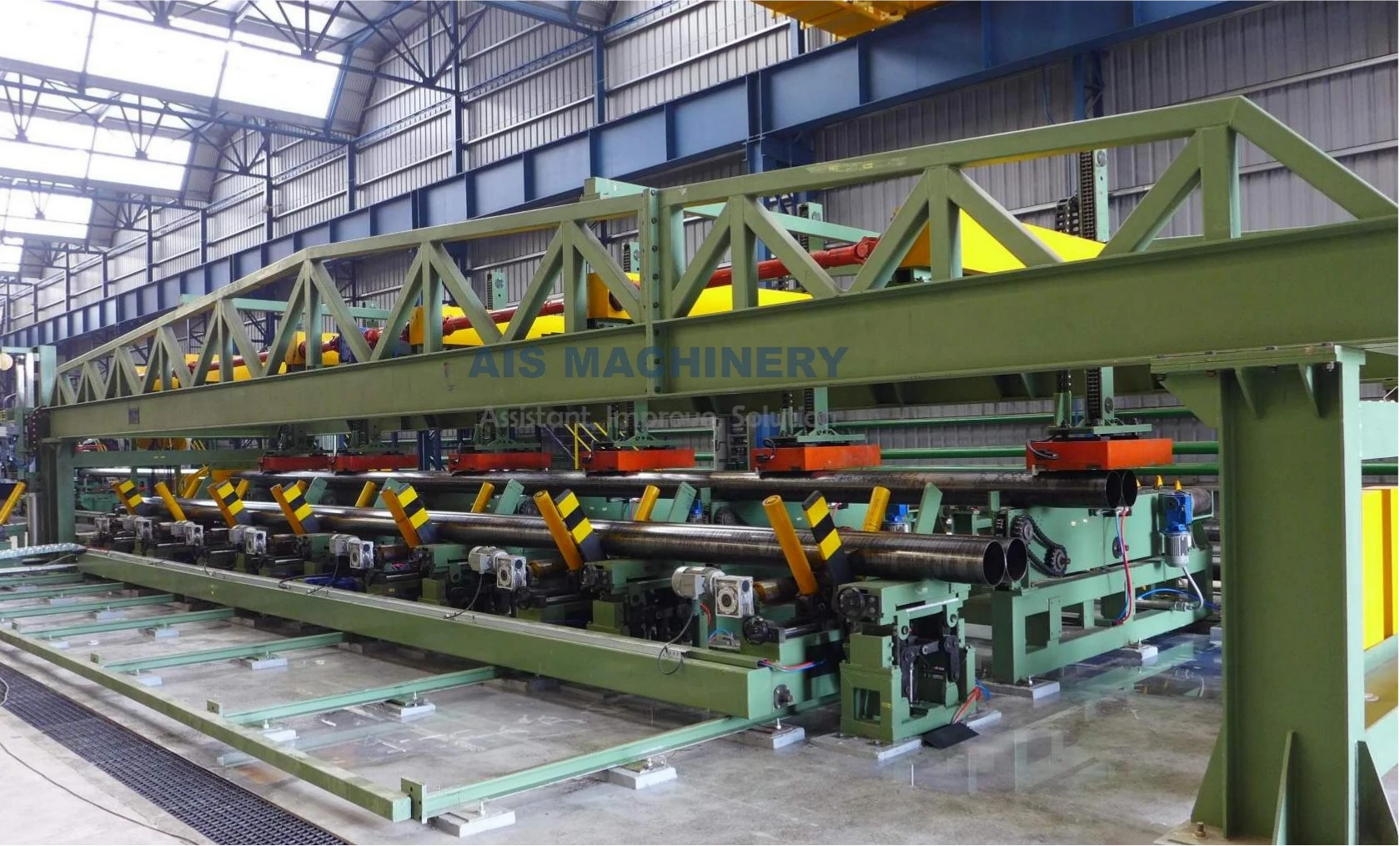
A Hydrostatic Tester Machine is a pressure testing system used to verify the strength, sealing performance, and pressure resistance of welded steel pipes. It fills the finished pipe with water, raises the internal pressure to a specified test value, and holds the pressure for a set period to check for leaks, cracks, or deformation.
Hydrostatic testing is one of the most reliable non-destructive pressure tests for steel pipes and is widely used in industries where pipe safety and pressure performance are critical.
Where Is the Hydrostatic Tester Used in an ERW Tube Mill? 🏭
The hydrostatic tester is installed after the pipe manufacturing process is completed.
A typical production flow is:
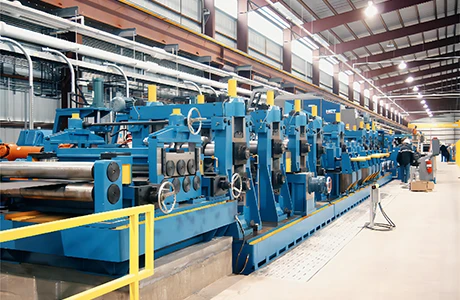
Uncoiler → Forming → High Frequency Welding → Cooling → Sizing → Flying Saw Cutting → End Facing/Chamfering (Optional) → Straightening (Optional) → NDT Inspection (Optional) → Hydrostatic Testing → Marking → Packing
Because hydrostatic testing is performed on finished pipes, it serves as a final quality verification before shipment or further processing.
How Does a Hydrostatic Tester Work? ⚙️
The testing process is simple but highly effective:
- The pipe is automatically loaded into the testing station.
- Both pipe ends are sealed with hydraulic sealing heads.
- Water is filled into the pipe to remove air.
- A high-pressure pump increases the internal water pressure to the preset value.
- The pressure is maintained for a specified time.
- The system monitors pressure changes and checks for leakage.
- After testing, the water is discharged and the pipe is unloaded.
If the pressure remains stable and no leakage or deformation is detected, the pipe passes the test.


Why Is Water Used Instead of Air? 💦
Water is nearly incompressible, making hydrostatic testing much safer than pneumatic testing.
Compared with compressed air, water stores far less energy under pressure. Even if a pipe fails during testing, the risk is significantly lower, making hydrostatic testing the preferred method for pressure-bearing steel pipes.
Is a Hydrostatic Tester Required in Every Tube Mill? 🤔
Not necessarily.
Whether a hydrostatic tester is required depends on the pipe application, customer specifications, and product standards.
Hydrostatic testing is commonly required when manufacturing:
- ✅ Oil and gas transportation pipes
- ✅ Water supply pipelines
- ✅ Fire protection pipes
- ✅ Pressure pipelines
- ✅ Structural pipes requiring pressure testing
- ✅ Pipes manufactured according to standards that specify hydrostatic testing
For some general structural tubes or furniture pipes, hydrostatic testing may not be mandatory. In these cases, customers often use other inspection methods, such as eddy current testing or ultrasonic testing, depending on the quality requirements.
Main Advantages of a Hydrostatic Tester ⭐
- 💧 Detects leaks quickly and accurately
- 🛡️ Verifies pipe pressure resistance
- 📏 Ensures weld quality and pipe integrity
- ⚙️ Stable automatic testing process
- 📈 Improves product reliability and quality consistency
- 🌍 Meets the testing requirements of many international pipe standards
Typical Technical Parameters 📋
Common parameters include:
| Item | Typical Range |
|---|---|
| Pipe Diameter | Customized according to tube mill |
| Pipe Length | Customized |
| Test Pressure | Customized based on pipe specification |
| Pressure Holding Time | Adjustable |
| Test Medium | Clean water |
| Control System | PLC + HMI Automatic Control |
The actual testing pressure is determined according to the applicable pipe standard, material grade, wall thickness, and customer requirements.
How to Choose the Right Hydrostatic Tester? ✅
When selecting a hydrostatic testing machine, consider:
- 📏 Pipe outside diameter range
- 📐 Wall thickness
- 📏 Pipe length
- 💧 Maximum required test pressure
- ⚡ Production speed of the tube mill
- 🤖 Required automation level
- 📋 Applicable product standards and customer specifications
Matching the tester capacity with the tube mill output helps ensure efficient production and reliable testing.

Why Choose AIS Machinery? 🌍
AIS Machinery provides customized Hydrostatic Tester Machines for ERW tube mills of different capacities. Our systems feature stable hydraulic control, reliable sealing performance, accurate pressure control, and automatic operation to improve testing efficiency and product quality.
Our hydrostatic testing equipment has been supplied together with complete tube mill lines and exported to customers in Europe, the Middle East, Southeast Asia, and other international markets, receiving positive feedback for stable performance and dependable quality.
Frequently Asked Questions (FAQ)
❓ Can every steel pipe be hydrostatically tested?
Most welded steel pipes can be hydrostatically tested, provided the testing pressure and sealing method are suitable for the pipe specification.
❓ Does hydrostatic testing damage the pipe?
No. When performed according to the required pressure and testing procedure, hydrostatic testing is a non-destructive quality test and does not affect normal pipe performance.
❓ Can hydrostatic testing replace eddy current or ultrasonic testing?
No. These testing methods serve different purposes. Hydrostatic testing verifies the pipe's pressure resistance and leak tightness, while eddy current and ultrasonic testing are primarily used to detect surface or internal defects. Many production lines use them together to achieve more comprehensive quality inspection.

Related Products






Related News

2026-11-02 02:23:25
ERW Pipe Mill for Sale: Buyer FAQs for a 76 mm Line
Review the 21.3 mm to 76 mm range, materials, equipment, speed, power, cutting methods, and production controls for an ERW pipe mill for sale.

2026-10-29 00:44:48
High-Speed Steel Coil Slitting Line FAQ: Specifications, Ordering and Support Questions
Get direct answers about High-Speed Steel Coil Slitting Line specifications, material compatibility, component layout, process steps, quality standards, and after-sales support from HEBEI AIS MACHINERY EQUIPMENT CO.,LTD.

2026-10-28 00:06:34
Learn the key working requirements and integration criteria for selecting a steel pipe making machine manufacturer. Covers diameter range, wall thickness, strip grade, HF welding power, footprint, and electrical supply using the 10inch 273mm ERW Pipe Making Machine from HEBEI AIS MACHINERY EQUIPMENT CO.,LTD.

2026-10-28 00:05:55
Choosing a Flying Cold Saw: Working Requirements and Integration Fit
Learn the key selection criteria for a flying cold saw — pipe diameter, line speed, cut precision, blade type, and PLC integration — to find the right cold cutting flying saw machine for your ERW tube mill.

2026-10-28 00:05:28
Evaluate whether the GGP 100kw Solid State High Frequency Induction Heating Welding Machine fits your ERW pipe production line. This guide covers power requirements, cooling infrastructure, electrical supply, and control integration criteria.

2026-10-28 00:04:41
Choosing Quick-Change System for Forming & Sizing Section: Application Fit and Specification Checks
Learn the key selection criteria for a Quick-Change System for Forming & Sizing Section in ERW tube mills — covering changeover frequency, cassette structure, pneumatic couplings, and application scope for structural, automotive, and export tube production.

2026-10-23 17:54:55
Compare a steel pipe seam annealing machine and a pipe threading machine: function, published ranges, PLC/HMI and CNC controls, operating steps and maintenance.

2026-10-04 16:13:15
HEBEI AIS MACHINERY at Tube & Wire Shanghai 2026 | Tube Mill Solutions
HEBEI AIS MACHINERY participated in Tube & Wire Shanghai 2026, meeting new and long-term customers to discuss ERW tube mills, steel processing equipment, new projects, and future cooperation.
Send a Message
Dear customer, thank you for your attention! We provide high-quality machinery and equipment and look forward to your orders. Please inform us of your needs and we will respond quickly!
 English
 Albanian
 Arabic
 French
 German
 Indonesian
 Italian
 Japanese
 Kazakh
 Korean
 Latin
 Macedonian
 Portuguese
 Russian
 Spanish
 Thai
 Turkish
 Ukrainian
 Uzbek