
-
 Tel:86-15176910262
-

Search

Single vs Double Layer Roll Forming Machine: Which One Is Right for You?
Jul . 02, 2026 10:15
What Is a Cold Roll Forming Machine?
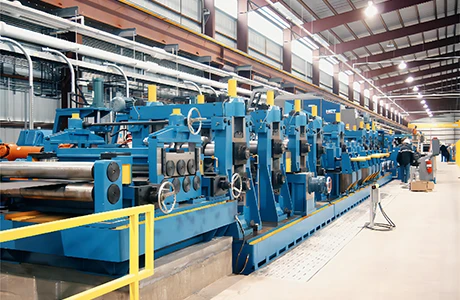
A cold roll forming machine is a type of metal forming equipment used to continuously produce roofing sheets, wall panels, floor deck, and other steel building profiles from galvanized steel, PPGI, aluminum, or other metal coils.
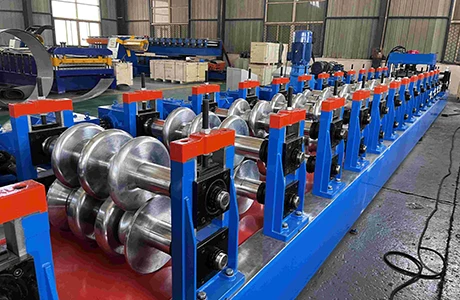
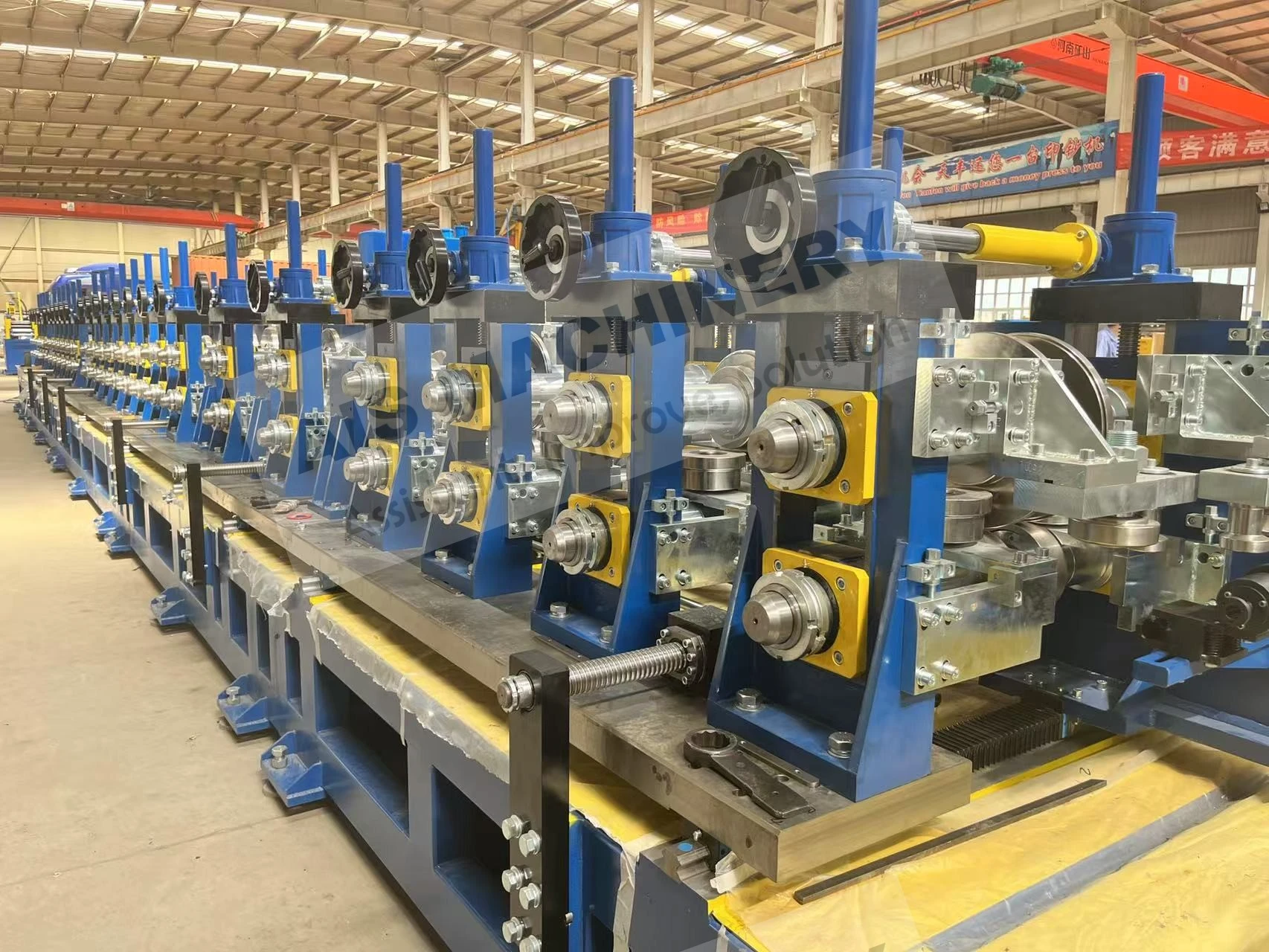
Among different cold roll forming machines, the roof sheet roll forming machine (roof panel machine) is one of the most widely used. It forms flat steel strips into roofing profiles through multiple forming rollers without heating the material, ensuring high production efficiency and consistent profile accuracy.
It is widely used in:
🏭 Steel structure buildings
🏠 Residential roofing
🏢 Industrial workshops
🚜 Agricultural buildings
🏬 Warehouses
🏗️ What Products Can a Roof Sheet Roll Forming Machine Produce?
Different roller designs can produce different roofing profiles.
Common products include:
✅ Corrugated roofing sheets
✅ Trapezoidal roofing sheets
✅ IBR roof panels
✅ Tile roof sheets (glazed tile)
✅ Wall cladding panels
By simply changing the roll forming design, manufacturers can produce profiles that meet different market standards.
🖼️ Single Layer vs Double Layer Roll Forming Machine
Single Layer Roll Forming Machine
A single layer machine produces one roofing profile.
Advantages
✔ Simple structure
✔ Higher production stability
✔ Easier maintenance
✔ Suitable for mass production of one profile
Best for factories producing large quantities of the same roofing sheet.


Double Layer Roll Forming Machine
A double layer machine combines two different roll forming systems into one machine frame.
Operators can switch between the upper and lower forming layers according to production needs.
Advantages
✔ Produce two different roofing profiles
✔ Save factory space
✔ Lower investment than purchasing two separate machines
✔ Flexible for customers with multiple product types
Ideal for manufacturers producing different roof sheet profiles in smaller production batches.


⚙️ Main Components of a Roof Sheet Roll Forming Machine
A standard roofing sheet production line usually includes:
| Machine | Function |
|---|---|
| Hydraulic Decoiler | Holds and unwinds the steel coil |
| Feeding Device | Guides the strip into the machine accurately |
| Roll Forming Machine | Gradually forms the sheet into the required profile |
| Hydraulic Cutting System | Cuts sheets to preset lengths |
| PLC Control System | Controls production length, quantity, and automatic operation |
| Run-out Table | Collects finished roofing sheets |
Some production lines may also include automatic stackers for higher production efficiency.
📐 Common Machine Specifications
The machine specifications depend on the roofing profile and customer requirements.
Typical production ranges include:
| Item | Typical Range |
|---|---|
| Coil Width | According to profile design |
| Material Thickness | 0.3–0.8 mm |
| Coil Material | GI, PPGI, Galvalume, Aluminum |
| Forming Speed | About 10–25 m/min (depending on profile and cutting method) |
| Cutting Type | Hydraulic cutting |
| Control System | PLC + Touch Screen (HMI) |
| Drive Method | Chain drive or gearbox drive (depending on machine design) |
Actual specifications can be customized based on production requirements.
✅ How to Choose the Right Roof Sheet Roll Forming Machine
Selecting the right machine depends on your production requirements.
1️⃣ Roofing Sheet Profile
Different countries use different roofing profiles.
Choose a machine designed for the profile required in your market.
2️⃣ Material Thickness
Confirm the material type and thickness before machine design.
Typical materials include:
- Galvanized steel (GI)
- PPGI
- Galvalume
- Aluminum
3️⃣ Production Capacity
Estimate your daily production output.
Higher production requirements may require faster forming speeds or automatic stacking systems.
4️⃣ Single or Double Layer
If you mainly manufacture one roofing sheet type, a single layer machine offers a simpler and more efficient solution.
If you need to produce two different roofing profiles while saving factory space and equipment investment, a double layer machine is a practical choice.
5️⃣ Automation Level
Depending on your production plan, optional equipment may include:
✅ Hydraulic decoiler
✅ Auto stacker
✅ Servo length control
✅ Remote technical support


🌍 Why Choose a Professional Roll Forming Machine Manufacturer?
An experienced manufacturer can provide:
✔ Customized profile design
✔ Stable machine performance
✔ Accurate forming rollers
✔ Reliable PLC control system
✔ Installation and commissioning support
✔ Spare parts and after-sales service
A well-designed roll forming machine helps improve production efficiency, reduce maintenance, and ensure consistent roofing sheet quality over long-term operation.
📞 Looking for a Reliable Roof Sheet Roll Forming Machine?
Whether you need a single layer roof sheet roll forming machine or a double layer roofing sheet production line, AIS Machinery can provide customized solutions based on your roofing profile, material specification, and production capacity.
Our engineering team can help you select the right machine configuration to achieve stable production, high efficiency, and long service life.
Contact us today for technical consultation, machine drawings, and a customized quotation.

Related Products






Related News

2026-11-02 02:23:25
ERW Pipe Mill for Sale: Buyer FAQs for a 76 mm Line
Review the 21.3 mm to 76 mm range, materials, equipment, speed, power, cutting methods, and production controls for an ERW pipe mill for sale.

2026-10-29 00:44:48
High-Speed Steel Coil Slitting Line FAQ: Specifications, Ordering and Support Questions
Get direct answers about High-Speed Steel Coil Slitting Line specifications, material compatibility, component layout, process steps, quality standards, and after-sales support from HEBEI AIS MACHINERY EQUIPMENT CO.,LTD.

2026-10-28 00:06:34
Learn the key working requirements and integration criteria for selecting a steel pipe making machine manufacturer. Covers diameter range, wall thickness, strip grade, HF welding power, footprint, and electrical supply using the 10inch 273mm ERW Pipe Making Machine from HEBEI AIS MACHINERY EQUIPMENT CO.,LTD.

2026-10-28 00:05:55
Choosing a Flying Cold Saw: Working Requirements and Integration Fit
Learn the key selection criteria for a flying cold saw — pipe diameter, line speed, cut precision, blade type, and PLC integration — to find the right cold cutting flying saw machine for your ERW tube mill.

2026-10-28 00:05:28
Evaluate whether the GGP 100kw Solid State High Frequency Induction Heating Welding Machine fits your ERW pipe production line. This guide covers power requirements, cooling infrastructure, electrical supply, and control integration criteria.

2026-10-28 00:04:41
Choosing Quick-Change System for Forming & Sizing Section: Application Fit and Specification Checks
Learn the key selection criteria for a Quick-Change System for Forming & Sizing Section in ERW tube mills — covering changeover frequency, cassette structure, pneumatic couplings, and application scope for structural, automotive, and export tube production.

2026-10-23 17:54:55
Compare a steel pipe seam annealing machine and a pipe threading machine: function, published ranges, PLC/HMI and CNC controls, operating steps and maintenance.

2026-10-04 16:13:15
HEBEI AIS MACHINERY at Tube & Wire Shanghai 2026 | Tube Mill Solutions
HEBEI AIS MACHINERY participated in Tube & Wire Shanghai 2026, meeting new and long-term customers to discuss ERW tube mills, steel processing equipment, new projects, and future cooperation.
Send a Message
Dear customer, thank you for your attention! We provide high-quality machinery and equipment and look forward to your orders. Please inform us of your needs and we will respond quickly!
 English
 Albanian
 Arabic
 French
 German
 Indonesian
 Italian
 Japanese
 Kazakh
 Korean
 Latin
 Macedonian
 Portuguese
 Russian
 Spanish
 Thai
 Turkish
 Ukrainian
 Uzbek