
-
 Tel:86-15176910262
-

Search

Slitting Line: Complete Guide to Coil Slitting Machines and Applications
Jun . 15, 2026 09:49
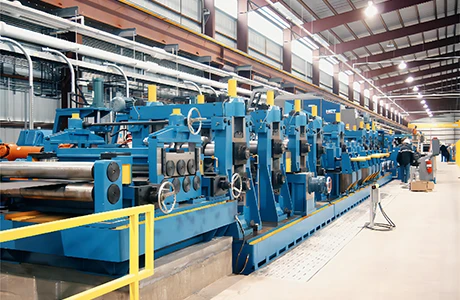
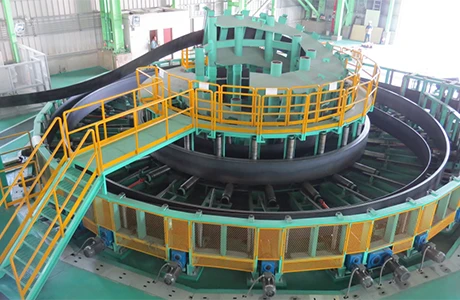
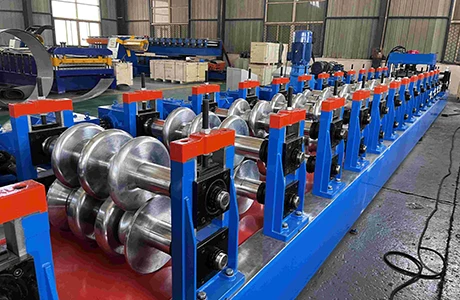
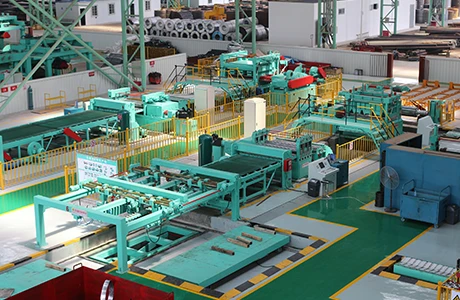
A Slitting Line, also known as a Coil Slitting Line or Steel Slitting Machine, is used to cut a wide metal coil into multiple narrower strips according to the required widths.
It is one of the most important processing lines in industries such as:
✅ ERW Tube Mill Production
✅ Cold Roll Forming Lines
✅ Steel Service Centers
✅ Automotive Components
✅ Construction Materials
✅ Electrical and Home Appliance Manufacturing
The slitted strips can be directly used for tube production, roll forming, stamping, or other metal processing applications.
At AIS Machinery, we provide customized slitting line solutions for carbon steel, galvanized steel, stainless steel, aluminum, and other metal coils.


How Does a Slitting Line Work? 🔧
The basic working principle is simple:
- Uncoil the master coil
- Feed the material into the slitting section
- Cut the coil into multiple strips using slitting knives
- Recoil the finished strips into separate coils
The entire process is continuous, efficient, and highly accurate.
Main Equipment of a Slitting Line
A complete slitting line usually consists of the following equipment:
1. Decoiler
The decoiler supports and unwinds the steel coil.
Functions:
- Coil loading
- Coil expansion and clamping
- Stable material feeding
2. Coil Head Opener & Pinch Feeder
This section helps guide the strip into the production line smoothly.
Functions:
- Open the coil head
- Feed material forward
- Improve production efficiency
3. Leveling Machine
Before slitting, the strip often contains coil set or slight deformation.
Functions:
- Flatten the strip
- Improve feeding accuracy
- Ensure better slitting quality
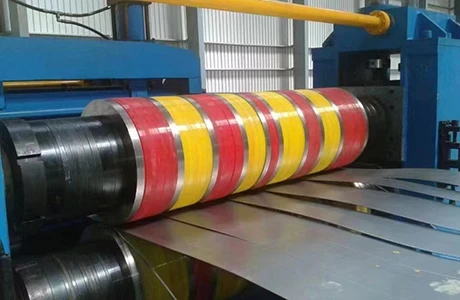
4. Slitting Machine (Main Machine) ✂️
This is the core equipment of the entire line.
Main components:
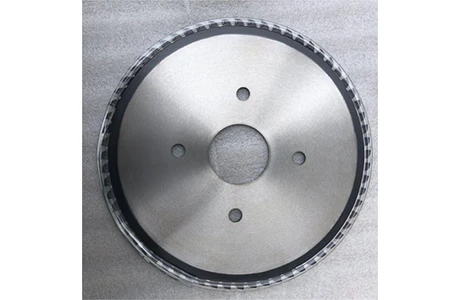
- Slitting knives
- Spacers
- Slitting shaft
- Drive system
The circular knives cut the wide coil into multiple narrow strips in one pass.
The number of strips depends on:
- Material thickness
- Coil width
- Minimum strip width
- Machine capacity
5. Scrap Winder
During slitting, edge scraps are generated on both sides.
Functions:
- Collect edge scraps automatically
- Keep the production area clean
- Improve operating safety
6. Tension Stand
The tension unit keeps all strips under stable tension.
Benefits:
- Prevent strip loosening
- Reduce scratching
- Improve recoiling quality
7. Recoiler
The recoiler rewinds all finished strips into coils.
Functions:
- Stable winding
- Neat coil appearance
- Easy transportation and storage
8. Hydraulic and Electrical Control System
Modern slitting lines are usually equipped with:
- PLC control system
- HMI touch screen
- AC frequency drive motors
- Automatic fault diagnosis
Operators can easily set production parameters and monitor machine status.

How to Choose the Right Slitting Line? 🤔
Selecting a slitting line requires more than just knowing the coil width.
Several key parameters must be considered.
1. Material Type
Different materials require different knife materials and machine configurations.
Examples:
- Carbon Steel
- Galvanized Steel
- Stainless Steel
- Aluminum
2. Material Thickness
Thickness directly affects machine capacity.
Typical ranges:
| Thickness Range | Recommended Line |
|---|---|
| 0.2-2.0 mm | Light Gauge Slitting Line |
| 1.0-6.0 mm | Medium Gauge Slitting Line |
| 3.0-12 mm | Heavy Duty Slitting Line |
3. Coil Width
Common coil widths include:
- 600 mm
- 1250 mm
- 1600 mm
- 2000 mm
The maximum coil width determines the machine model.
4. Coil Weight
Common coil weights:
- 5T
- 10T
- 15T
- 20T
- 30T
The decoiler and recoiler must be designed according to the maximum coil weight.
5. Number of Slits
This is one of the most important parameters.
For example:
A customer processing:
- Thickness: 0.5 mm
- Coil Width: 1250 mm
- Finished Strip Width: 50 mm
may require more than 20 strips in one pass.
More strips require:
- More knives
- Higher shaft precision
- Better machine rigidity
6. Production Speed
Typical slitting speeds:
🚀 80 m/min
🚀 100 m/min
🚀 120 m/min
Higher speed means higher productivity, but also requires better machine stability and automation.
Why Slitting Quality Matters
A high-quality slitting line should provide:
✅ Accurate strip width
✅ Smooth strip edges
✅ Minimal burr formation
✅ Stable recoiling tension
✅ High production efficiency
Poor slitting quality can cause problems in downstream tube mills and roll forming lines, resulting in production losses and material waste.
AIS Machinery Slitting Line Solutions
At AIS Machinery, we design and manufacture customized slitting lines based on customer requirements.
Our solutions feature:
✔ PLC automatic control
✔ High-precision slitting shafts
✔ Reliable hydraulic system
✔ Stable AC drive technology
✔ Customized configurations for different industries
Whether you process carbon steel, stainless steel, galvanized steel, or aluminum coils, our engineering team can help you select the most suitable slitting line configuration.

Related Products






Related News

2026-11-02 02:23:25
ERW Pipe Mill for Sale: Buyer FAQs for a 76 mm Line
Review the 21.3 mm to 76 mm range, materials, equipment, speed, power, cutting methods, and production controls for an ERW pipe mill for sale.

2026-10-29 00:44:48
High-Speed Steel Coil Slitting Line FAQ: Specifications, Ordering and Support Questions
Get direct answers about High-Speed Steel Coil Slitting Line specifications, material compatibility, component layout, process steps, quality standards, and after-sales support from HEBEI AIS MACHINERY EQUIPMENT CO.,LTD.

2026-10-28 00:06:34
Learn the key working requirements and integration criteria for selecting a steel pipe making machine manufacturer. Covers diameter range, wall thickness, strip grade, HF welding power, footprint, and electrical supply using the 10inch 273mm ERW Pipe Making Machine from HEBEI AIS MACHINERY EQUIPMENT CO.,LTD.

2026-10-28 00:05:55
Choosing a Flying Cold Saw: Working Requirements and Integration Fit
Learn the key selection criteria for a flying cold saw — pipe diameter, line speed, cut precision, blade type, and PLC integration — to find the right cold cutting flying saw machine for your ERW tube mill.

2026-10-28 00:05:28
Evaluate whether the GGP 100kw Solid State High Frequency Induction Heating Welding Machine fits your ERW pipe production line. This guide covers power requirements, cooling infrastructure, electrical supply, and control integration criteria.

2026-10-28 00:04:41
Choosing Quick-Change System for Forming & Sizing Section: Application Fit and Specification Checks
Learn the key selection criteria for a Quick-Change System for Forming & Sizing Section in ERW tube mills — covering changeover frequency, cassette structure, pneumatic couplings, and application scope for structural, automotive, and export tube production.

2026-10-23 17:54:55
Compare a steel pipe seam annealing machine and a pipe threading machine: function, published ranges, PLC/HMI and CNC controls, operating steps and maintenance.

2026-10-04 16:13:15
HEBEI AIS MACHINERY at Tube & Wire Shanghai 2026 | Tube Mill Solutions
HEBEI AIS MACHINERY participated in Tube & Wire Shanghai 2026, meeting new and long-term customers to discuss ERW tube mills, steel processing equipment, new projects, and future cooperation.
Send a Message
Dear customer, thank you for your attention! We provide high-quality machinery and equipment and look forward to your orders. Please inform us of your needs and we will respond quickly!
 English
 Albanian
 Arabic
 French
 German
 Indonesian
 Italian
 Japanese
 Kazakh
 Korean
 Latin
 Macedonian
 Portuguese
 Russian
 Spanish
 Thai
 Turkish
 Ukrainian
 Uzbek