
-
 Tel:86-15176910262
-

Search

Comprehensive Guide to Eddy Current Testing Equipment and Applications
Mar . 06, 2026 04:25
Eddy Current Testing Equipment: A Comprehensive Guide
Eddy current testing (ECT) is a non-destructive testing (NDT) method used to detect flaws and characterize materials. It's a versatile technique widely employed across industries like aerospace, oil & gas, and manufacturing for quality control and maintenance. This article explores the principles, applications, types, and key considerations when selecting eddy current testing equipment, helping you make informed decisions. Understanding ECT is crucial for ensuring the reliability and safety of critical components.
Understanding the Principles of Eddy Current Testing
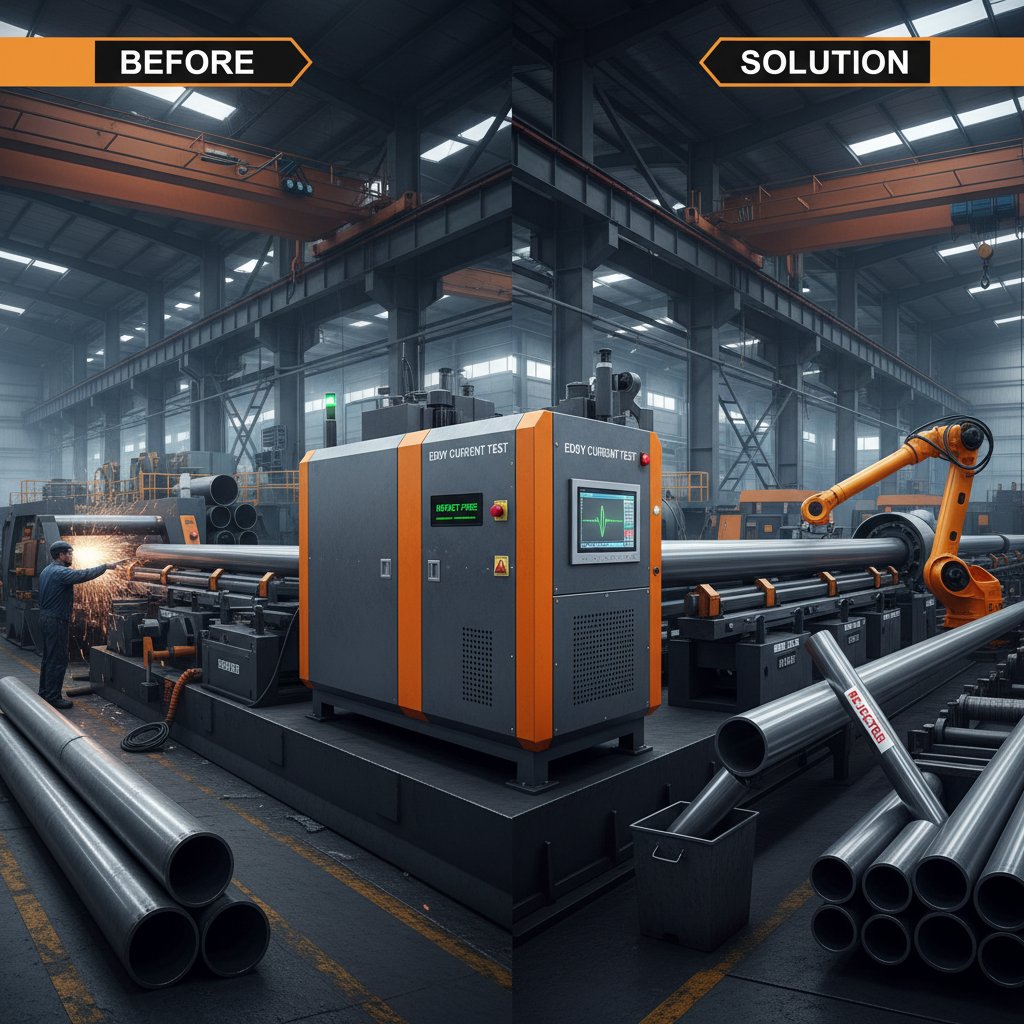
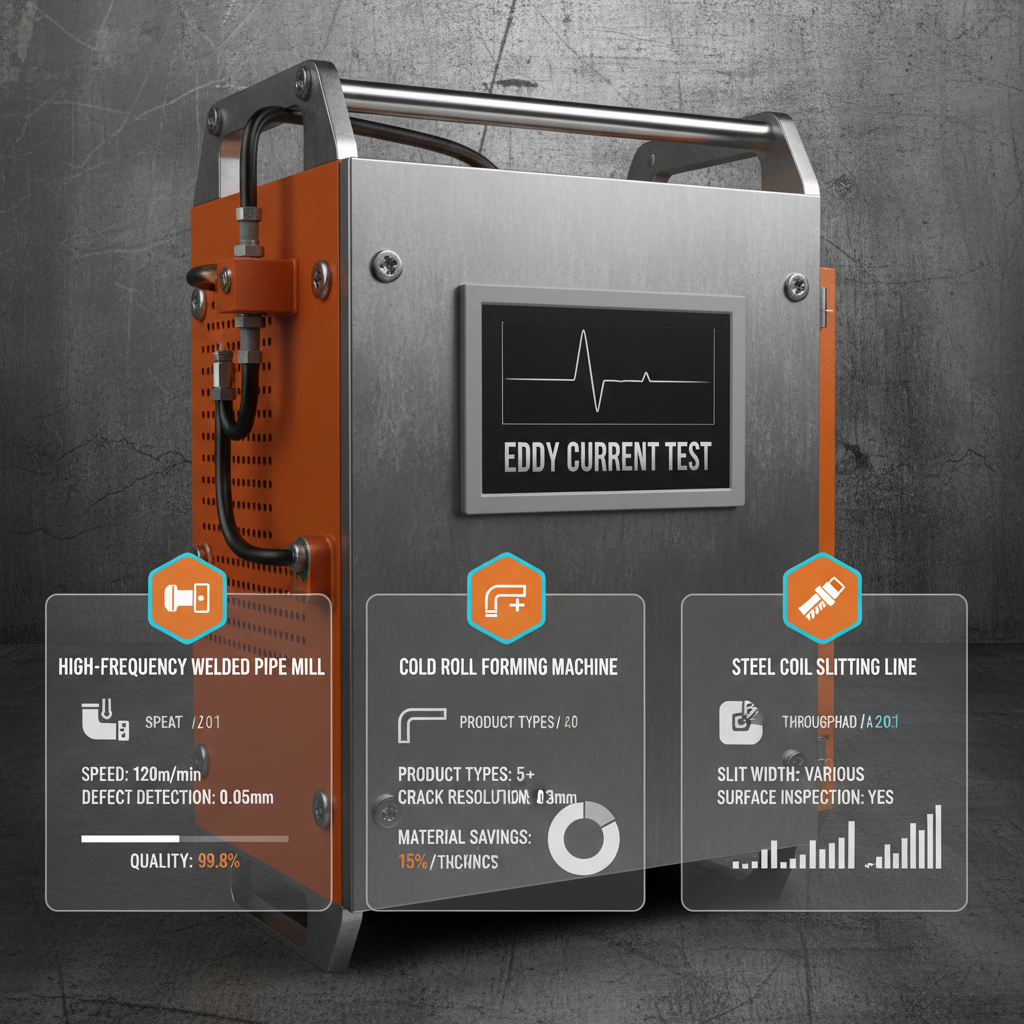
At its core, ECT relies on electromagnetic induction. An alternating current is passed through a coil, generating a magnetic field. When this field interacts with a conductive material, circulating currents – known as eddy currents – are induced within the material. Any flaws or variations in the material’s conductivity or permeability disrupt the flow of these eddy currents. The ECT instrument detects these disruptions, allowing for the identification of surface and near-surface defects, material variations, and coating thickness. The sensitivity and effectiveness of the test depend on factors like frequency, probe design, and material properties. AISTubeMill offers a range of ECT solutions tailored to diverse industrial needs.
Key Principle: Electromagnetic Induction – the creation of eddy currents in conductive materials through a changing magnetic field.
Types of Eddy Current Testing Equipment
Various types of ECT equipment cater to specific applications. Surface probes detect flaws breaking the surface. Bobbin probes are ideal for inspecting tubes and pipes. Rotating probes are used for inspecting bolts, studs, and bar stock. Array probes (or phased array ECT) provide faster coverage and enhanced flaw characterization. The selection of the appropriate probe is crucial for accurate and reliable results. The versatility of AISTubeMill’s eddy current testing equipment allows for adaptability to many inspection tasks.
Eddy Current Probe Types:
• Surface Probes: Detect flaws breaking the surface.
• Bobbin Probes: Ideal for tube and pipe inspection.
• Rotating Probes: Used for bolts, studs, and bar stock.
• Array Probes: Faster coverage and enhanced flaw characterization.
Eddy Current Testing Equipment: Key Features & Specifications
When evaluating eddy current testing equipment, several specifications are vital. Frequency range affects penetration depth; lower frequencies penetrate deeper, while higher frequencies are more sensitive to surface flaws. Instrument resolution determines the smallest detectable flaw. Data storage and analysis capabilities are crucial for documentation and reporting. Portability impacts field usability. Consider the material under inspection and the type of defects expected when choosing the appropriate equipment.
Applications of Eddy Current Testing
ECT finds application in a vast spectrum of industries. In aerospace, it’s used for crack detection in aircraft components. In the oil and gas sector, it inspects pipelines for corrosion and erosion. Manufacturing utilizes ECT for heat treatment verification and material sorting. The automotive industry employs it for fastener inspection and quality control. The versatility of this method makes it a vital component of many NDT programs. AISTubeMill provides solutions for all these sectors.
Selecting the Right Eddy Current Testing Equipment
Choosing the right eddy current testing equipment requires careful consideration of several factors. Understand the material being inspected, the types of defects you’re looking for, and the inspection environment. Consider the skill level of the operators. A quality instrument with excellent support and training is a worthwhile investment. AISTubeMill offers comprehensive support, from equipment selection to training and service.
Conclusion: Investing in Quality Eddy Current Testing
Investing in high-quality eddy current testing equipment from a reputable supplier like AISTubeMill is a crucial step towards ensuring the safety, reliability, and longevity of critical assets. By understanding the principles, types, and key considerations outlined in this guide, you can make informed decisions and optimize your NDT program.
Frequently Asked Questions (FAQs)
What are the limitations of Eddy Current Testing?
While ECT is a powerful NDT method, it does have limitations. It's primarily suitable for detecting surface and near-surface flaws in conductive materials. It has limited ability to detect defects deep within a material. The lift-off distance (distance between the probe and the surface) significantly affects accuracy. Also, magnetic permeability variations and surface roughness can influence results. Careful probe control and proper calibration are essential to mitigate these limitations.
What materials can be inspected using Eddy Current Testing?
ECT is best suited for inspecting conductive materials like metals (aluminum, copper, steel, titanium). It cannot be used on non-conductive materials such as plastics or ceramics. The conductivity of the material affects the signal strength, and the instrument needs to be calibrated accordingly. Different probe designs and frequencies can be used to optimize the inspection of various materials.
How important is operator training in Eddy Current Testing?
Operator training is critically important for accurate and reliable ECT results. Proper training covers probe selection, calibration procedures, interpretation of signals, and defect characterization. A well-trained operator can identify subtle indications, differentiate between relevant and irrelevant signals, and accurately assess the severity of defects. AISTubeMill provides comprehensive training programs alongside its equipment.

Related Products






Related News

2026-11-02 02:23:25
ERW Pipe Mill for Sale: Buyer FAQs for a 76 mm Line
Review the 21.3 mm to 76 mm range, materials, equipment, speed, power, cutting methods, and production controls for an ERW pipe mill for sale.

2026-10-29 00:44:48
High-Speed Steel Coil Slitting Line FAQ: Specifications, Ordering and Support Questions
Get direct answers about High-Speed Steel Coil Slitting Line specifications, material compatibility, component layout, process steps, quality standards, and after-sales support from HEBEI AIS MACHINERY EQUIPMENT CO.,LTD.

2026-10-28 00:06:34
Learn the key working requirements and integration criteria for selecting a steel pipe making machine manufacturer. Covers diameter range, wall thickness, strip grade, HF welding power, footprint, and electrical supply using the 10inch 273mm ERW Pipe Making Machine from HEBEI AIS MACHINERY EQUIPMENT CO.,LTD.

2026-10-28 00:05:55
Choosing a Flying Cold Saw: Working Requirements and Integration Fit
Learn the key selection criteria for a flying cold saw — pipe diameter, line speed, cut precision, blade type, and PLC integration — to find the right cold cutting flying saw machine for your ERW tube mill.

2026-10-28 00:05:28
Evaluate whether the GGP 100kw Solid State High Frequency Induction Heating Welding Machine fits your ERW pipe production line. This guide covers power requirements, cooling infrastructure, electrical supply, and control integration criteria.

2026-10-28 00:04:41
Choosing Quick-Change System for Forming & Sizing Section: Application Fit and Specification Checks
Learn the key selection criteria for a Quick-Change System for Forming & Sizing Section in ERW tube mills — covering changeover frequency, cassette structure, pneumatic couplings, and application scope for structural, automotive, and export tube production.

2026-10-23 17:54:55
Compare a steel pipe seam annealing machine and a pipe threading machine: function, published ranges, PLC/HMI and CNC controls, operating steps and maintenance.

2026-10-04 16:13:15
HEBEI AIS MACHINERY at Tube & Wire Shanghai 2026 | Tube Mill Solutions
HEBEI AIS MACHINERY participated in Tube & Wire Shanghai 2026, meeting new and long-term customers to discuss ERW tube mills, steel processing equipment, new projects, and future cooperation.
Send a Message
Dear customer, thank you for your attention! We provide high-quality machinery and equipment and look forward to your orders. Please inform us of your needs and we will respond quickly!
 English
 Albanian
 Arabic
 French
 German
 Indonesian
 Italian
 Japanese
 Kazakh
 Korean
 Latin
 Macedonian
 Portuguese
 Russian
 Spanish
 Thai
 Turkish
 Ukrainian
 Uzbek