
-
 Tel:86-15176910262
-

Search

Steel Tubing Mill Speed Control
Sep . 03, 2025 15:21
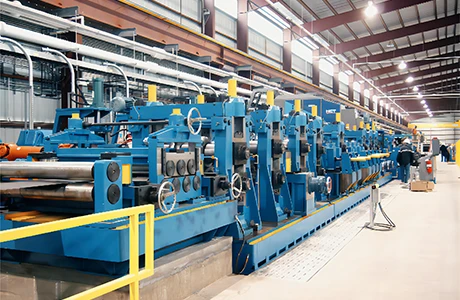
Effective speed control in steel tubing mill operations is a cornerstone of efficient production, directly influencing product quality, material utilization, and overall manufacturing productivity. As a wholesaler, understanding the nuances of speed control systems for steel tubing mill, roll forming tube equipment, and steel pipe mills enables partners to select machinery that aligns with their production goals—whether prioritizing high-volume output or precision engineering. HEBEI AIS MACHINERY EQUIPMENT CO.,LTD specializes in designing steel tubing mill systems with advanced speed control technologies, ensuring seamless operation across diverse applications. This guide explores the principles of speed control in steel tubing mill setups, strategies for optimizing roll forming tube processes, and how steel pipe mills balance speed with accuracy, empowering wholesalers to support customers in achieving consistent, high-quality production.
Steel Tubing Mill Speed Control Fundamentals
Core Components of Speed Control Systems
Variable Frequency Drives (VFDs): VFDs are the backbone of modern steel tubing millspeed control, allowing operators to adjust motor speed with precision. HEBEI AIS MACHINERY EQUIPMENT CO.,LTD integrates VFDs rated for 150–500 kW in their steel tubing mill systems, enabling speed adjustments from 10–100 m/min while maintaining torque stability—a critical feature when processing varying material thicknesses.
Servo Motors for Synchronization: In multi-stage steel tubing milloperations, servo motors ensure that each production stage (uncoiling, forming, welding, cutting) operates at synchronized speeds, preventing material stretching or buckling. HEBEI AIS MACHINERY EQUIPMENT CO.,LTD.’s steel tubing mill systems achieve synchronization accuracy within ±0.1%, even during rapid speed changes.
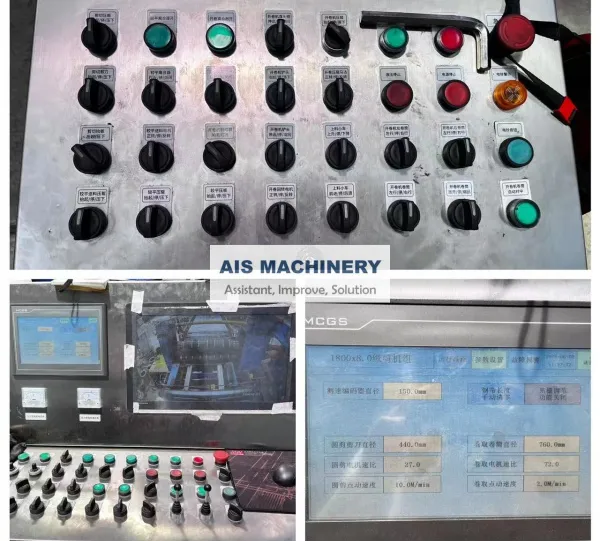
PLC-Based Control Panels: Programmable Logic Controllers (PLCs) centralize steel tubing millspeed control, allowing operators to pre-set speed profiles for different tube sizes and materials. HEBEI AIS MACHINERY EQUIPMENT CO.,LTD.’s user-friendly PLC interfaces store up to 500 custom speed programs, reducing setup time when switching between production runs.
Speed vs. Quality Trade-offs
Thin-Wall vs. Thick-Wall Speeds: steel tubing millspeed must be calibrated to material thickness—thin-wall tubes (≤2mm) can be produced at 60–100 m/min, while thick-wall tubes (5–12mm) require slower speeds (20–40 m/min) to ensure proper weld penetration. HEBEI AIS MACHINERY EQUIPMENT CO.,LTD.’s steel tubing mill systems automatically adjust speed based on input material parameters, preventing quality compromises.
Dimensional Accuracy at Speed: Higher speeds in steel tubing milloperations increase the risk of dimensional variations, such as ovality in round tubes. HEBEI AIS MACHINERY EQUIPMENT CO.,LTD. mitigates this with real-time monitoring systems that adjust speed by ±2 m/min if deviations exceed 0.5mm, ensuring compliance with tolerance standards like ASTM A500.
Roll Forming Tube Speed Optimization Techniques
Progressive Speed Profiling
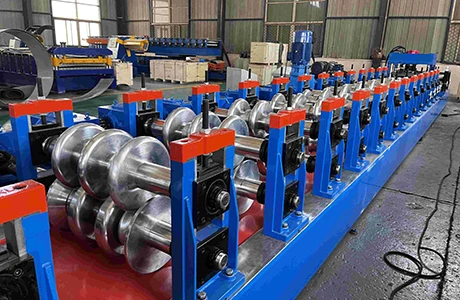
Stage-Specific Speed Adjustments: roll forming tubeprocesses use progressive speed increases across forming stands—initial stages run slower (10–20 m/min) to shape material without stress, while final stages accelerate (40–80 m/min) to boost throughput. HEBEI AIS MACHINERY EQUIPMENT CO.,LTD.’s roll forming tube lines feature 8–12 forming stands with pre-programmed speed increments, ensuring smooth material flow through each stage.
Material-Dependent Speed Curves: roll forming tubespeed profiles vary by material—mild steel allows faster forming (60–80 m/min) than high-strength alloys (30–50 m/min), which require more gradual shaping. HEBEI AIS MACHINERY EQUIPMENT CO.,LTD. provides customizable speed curves for their roll forming tube equipment, tailored to specific material properties like yield strength and ductility.
Torque Management for Consistent Speed
Load-Sensing Technology: roll forming tubemachines encounter varying resistance when processing different materials, which can slow production. HEBEI AIS MACHINERY EQUIPMENT CO.,LTD.’s roll forming tube systems use load sensors that adjust torque in real time, maintaining set speeds even when forming high-tensile steel or thick-gauge material.
Overload Protection: Sudden torque spikes—common when forming thick-walled roll forming tubeproducts—can damage equipment or cause speed fluctuations. HEBEI AIS MACHINERY EQUIPMENT CO.,LTD.’s systems include overload protection that temporarily reduces speed by 10–15% during spikes, preventing downtime while preserving product quality.
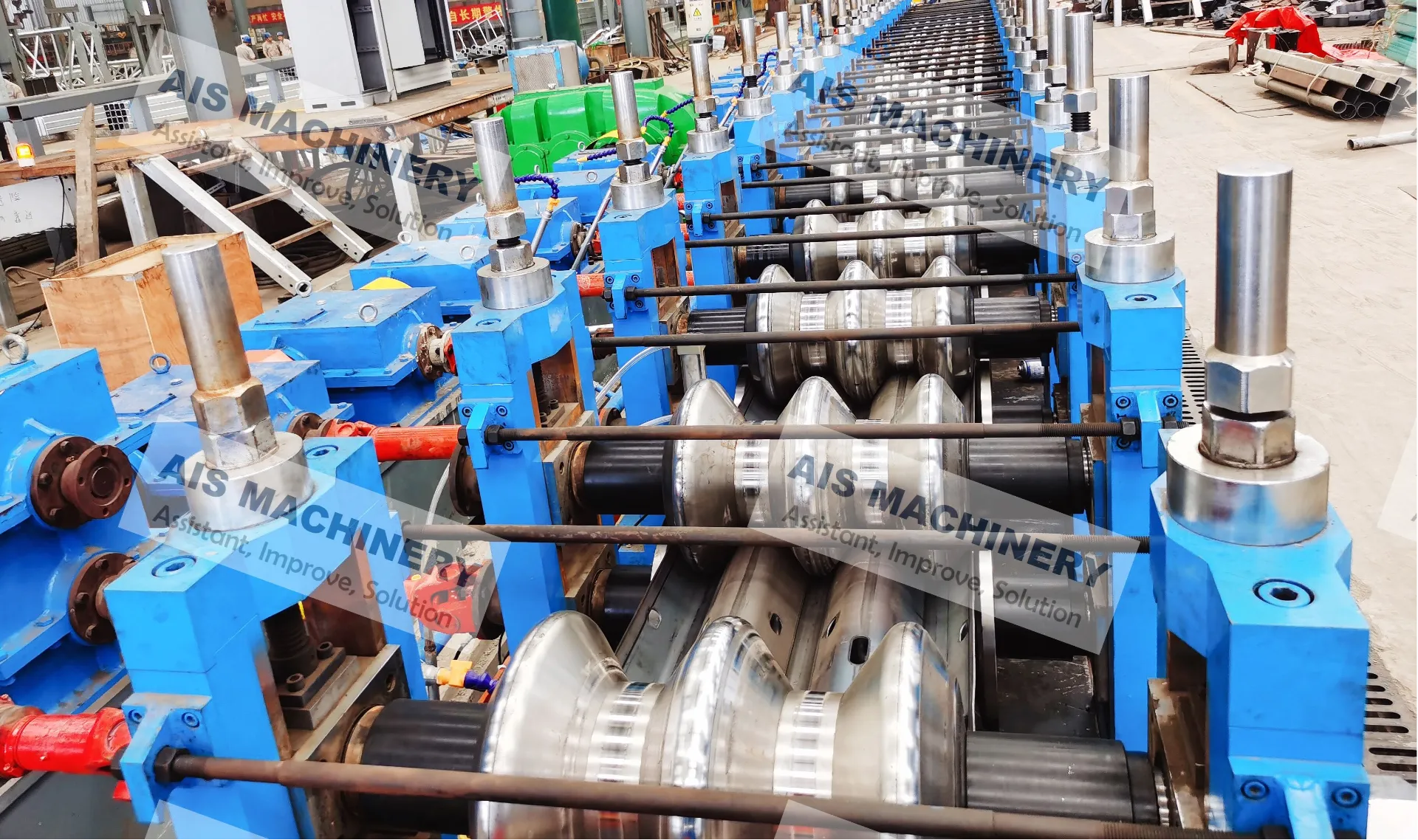
Steel Pipe Mills Speed Control for Heavy-Duty Production
High-Torque Systems for Large-Diameter Pipes
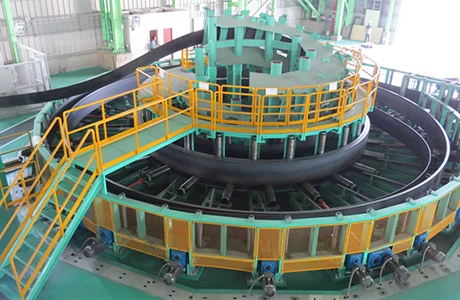
Speed Limitations in Large Pipes: steel pipe millsproducing large-diameter pipes (≥200mm) operate at slower speeds (10–30 m/min) due to increased material mass and forming resistance. HEBEI AIS MACHINERY EQUIPMENT CO.,LTD.’s heavy-duty steel pipe mills use 500–1000 kW motors with high-torque outputs, ensuring consistent speed even when forming 10–20mm thick walls.
Welding Speed Synchronization: In steel pipe mills, welding speed must match forming speed to avoid uneven seam quality. HEBEI AIS MACHINERY EQUIPMENT CO.,LTD. synchronizes high-frequency welding generators with forming rollers, maintaining a 1:1 speed ratio that ensures uniform weld penetration across large-diameter pipes.
Cooling and Speed Sustainability
Thermal Management at Speed: Continuous high-speed operation in steel pipe millsgenerates significant heat, which can degrade equipment performance. HEBEI AIS MACHINERY EQUIPMENT CO.,LTD.’s steel pipe mills integrate water-cooled motor jackets and roller bearings, enabling sustained operation at 80% of maximum speed without overheating.
Maintenance for Speed Consistency: Regular maintenance of steel pipe mills—including lubrication of drive components and calibration of speed sensors—prevents gradual speed degradation. HEBEI AIS MACHINERY EQUIPMENT CO.,LTD. provides maintenance schedules that outline checks for VFD calibration, gearbox alignment, and roller wear, ensuring long-term speed control reliability.
Table: Typical Speed Ranges for Steel Tubing Equipment
|
Equipment Type |
Pipe Diameter Range |
Material Thickness |
Speed Range (m/min) |
HEBEI AIS MACHINERY EQUIPMENT CO.,LTD. Model |
|
steel tubing mill |
20–150mm |
1–8mm |
20–100 |
AM-STM-150 |
|
roll forming tube |
50–300mm |
2–10mm |
10–80 |
AM-RFT-300 |
|
steel pipe mills |
100–600mm |
5–20mm |
10–30 |
AM-SPM-600 |

Steel Tubing Mill FAQS
How does speed control in steel tubing mill systems impact energy efficiency?
Speed control in steel tubing mill systems directly affects energy efficiency—Variable Frequency Drives (VFDs) reduce energy consumption by 20–30% compared to fixed-speed motors, as they adjust power input to match actual speed requirements. For example, running a steel tubing mill at 50 m/min instead of 100 m/min cuts energy use nearly in half. HEBEI AIS MACHINERY EQUIPMENT CO.,LTD.’s steel tubing mill systems optimize energy efficiency further by synchronizing auxiliary components (e.g., pumps, fans) with main drive speeds, minimizing waste in low-speed operations.
Can roll forming tube equipment maintain consistent speed with varying material hardness?
Yes, roll forming tube equipment can maintain consistent speed with varying material hardness through adaptive torque control. HEBEI AIS MACHINERY EQUIPMENT CO.,LTD.’s roll forming tube systems use hardness sensors that adjust drive torque—softer materials require less torque to form, while harder alloys trigger increased torque to maintain speed. This ensures that roll forming tube production remains stable, even when processing mixed batches of mild steel and high-strength alloys.
What is the role of PLCs in steel pipe mills speed control?
PLCs (Programmable Logic Controllers) serve as the central brain for steel pipe mills speed control, integrating inputs from sensors across the production line to adjust speeds dynamically. They store pre-programmed speed profiles for different pipe sizes, automate speed ramps during startup/shutdown, and coordinate multi-stage operations (e.g., forming, welding, cutting) to maintain synchronized speeds. HEBEI AIS MACHINERY EQUIPMENT CO.,LTD.’s steel pipe mills use advanced PLCs that can modify speed in 0.1 m/min increments, ensuring precise control over heavy-duty production processes.
How do steel tubing mill speed control systems handle sudden material thickness changes?
steel tubing mill speed control systems handle sudden material thickness changes using real-time feedback loops—thickness sensors detect variations and trigger immediate speed adjustments. For example, a 2mm increase in material thickness might prompt a 10–15% speed reduction to ensure proper forming. HEBEI AIS MACHINERY EQUIPMENT CO.,LTD.’s systems respond to thickness changes within 0.5 seconds, preventing defects like under-formed seams or excessive roll wear that can occur with unadjusted speeds.
What training is required to operate speed control features in roll forming tube equipment?
Operating speed control features in roll forming tube equipment requires training on PLC interface navigation, speed profile programming, and troubleshooting VFD alarms. HEBEI AIS MACHINERY EQUIPMENT CO.,LTD. offers on-site training that covers basic tasks (e.g., selecting pre-loaded speed programs) and advanced functions (e.g., creating custom speed curves for unique materials). This training ensures operators can optimize roll forming tube speed for different production runs, balancing efficiency with product quality.
Mastering speed control in steel tubing mill, roll forming tube, and steel pipe mills operations is essential for maximizing productivity while maintaining strict quality standards. By leveraging advanced technologies like VFDs, servo synchronization, and PLC-based systems, manufacturers can achieve precise speed adjustments that accommodate varying materials, pipe sizes, and production volumes. HEBEI AIS MACHINERY EQUIPMENT CO.,LTD.’s commitment to engineering robust speed control solutions—tailored to the unique demands of each equipment type—empowers wholesalers to offer customers machinery that delivers consistent performance, energy efficiency, and adaptability. As a wholesaler, emphasizing these speed control capabilities helps partners select equipment that aligns with their production goals, ultimately driving their success in a competitive manufacturing landscape.

Related Products

Related News
2027-04-24 00:00:00
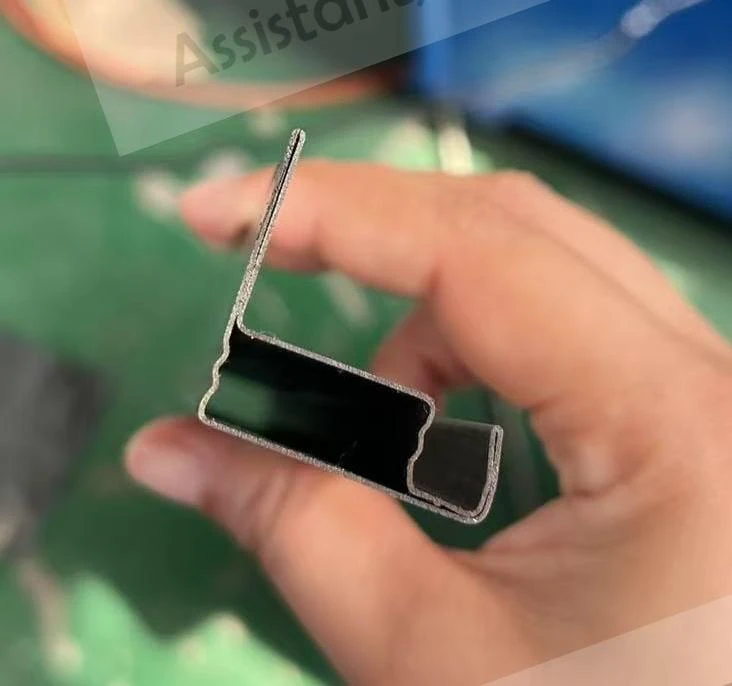
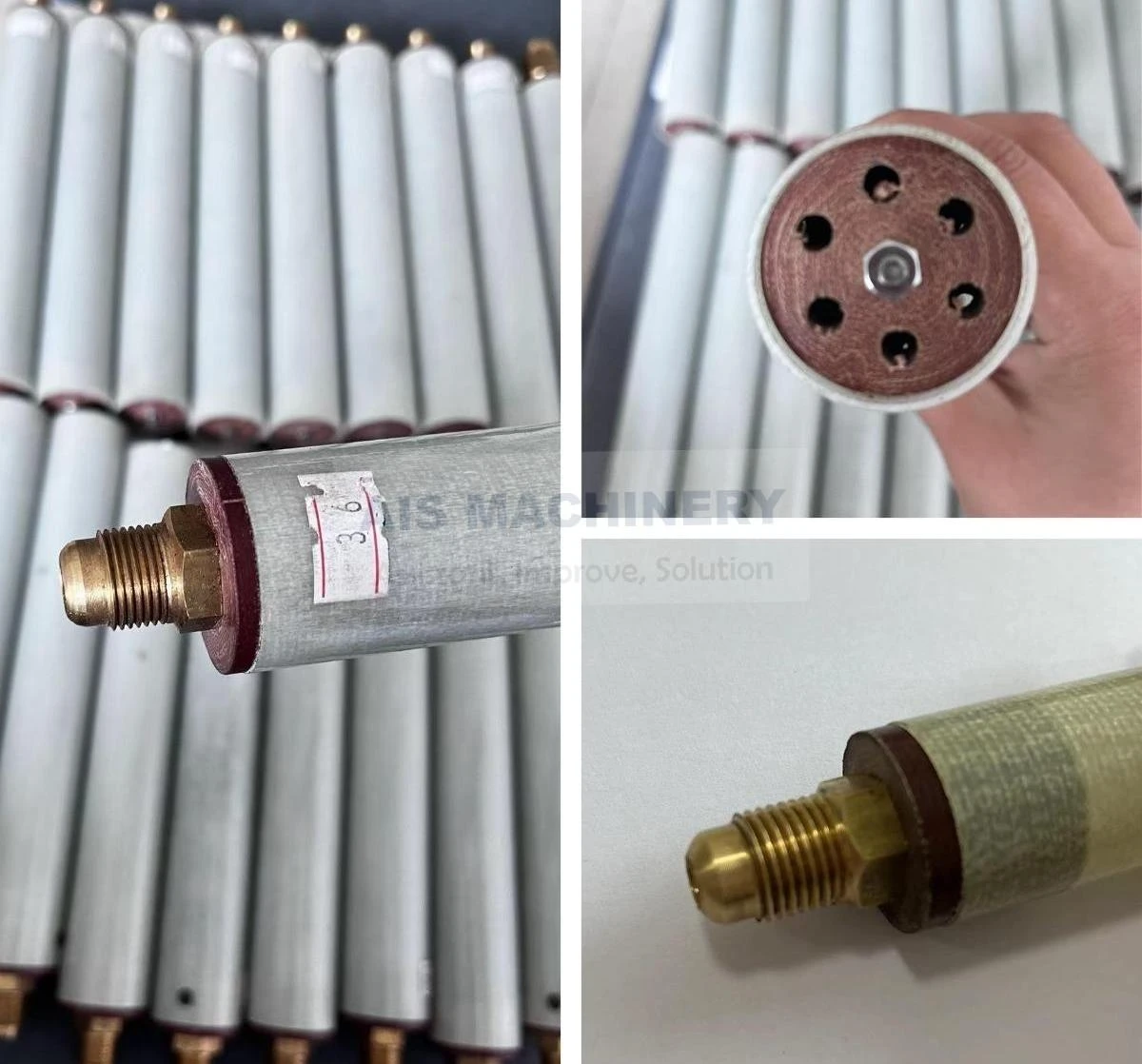
What is an Impeder and Ferrite Rods in ERW Tube Mill?
Struggling with impeder overheating or short service life in your ERW tube mill? This guide explains common impeder problems, the role of ferrite rods, and how to choose the right impeder for stable welding performance. Improve weld quality, reduce energy loss, and extend equipment lifespan with the right selection and proper cooling solutions.
2026-04-21 10:22:25
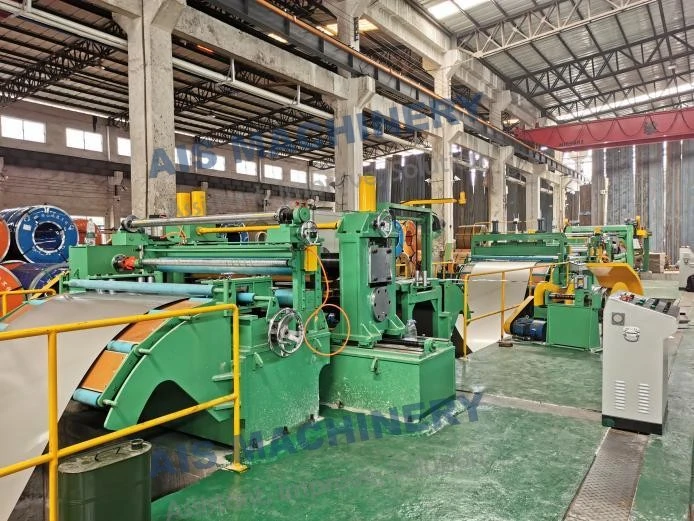
Slitting & Cut-to-Length Combined Production Line: A Smarter Way to Process Steel Coils
Discover the Slitting & Cut-to-Length Combined Production Line, a flexible solution for steel coil processing. This system integrates slitting line and cut-to-length line functions in one machine, saving space, reducing costs, and improving efficiency. Ideal for processing both steel strips and sheets, it is widely used in service centers and manufacturing industries. Learn its advantages, limitations, and applications.
2026-04-18 03:20:20
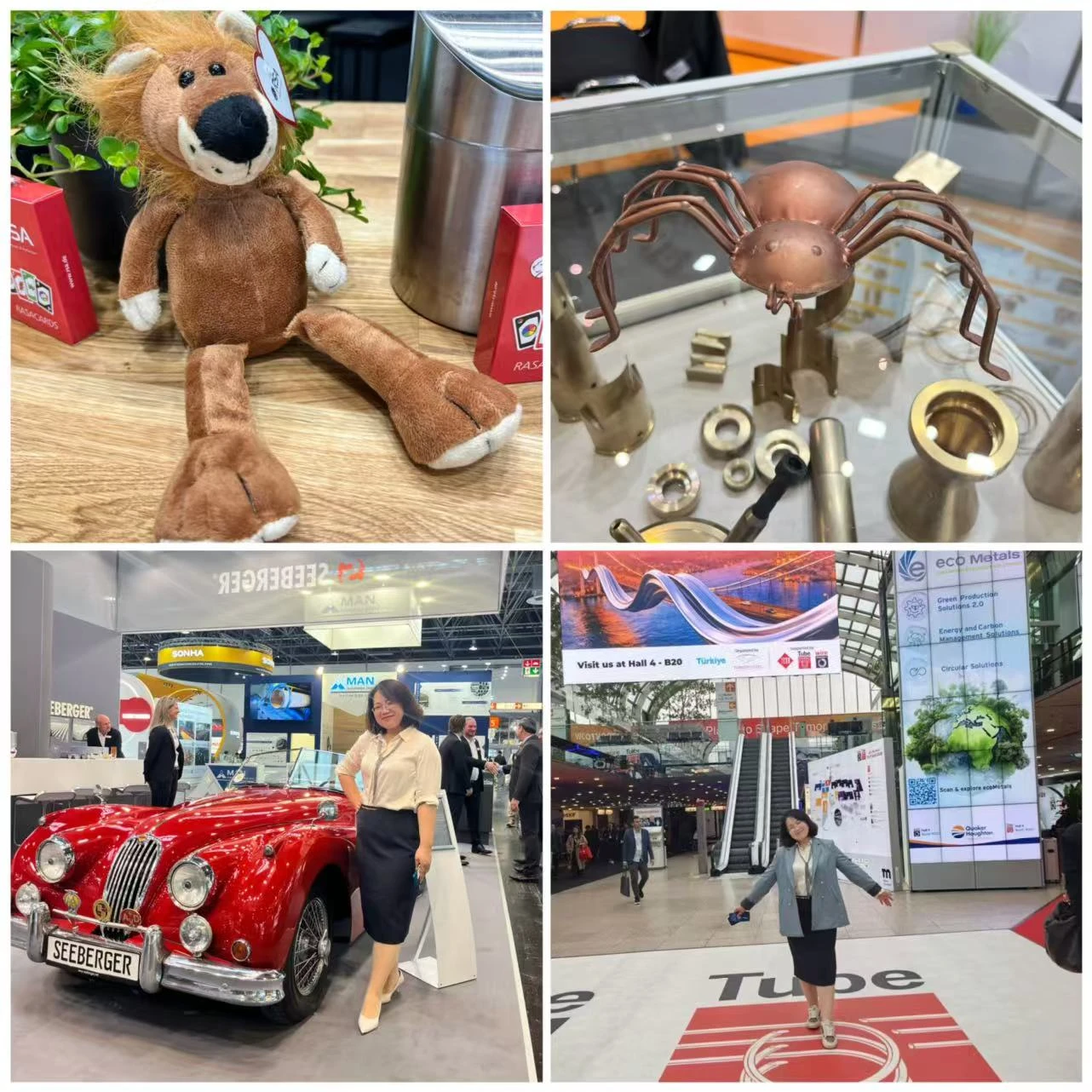
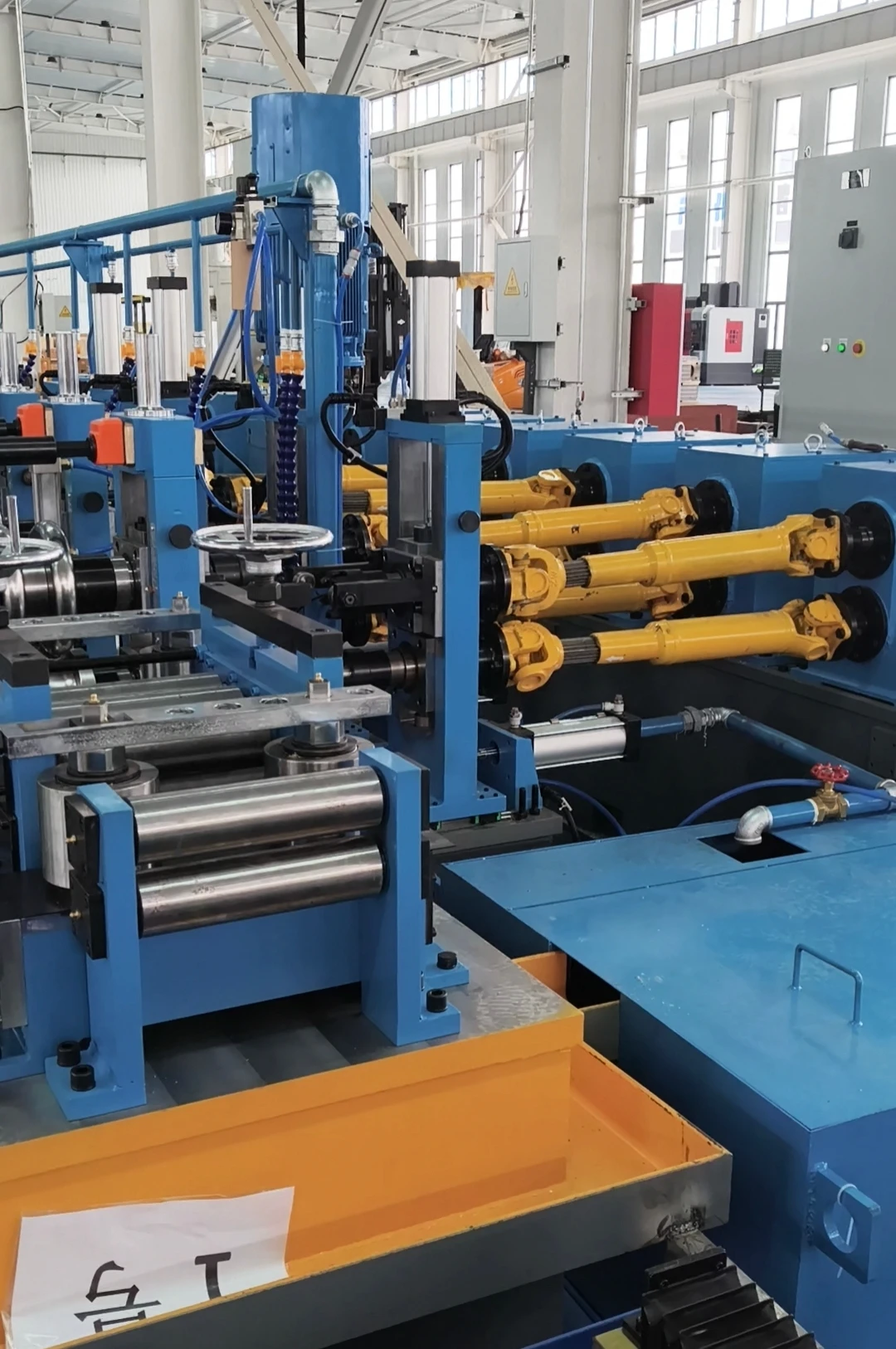
AIS Machinery Showcases Advanced Tube Solutions at Tube & Wire Düsseldorf 2026
Tube & Wire Düsseldorf 2026, one of the most influential exhibitions in the global tube and wire industry, held biennially in Düsseldorf, Germany
2026-04-17 00:00:00
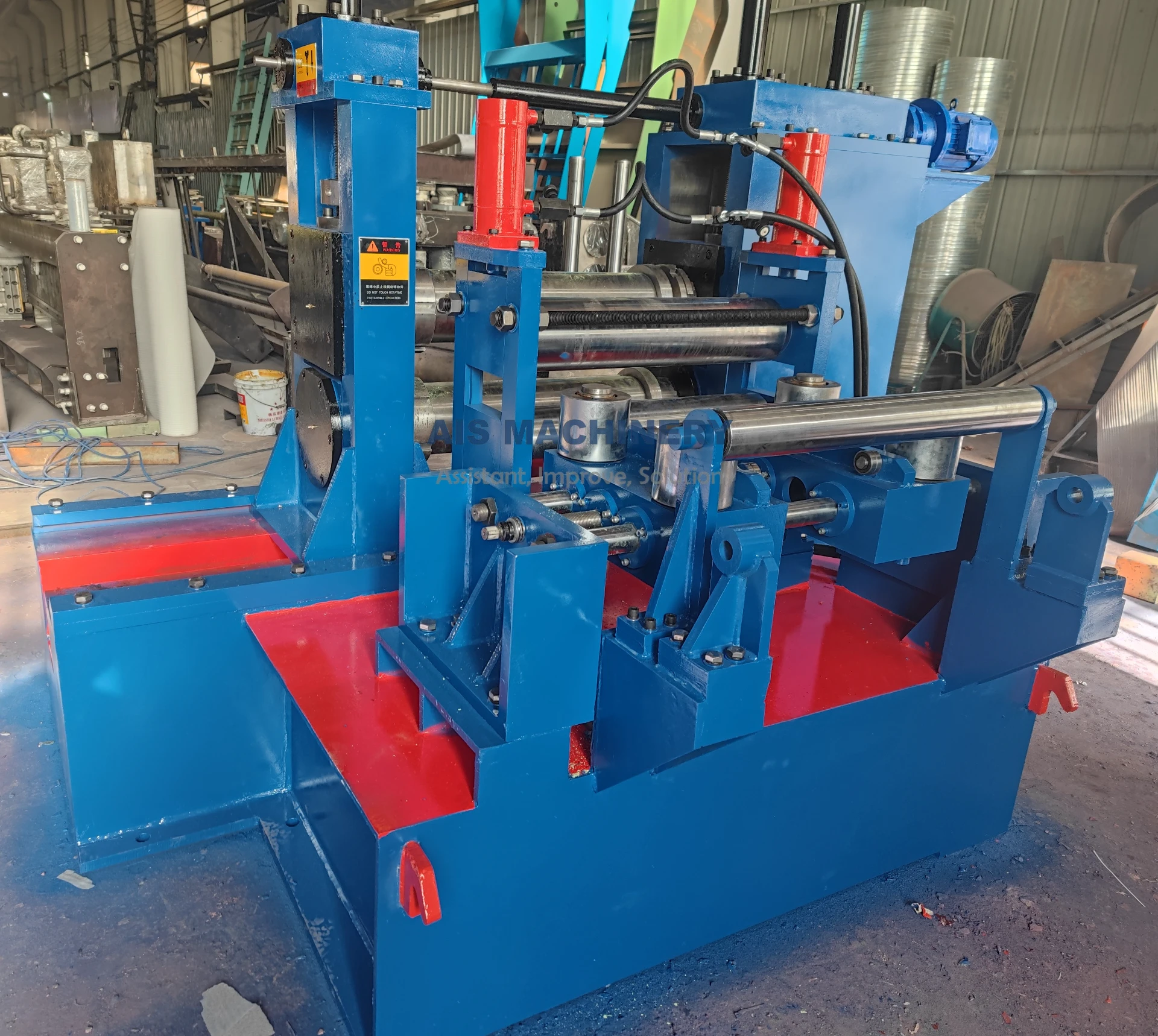
Southeast Asia Client Visits Our Factory | Customized Tube Mill Solution Delivered
A Southeast Asia client visited our ERW tube mill factory to inspect production lines and discuss a customized tube mill solution. Impressed by our machine quality, welding performance, and engineering support, the client confirmed strong cooperation intentions. Discover how our ERW tube mill solutions improve efficiency, precision, and long-term production reliability.
2026-04-15 10:37:55
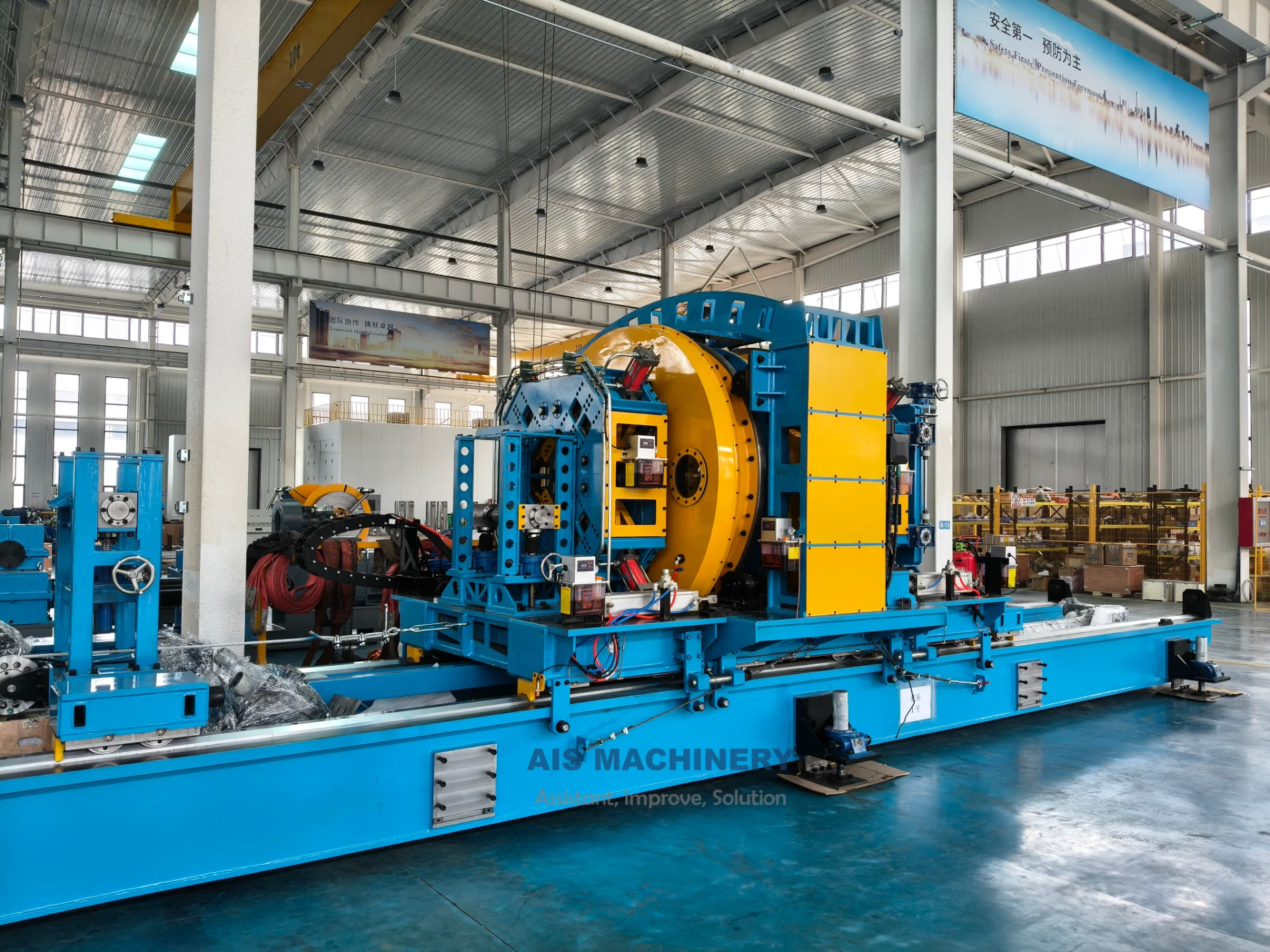
Flat Bar Production Line for Steel Coils: How It Works & Why It Matters
Looking for a flat bar production line? Learn how it turns steel coils into ready-to-use flat bars with precise length and high straightness. Compare it with slitting lines and get the best solution for your steel processing needs.
2026-04-14 00:00:00
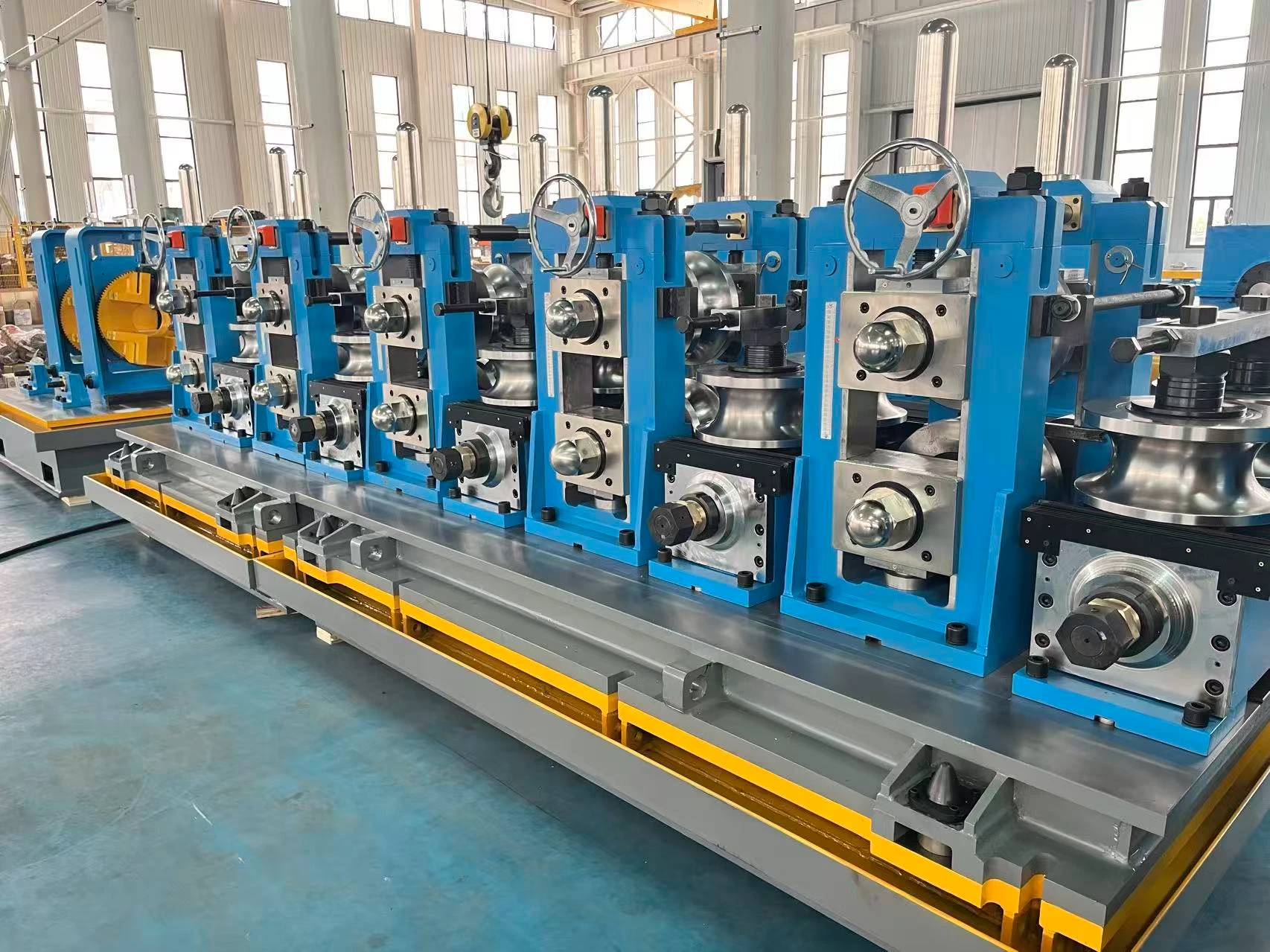
Looking for a Milling Saw for ERW Tube Mill? Here’s What You Need to Know
Looking for a high-performance milling saw for your ERW tube mill? Upgrade to burr-free, high-precision pipe cutting with advanced flying saw technology. Improve efficiency, reduce rework, and meet export standards for carbon steel, stainless steel, and API pipes. Contact us today for expert solutions and competitive pricing tailored to your production needs.
2026-04-09 16:15:19
5-Inch (127mm) ERW Tube Making Machine Delivered with Heavy-Duty Design and Advanced Quick Change System
2027-04-07 00:00:00
Metal Embossing Machine: Turn Flat Sheets into High-Value Textured Products
Discover how a metal embossing machine transforms flat steel, stainless steel, and aluminum sheets into high-value textured products. Learn about its working principle, key components, and applications. Ideal for decorative and industrial use, embossing machines improve both appearance and performance. Explore complete embossing line solutions and find the right machine for your production needs.
Send a Message
Dear customer, thank you for your attention! We provide high-quality machinery and equipment and look forward to your orders. Please inform us of your needs and we will respond quickly!
 English
  Albanian
  Arabic
  French
  German
  Indonesian
  Italian
  Japanese
  Kazakh
  Korean
  Latin
Latin  Macedonian
  Portuguese
  Russian
  Spanish
  Thai
Thai  Turkish
  Ukrainian
  Uzbek
Uzbek